

Saudi Arabia & UAE’s Personal Debt Boom: Risks & Solutions

The Gulf Cooperation Council (GCC) region, especially Saudi Arabia and the United Arab Emirates (UAE), is experiencing a sharp and sustained personal debt boom. Fuelled by consumer credit expansion, lifestyle changes, and digital borrowing platforms, this trend is reshaping the region’s financial landscape.
As access to loans, credit cards, and Buy Now Pay Later (BNPL) options increases, many residents are falling into debt traps, leading to financial distress, legal complications, and economic ripple effects. Understanding the drivers, risks, and possible solutions is critical for policymakers, financial institutions, and households alike.
Personal Debt: A Growing Concern in the GCC
Over the past five years, both Saudi Arabia and the UAE have seen rapid growth in household borrowing. Below is a snapshot of the most recent available figures:
Table: Personal Debt Indicators in Saudi Arabia & UAE (2024)
| Indicator | Saudi Arabia | United Arab Emirates |
|---|---|---|
| Household debt as % of GDP | 31.7% | 38.1% |
| Growth in personal loans (YoY 2024) | 14.3% | 11.8% |
| Average credit card debt per person | SAR 16,200 | AED 20,500 |
| BNPL transaction growth (2024) | 42% | 68% |
| % of residents with active debt | 52% | 61% |
| Non-performing loan (NPL) ratio | 1.9% | 3.1% |
| Expatriate population share | ~38% | ~88% |
Sources: Central Bank of the UAE, SAMA, RedSeer, IMF, World Bank
Key Drivers Behind the Debt Surge
1. Lifestyle Inflation
Rising incomes and exposure to global lifestyles have contributed to increased spending expectations. In cities like Riyadh, Jeddah, Abu Dhabi, and Dubai, luxury retail, dining, and travel are commonly financed through credit cards and short-term loans.
2. BNPL and Fintech Disruption
The rise of BNPL platforms has made credit more accessible—but also more dangerous. With minimal approval processes and zero-interest options, many users fall into cyclical debt by overcommitting.
3. High Cost of Living
Housing, healthcare, education, and transportation costs are growing, especially in UAE cities. Residents—particularly expatriates—are increasingly reliant on unsecured personal loans to meet routine expenses.
4. Financial Illiteracy
Many residents, especially the younger population and new migrants, lack sufficient knowledge about interest rates, repayment terms, and the impact of defaults on credit scores and legal standing.

The Risks of Personal Debt Explosion
1. Rising Default Rates
As borrowing increases, so do missed payments. Financial institutions report a steady rise in non-performing loans (NPLs), especially from personal loans and credit card debt.
2. Legal Consequences
In both countries, defaulting on debt can lead to travel bans, court cases, and even imprisonment. While laws are evolving, the legal system still places heavy accountability on individual borrowers.
3. Mental and Social Stress
Over-indebtedness is linked to mental health issues, family breakdowns, and employment instability. Many borrowers suffer from anxiety and depression due to unpaid debts and legal pressure.
4. Macroeconomic Slowdown
High household debt suppresses consumer spending. When large portions of income are directed toward loan repayments, retail, hospitality, and services take a hit, slowing economic growth.

Strategic Solutions: Curbing the Crisis
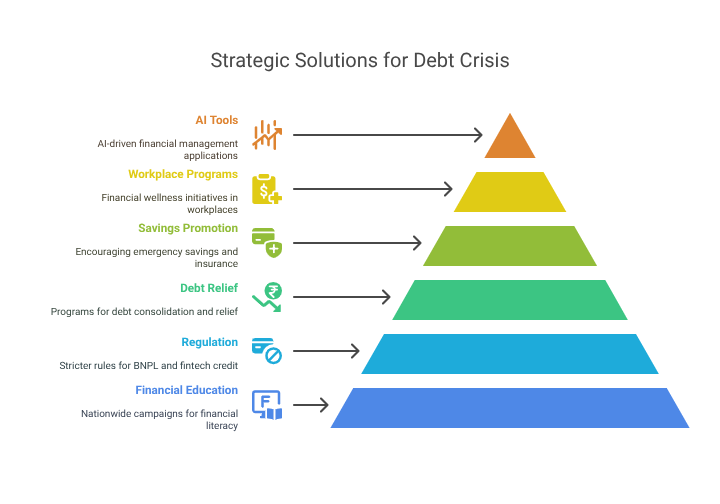
1. Nationwide Financial Education Campaigns
- Mandatory financial literacy programs in schools, universities, and workplaces
- Awareness campaigns via TV, radio, apps, and social media
- Tools for budgeting, credit score monitoring, and safe borrowing
2. Stricter Regulation of BNPL and Fintech Credit
Regulatory bodies should:
- Set maximum borrowing limits
- Mandate affordability assessments
- Enforce full disclosure of interest, fees, and penalties
- License all fintech lenders under national authorities
3. Debt Consolidation & Relief Programs
Governments and banks can introduce:
- Low-interest debt consolidation loans
- Payment deferment for short-term hardships
- Simplified out-of-court settlements
- Better access to existing insolvency frameworks
4. Emergency Savings and Insurance Promotion
Encouraging residents to build emergency savings funds through:
- Payroll deduction programs
- Employer-matched savings plans
- Public awareness of financial safety nets and micro-insurance
5. Workplace Financial Wellness Programs
Employers can:
- Offer debt counselling services
- Provide tools for financial planning
- Launch salary advance and loan assistance schemes
- Support employees with training on responsible borrowing
6. AI-Driven Financial Management Tools
Authorities and financial startups can develop:
- AI budgeting assistants
- Debt repayment calculators
- Predictive alerts for missed payments
- Personalized repayment optimization plans
Regional Comparison: How the Gulf Is Reacting Differently to Debt
The debt landscape is evolving not only in Saudi Arabia and the UAE but across the broader GCC. While the two leading economies dominate in terms of consumer credit volume, neighbouring states like Qatar, Kuwait, and Bahrain are experiencing similar challenges, albeit on a smaller scale.
The Role of the Banking Sector in Managing Debt
Banks are central to both the growth and potential containment of the debt boom. While retail loans boost profits, increasing delinquencies could threaten financial system stability.
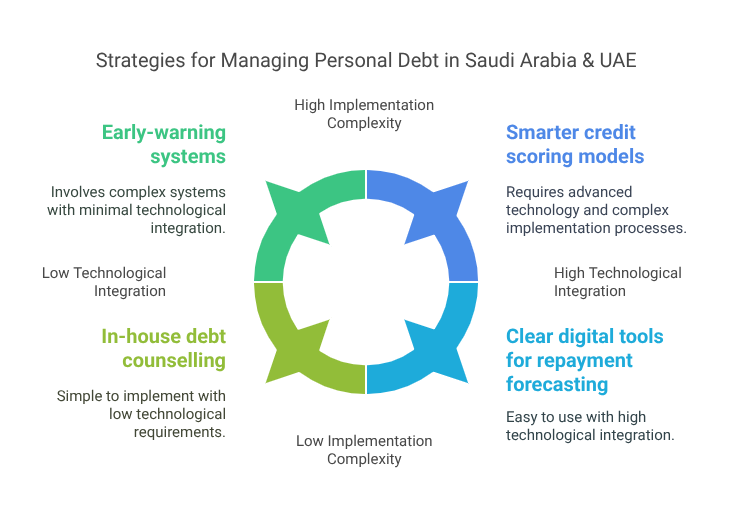
Key Reforms Needed:
- Smarter credit scoring models
- Early-warning systems for at-risk borrowers
- In-house or third-party debt counselling
- Clear digital tools for repayment forecasting
Policy Innovation: Toward a Balanced Credit Economy
Governments can implement long-term strategies for safer borrowing environments:
- Real-time national debt dashboards
- Cross-platform credit exposure APIs
- Tax incentives for on-time repayments
- Debt passport systems for cross-border creditworthiness
Youth & Gen Z: Managing the Most Vulnerable Demographic
The younger population is entering the workforce with unprecedented credit exposure. With social media-driven lifestyles and access to BNPL services, they are among the most vulnerable.
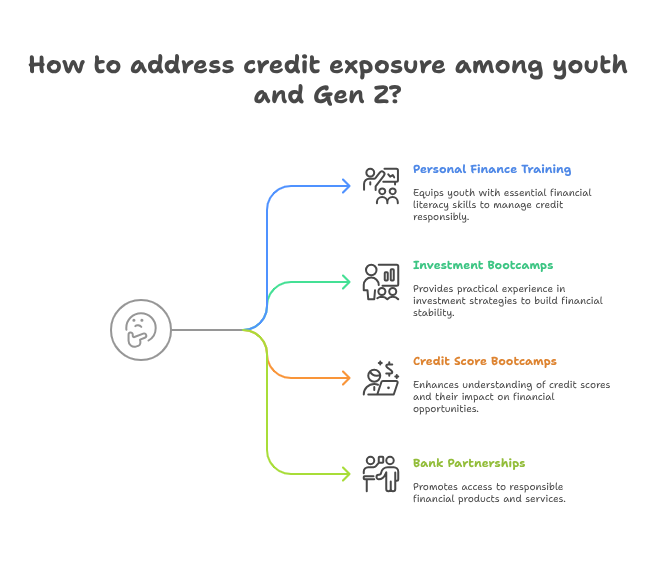
Educational institutions must:
- Embed personal finance training
- Run investment and credit score bootcamps
- Partner with banks to promote responsible financial products
Leveraging Islamic Finance for Ethical Borrowing
Islamic banking, which prohibits interest and encourages ethical lending, can be a cornerstone of responsible credit expansion.
Benefits include:
- Risk-sharing models
- Use of Takaful (Islamic insurance) for emergencies
- Clear restrictions on non-essential borrowing
Long-Term Risk: A Slow-Burning Financial Crisis
If rising personal debt is not checked by regulation, education, and innovation, both countries could face a long-term financial drag. The impact will not only be limited to consumers:
- Banks could face rising capital risk
- SMEs may experience reduced demand
- Youth productivity may decline under long-term credit burdens
- Foreign investment confidence could wane due to systemic instability
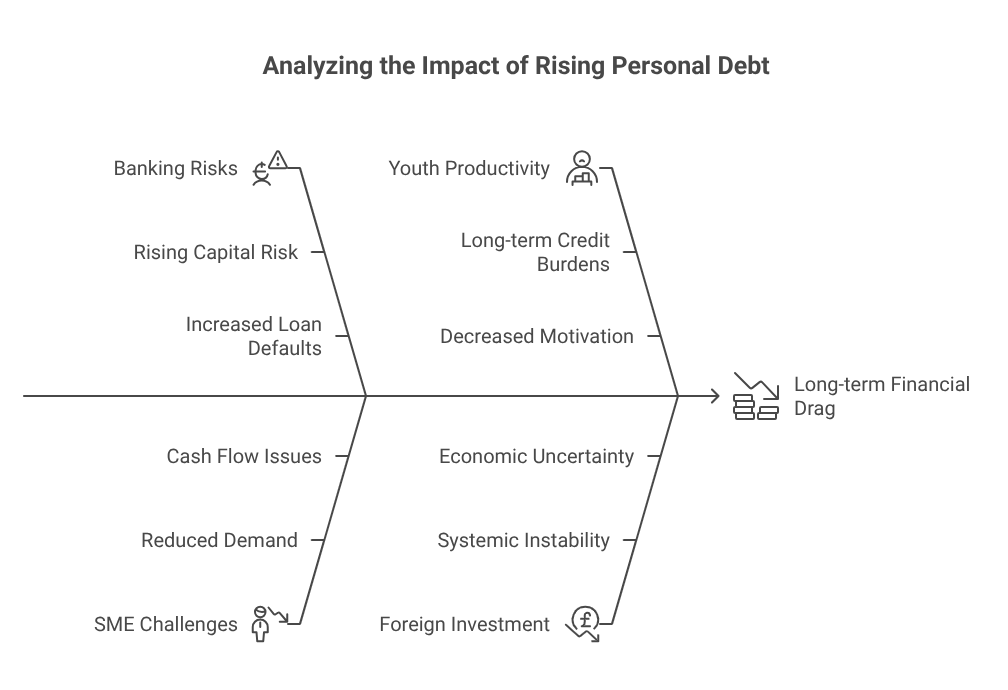
Addressing this early ensures that the credit boom doesn’t evolve into a credit collapse.
Digital Inclusion Can Drive Financial Resilience
One of the under-leveraged tools to fight the debt crisis is digital financial inclusion. Saudi Arabia and the UAE have high internet penetration, smartphone usage, and tech-savvy populations.
Policymakers should encourage:
- Government-backed budgeting apps
- Real-time debt tracking dashboards for households
- Integration of AECB and SIMAH credit scores into consumer mobile apps
This digital-first approach to managing household finances could reduce default rates and build a generation of informed borrowers.
Conclusion: A Call for Smart, Sustainable Credit Culture
The personal debt boom in Saudi Arabia and the UAE is both a reflection of progress and a warning. While credit access supports economic dynamism, it must come with guardrails that protect households and society.
Through a combination of policy innovation, technology, education, and regulation, the Gulf can lead the way in establishing a sustainable credit culture—one that promotes financial health, personal dignity, and inclusive growth.


