Rising Oil Prices and War Spending Push Middle East Sovereign Debt Higher
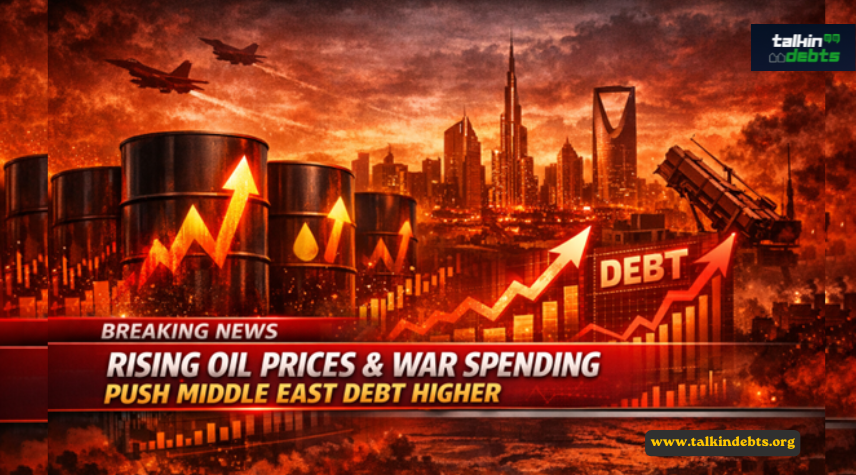
The Middle East is entering a critical financial phase as rising oil prices and escalating war-related expenditures reshape the region’s fiscal outlook. Governments across the Gulf Cooperation Council (GCC) are facing a complex paradox: while higher crude prices are boosting revenues, increased military spending and long-term economic commitments are driving sovereign debt levels upward. This evolving dynamic is forcing policymakers to rethink borrowing strategies, fiscal discipline, and long-term economic diversification plans.
Across key economies such as Saudi Arabia, the United Arab Emirates, and Qatar, governments are balancing strong energy income with rising expenditures tied to regional conflicts, defense upgrades, and infrastructure development. The result is a growing reliance on debt markets—even as oil prices hover at elevated levels.
Oil Prices Surge but Fiscal Pressure Mounts
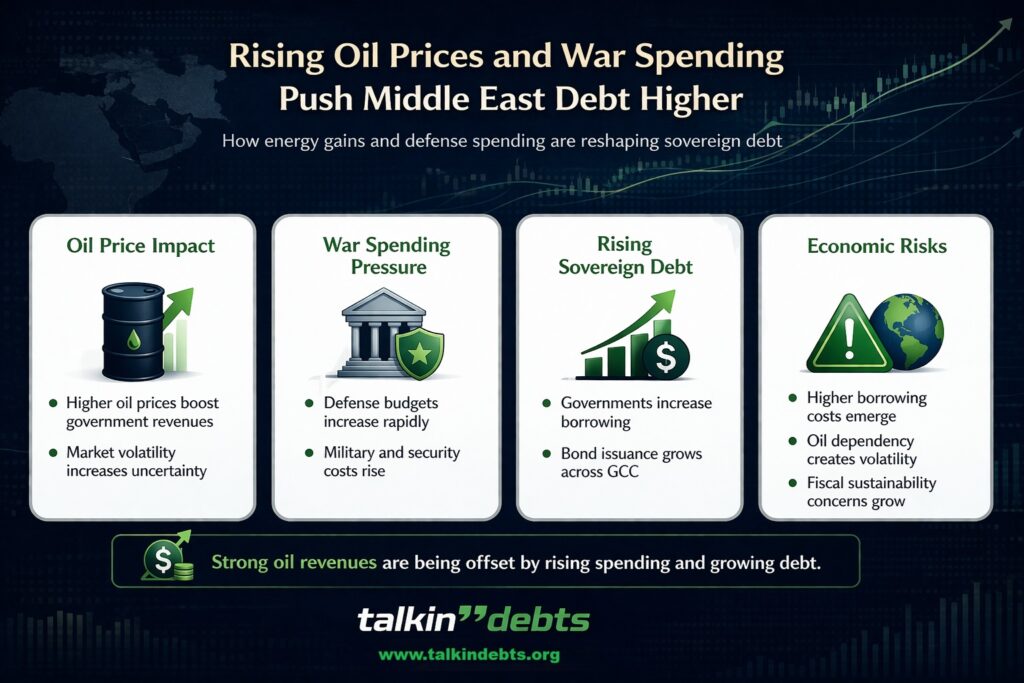
Global oil markets have experienced renewed volatility amid geopolitical tensions in the Middle East. Benchmark crude prices have surged due to supply uncertainties and conflict-driven disruptions, providing a temporary windfall for oil-exporting nations. However, this increase in revenue is being offset by a sharp rise in government spending.
Defense budgets across the GCC have expanded significantly in response to heightened regional instability. Military procurement, security investments, and strategic alliances are consuming a larger share of national budgets. At the same time, governments are continuing to fund ambitious economic diversification programs aimed at reducing dependence on hydrocarbons.
For example, Saudi Arabia continues to invest heavily in Vision 2030 initiatives, including mega infrastructure projects and tourism development. Similarly, the United Arab Emirates is expanding its global trade, logistics, and technology sectors. These long-term investments, while essential for future growth, are placing immediate pressure on fiscal balances.
Rising Sovereign Debt Across the GCC
Despite strong oil revenues, sovereign debt levels in the Middle East are trending upward. Governments are increasingly tapping international and domestic bond markets to finance budget deficits and strategic projects.
In Saudi Arabia, public debt has risen steadily over the past few years as the government balances oil income with large-scale spending commitments. The kingdom has become one of the largest issuers of sovereign bonds in emerging markets, attracting global investors seeking stable returns.
The United Arab Emirates has also expanded its borrowing, particularly at the emirate level. Abu Dhabi and Dubai continue to issue debt to fund infrastructure, energy transition initiatives, and economic diversification efforts. While the UAE maintains relatively strong credit ratings, the pace of borrowing reflects growing fiscal demands.
Meanwhile, Qatar is navigating a similar path, leveraging its substantial natural gas revenues while increasing debt issuance to support domestic development and international investments.
War Spending Adds to Fiscal Burden
One of the most significant drivers of rising sovereign debt in the region is increased military and security spending. Ongoing conflicts and geopolitical tensions have forced governments to prioritize defense readiness, often at the expense of fiscal consolidation.
Military expenditures in the Middle East are among the highest in the world as a percentage of GDP. Countries are investing in advanced defense systems, cybersecurity infrastructure, and strategic partnerships to safeguard national interests. These expenditures are not only substantial but also recurring, creating long-term fiscal obligations.
The impact of war spending extends beyond defense budgets. It also influences investor sentiment, risk premiums, and borrowing costs. As geopolitical risks rise, lenders demand higher yields on sovereign bonds, increasing the cost of debt servicing for governments.
Oil Dependency and Revenue Volatility
While higher oil prices provide short-term fiscal relief, they also underscore the region’s continued dependence on hydrocarbons. Revenue volatility remains a key challenge for Middle Eastern economies, as oil prices are influenced by global demand, geopolitical developments, and energy transition policies.
Periods of high oil prices often lead to increased government spending, making it difficult to implement fiscal discipline. Conversely, when prices decline, governments face budget deficits and are forced to borrow more aggressively.
This cyclical pattern has contributed to the gradual accumulation of sovereign debt across the region. Despite efforts to diversify economies, oil revenues still account for a significant portion of government income in countries like Saudi Arabia and the United Arab Emirates.
GCC Borrowing Strategies Evolve
In response to rising debt levels, GCC governments are adopting more sophisticated borrowing strategies. These include issuing longer-term bonds, diversifying funding sources, and exploring local currency debt markets.
Green bonds and sustainability-linked debt instruments are also gaining traction as governments align their financing strategies with environmental and social goals. The United Arab Emirates, for instance, has been at the forefront of sustainable finance initiatives in the region.
Additionally, governments are leveraging sovereign wealth funds to manage fiscal pressures. These funds play a critical role in stabilizing economies, providing liquidity, and supporting strategic investments. However, reliance on such funds also highlights the importance of maintaining long-term financial sustainability.
Investor Confidence and Credit Ratings
Despite rising debt levels, Middle Eastern sovereigns continue to attract strong investor interest. High oil revenues, substantial foreign reserves, and relatively low debt-to-GDP ratios compared to global peers support investor confidence.
Credit rating agencies have generally maintained stable outlooks for major GCC economies, although they remain cautious about rising fiscal deficits and geopolitical risks. The ability of governments to manage debt sustainably while continuing economic reforms will be a key factor in determining future ratings.
Investors are closely monitoring fiscal policies, spending priorities, and diversification efforts. Transparent governance and prudent financial management will be essential in maintaining market confidence.
Economic Diversification vs. Debt Sustainability
A central challenge for Middle Eastern economies is balancing economic diversification with debt sustainability. Governments are investing heavily in sectors such as tourism, technology, renewable energy, and logistics to reduce reliance on oil.
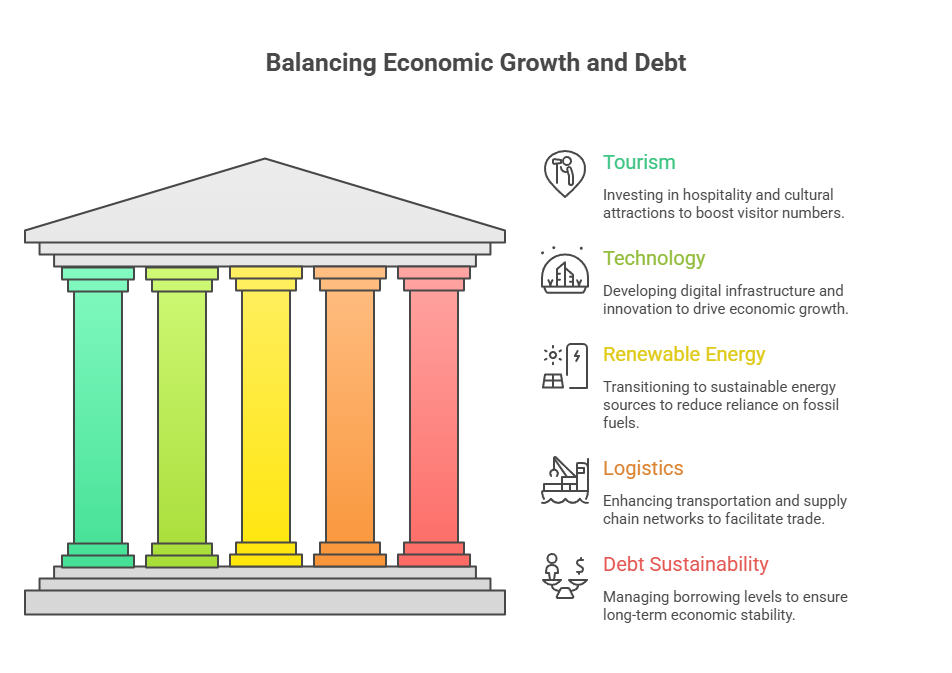
While these investments are critical for long-term growth, they often require significant upfront capital, contributing to rising debt levels. The success of these initiatives will determine whether increased borrowing translates into sustainable economic expansion.
In Saudi Arabia, mega projects such as NEOM are expected to drive future growth but come with substantial financial commitments. Similarly, the United Arab Emirates is positioning itself as a global hub for innovation and trade, requiring continuous investment.
Regional Outlook: A Delicate Balance
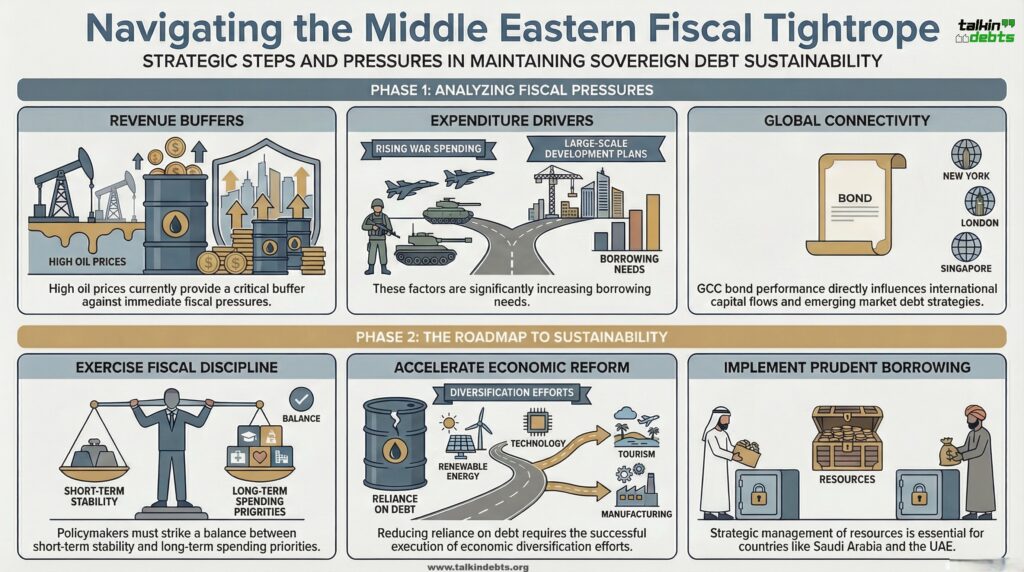
The outlook for Middle East sovereign debt remains complex. On one hand, high oil prices provide a buffer against fiscal pressures. On the other hand, rising war spending and ambitious development plans are increasing borrowing needs.
The key challenge for governments will be maintaining fiscal discipline while addressing security concerns and pursuing economic transformation. Policymakers must strike a delicate balance between short-term stability and long-term sustainability.
As geopolitical tensions persist and global energy markets remain uncertain, the region’s fiscal trajectory will depend on a combination of oil price trends, spending priorities, and economic reforms.
Global Implications
The rise in Middle East sovereign debt has broader implications for global financial markets. GCC bonds are widely held by international investors, making the region an important player in emerging market debt.
Changes in borrowing patterns, interest rates, and credit risk in the Middle East can influence global capital flows and investment strategies. Additionally, fluctuations in oil prices continue to have a significant impact on inflation, economic growth, and debt levels worldwide.
The Road Ahead
Looking ahead, Middle Eastern governments face a pivotal moment. Rising oil prices offer an opportunity to strengthen fiscal positions, but only if accompanied by disciplined spending and strategic planning.
War-related expenditures are unlikely to decline in the near term, adding to fiscal pressures. At the same time, the success of economic diversification efforts will determine the region’s ability to reduce reliance on debt.
For countries like Saudi Arabia, the United Arab Emirates, and Qatar, the path forward will require careful management of resources, prudent borrowing, and sustained economic reform.
The interplay between oil prices, war spending, and sovereign debt will continue to shape the Middle East’s financial landscape in the years to come. As governments navigate this complex environment, their ability to balance growth ambitions with fiscal responsibility will be critical in determining long-term economic stability.