UAE Updates Enforcement Rules for Personal Loan Defaults: What Creditors Need to Know

Dubai, UAE – March 2026:
The United Arab Emirates has introduced updated enforcement rules for personal loan defaults, a regulatory move that could significantly affect how banks and financial institutions recover unpaid consumer debt. The revised framework is designed to strengthen legal clarity around loan recovery while improving protections for borrowers facing financial distress.
Financial regulators say the updated enforcement guidelines aim to ensure that lenders follow structured legal procedures when pursuing recovery actions. The changes come as consumer borrowing continues to grow across the UAE, prompting authorities to refine enforcement mechanisms that govern loan defaults.
Industry observers say the updates could influence how creditors manage risk, pursue legal recovery, and structure loan agreements in the coming years.
Regulatory Changes Reshape UAE Loan Enforcement Landscape
The revised enforcement rules are part of the UAE’s broader effort to modernize its financial regulations and align debt recovery procedures with international compliance standards.
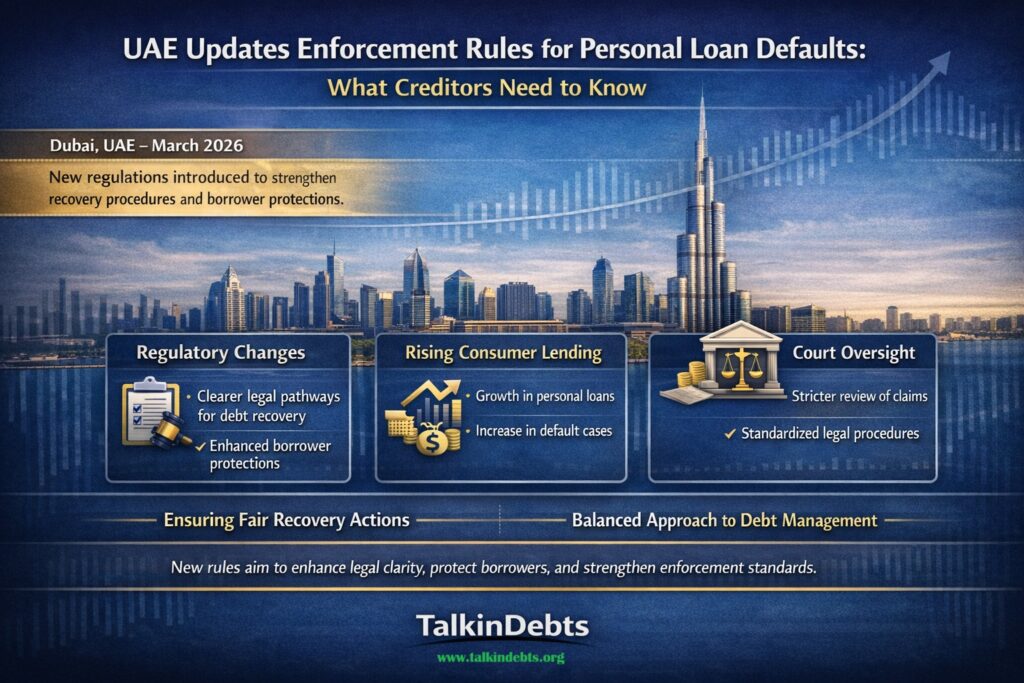
Officials familiar with the regulatory updates say the new framework introduces clearer legal pathways for creditors pursuing personal loan recovery while strengthening oversight over enforcement actions.
Under the revised structure, creditors must now follow defined legal procedures before initiating enforcement claims in UAE courts. These procedures include documented borrower notifications, detailed loan documentation, and verification of default status.
Legal experts say the reforms aim to reduce disputes between borrowers and lenders while improving transparency across enforcement proceedings.
Rising Consumer Lending Behind Policy Update
Consumer lending has expanded rapidly in the UAE over the past decade, driven by strong economic growth, rising household spending, and an expanding expatriate population.
Personal loans have become one of the most widely used financial products in the country, often used for housing expenses, education costs, and personal financial needs.
However, financial analysts say that economic fluctuations, employment transitions, and rising living costs have occasionally contributed to increased personal loan default cases.
Regulators have been reviewing enforcement frameworks to ensure that recovery procedures remain effective while maintaining borrower protections.
The latest updates reflect the UAE’s attempt to balance financial sector stability with responsible lending practices.
Courts to Play Larger Role in Enforcement Oversight
One of the key elements of the updated rules is the expanded role of UAE courts in overseeing enforcement proceedings.
Under the revised framework, courts are expected to review creditor claims more closely before authorizing enforcement actions. This approach is intended to ensure that recovery actions are based on legitimate claims and supported by complete documentation.
Legal professionals say the enhanced court oversight could help reduce disputes and ensure that both lenders and borrowers receive fair treatment during enforcement cases.
The new procedures also aim to streamline court processes by standardizing the documentation required when creditors file enforcement claims.
Documentation Requirements for Loan Recovery
The updated enforcement rules place significant emphasis on documentation.
Creditors seeking enforcement must provide evidence supporting the loan default, including loan agreements, repayment schedules, and records of borrower communications.
Legal experts say comprehensive documentation will be essential for creditors seeking court approval for enforcement actions.
Required documentation typically includes:
- Signed loan agreements
- Payment history and missed installment records
- Official borrower notification notices
- Evidence confirming the loan default
Financial institutions that maintain accurate records may experience fewer delays during enforcement proceedings.
Banks Reviewing Compliance Strategies
Following the regulatory update, banks and financial institutions across the UAE are reviewing their internal compliance frameworks.
Industry sources indicate that many lenders are assessing whether their existing loan recovery policies align with the revised enforcement rules.
Compliance teams are expected to review procedures related to borrower communication, loan default monitoring, and documentation practices.
Banking analysts say the regulatory changes could encourage lenders to strengthen their risk management strategies and ensure that enforcement processes meet updated legal standards.
Financial institutions may also introduce new internal training programs for recovery teams to ensure familiarity with the revised procedures.
Impact on the Debt Collection Industry
The new enforcement rules are also expected to affect the operations of debt collection agencies working with banks and financial institutions.
Industry professionals say agencies involved in debt recovery will likely need to adjust their processes to ensure compliance with the revised legal framework.
Debt collection agencies often play a role in borrower communication and negotiation before enforcement cases reach the courts.
Legal analysts say the updated rules emphasize the importance of maintaining proper documentation of borrower interactions during the recovery process.
This shift may encourage agencies to adopt more structured communication practices when handling loan default cases.
Borrower Protection Measures Reinforced
While the revised rules clarify enforcement procedures for creditors, they also reinforce safeguards designed to protect borrowers.
Regulators have emphasized that enforcement actions must be carried out through lawful processes that respect borrower rights.
Legal observers say borrower protection measures under the updated framework include clearer notification requirements and court oversight before enforcement actions proceed.
These safeguards are intended to ensure that borrowers receive fair treatment while allowing creditors to pursue legitimate claims.
Consumer finance experts say maintaining this balance is important for preserving confidence in the UAE’s financial system.
Financial Sector Stability a Key Priority
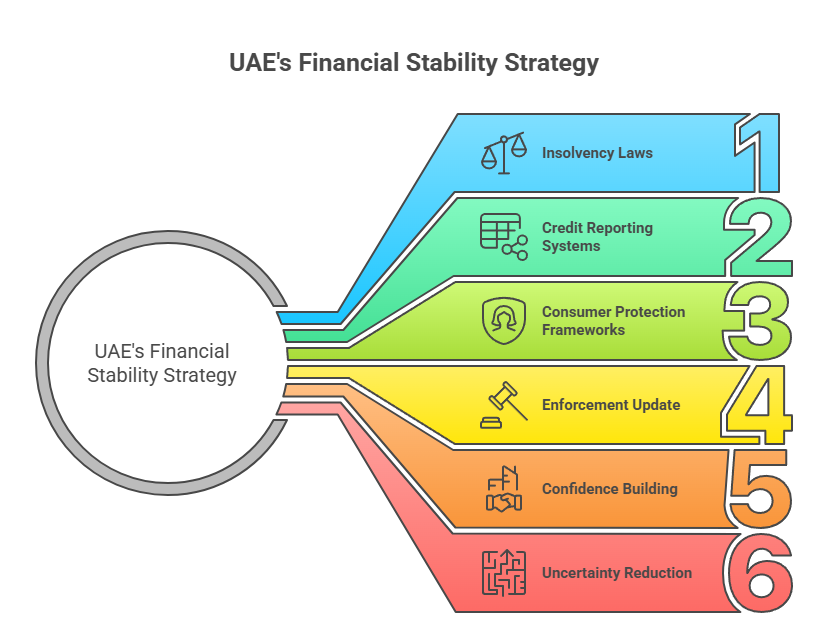
The updated enforcement rules reflect broader efforts by UAE regulators to strengthen financial sector stability.
Authorities have been introducing reforms across multiple areas of financial regulation, including insolvency laws, credit reporting systems, and consumer protection frameworks.
The latest enforcement update is viewed as part of this broader regulatory strategy.
Financial policy analysts say modern enforcement frameworks are essential for maintaining confidence among banks, investors, and international financial institutions operating in the UAE.
Clear legal procedures can also help reduce uncertainty in debt recovery cases and encourage responsible lending practices.
Analysts Expect Long-Term Impact on Lending Practices
Market analysts believe the updated enforcement framework could influence how lenders structure personal loans in the future.
Some banks may review lending criteria, repayment monitoring systems, and borrower risk assessments to adapt to the updated legal environment.
Financial experts say stronger enforcement procedures can help lenders manage credit risk more effectively while ensuring compliance with regulatory requirements.
The regulatory changes may also contribute to improved transparency across consumer lending markets.
UAE Continues Modernization of Financial Regulations
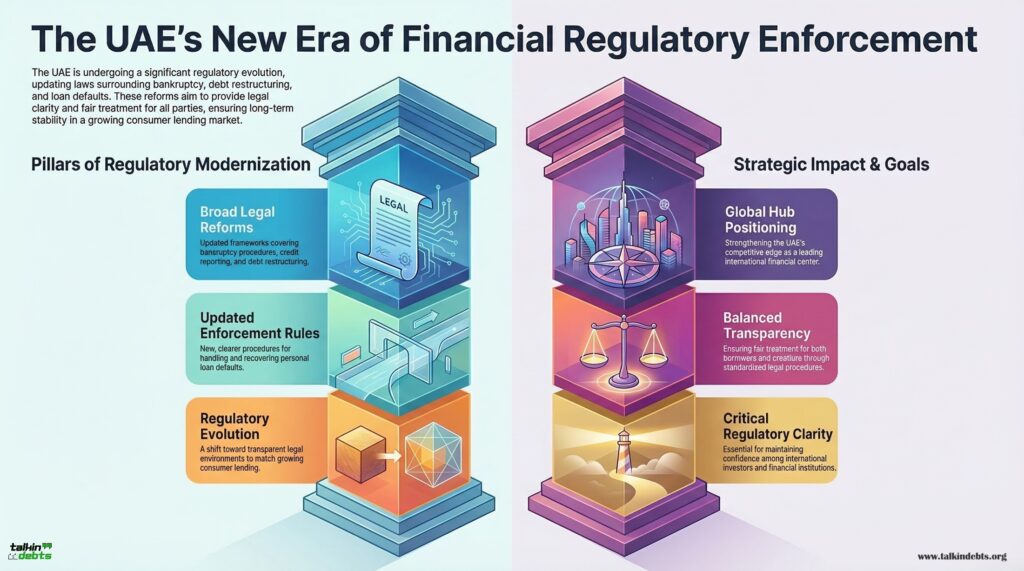
The UAE has been actively updating its financial regulations in recent years as part of efforts to strengthen its position as a global financial hub.
Authorities have introduced reforms covering bankruptcy procedures, credit reporting, and debt restructuring frameworks.
The updated enforcement rules for personal loan defaults represent another step in the country’s financial modernization efforts.
Industry observers say regulatory clarity is critical for maintaining confidence among international investors and financial institutions operating in the UAE.
As consumer lending continues to grow, enforcement frameworks are expected to remain a key area of focus for policymakers.
New Enforcement Framework Signals Regulatory Evolution
The introduction of updated enforcement rules marks an important development in the UAE’s evolving financial regulatory landscape.
By introducing clearer procedures for handling personal loan defaults, regulators aim to strengthen legal transparency while ensuring fair treatment for borrowers and creditors alike.
Financial analysts say the reforms reflect the UAE’s broader commitment to maintaining a stable and well-regulated financial environment.
As the country continues to refine its legal and financial frameworks, the updated enforcement rules are likely to play a central role in shaping how lenders manage loan defaults and recovery processes across the UAE banking sector.