Rising Household Debt in Germany, France & Italy – What’s Driving It?

Across Europe’s strongest economies, a quiet crisis is building — and it’s happening inside ordinary homes. Household debt is rising sharply in Germany, France, and Italy, placing unprecedented pressure on family finances and raising alarms among economists and policymakers alike.
What was once manageable borrowing for homes, education, or personal needs is now turning into a long-term financial burden. From soaring living costs and stagnant wages to interest rate hikes and shifting spending habits, a complex web of factors is fuelling this debt surge.
Debt Levels Are Rising – The Latest Snapshot
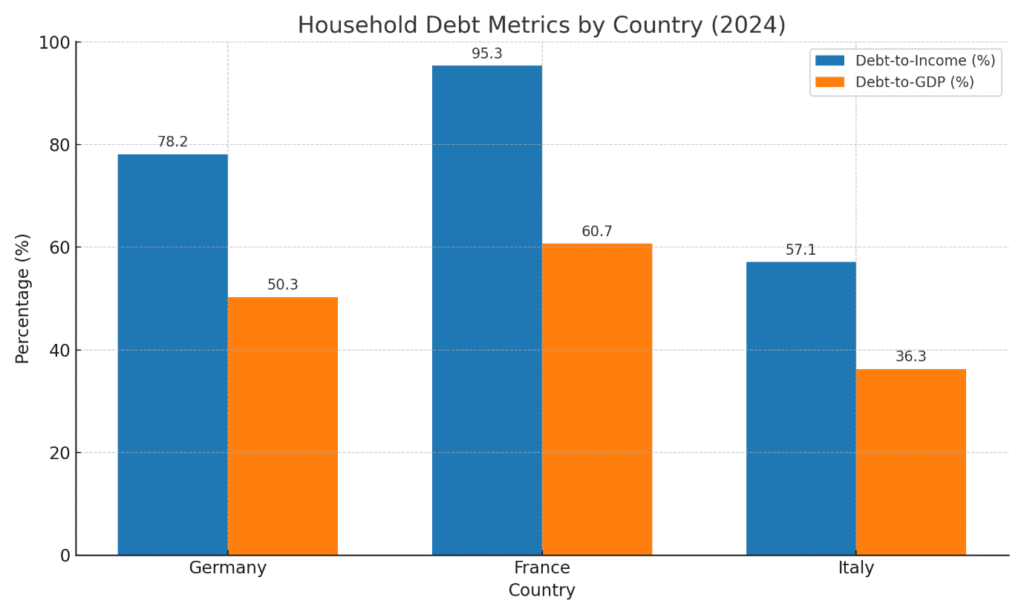
Let’s look at where things stand:
- Germany: Household debt reached 58.4% of disposable income in late 2024, reflecting a sharp upward trend.
- France: Now at 66.9%, France leads among the three in household debt, driven largely by mortgages and consumer loans.
- Italy: Traditionally cautious with borrowing, Italy saw its household debt rise to 43.7%, the highest level in over a decade.
These rising levels signal more than temporary stress — they point to structural pressures affecting millions of households.
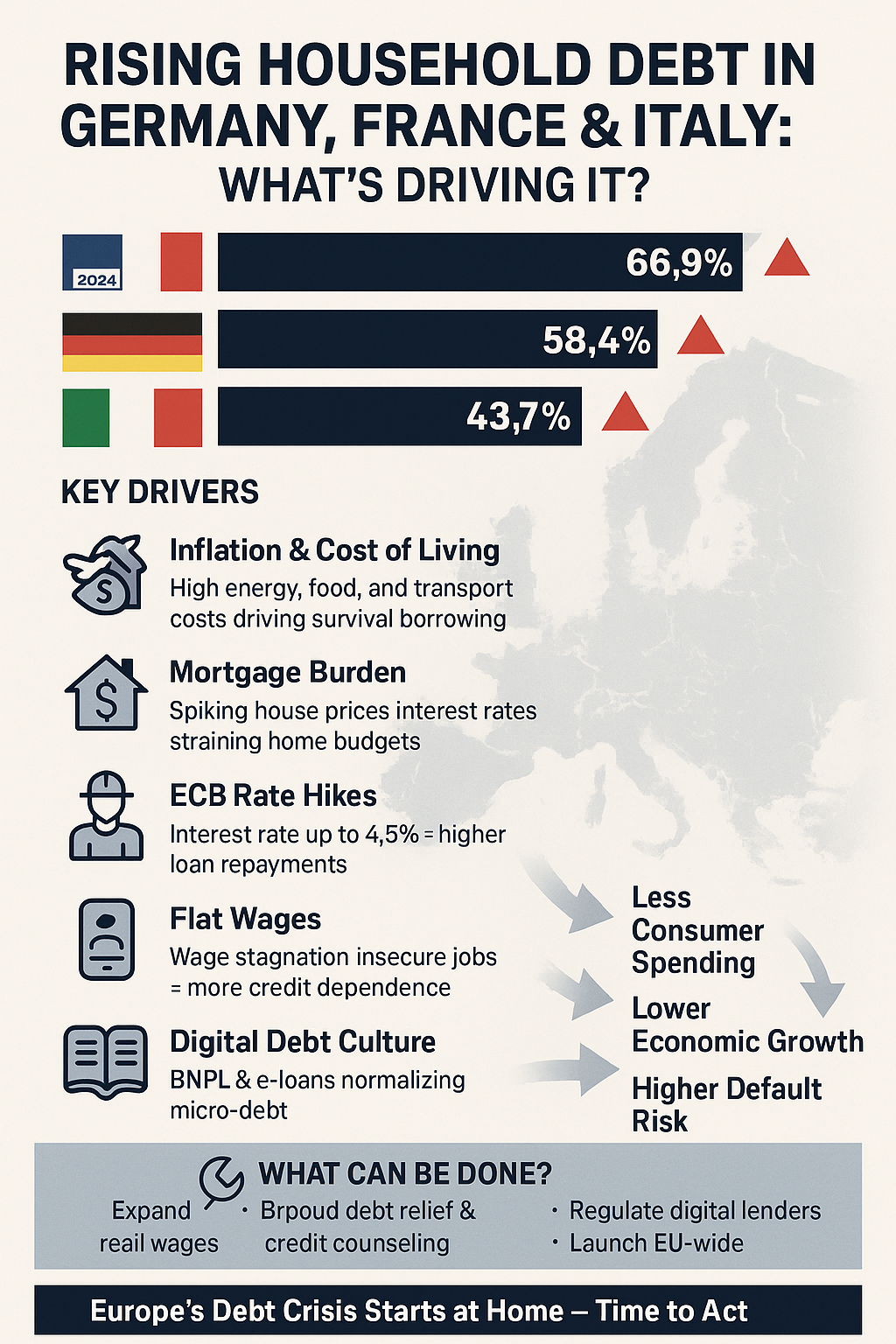
1. Inflation and Cost of Living: The Pressure Cooker
Inflation has become the most visible threat to financial stability across Europe.
In Germany, France, and Italy, energy prices, food costs, and transportation expenses have surged since the Russia-Ukraine war disrupted supply chains. These aren’t luxury items — they’re basic necessities.
With inflation sticking above 5%, and wages failing to catch up, families are increasingly turning to credit to plug the gaps between what they earn and what they need to survive.
In 2024, over 36% of households in France reported using short-term credit just to manage monthly bills — a 14% rise in two years.
This isn’t reckless spending. It’s survival borrowing.
2. Mortgage Burden and Housing Inequality
Germany: A Red-Hot Housing Market
Germany’s urban housing shortage is legendary. With limited new construction and rising demand, cities like Munich, Berlin, and Hamburg have seen house prices spike over 40% in just five years. Renters are not spared either, with average rental costs rising 20% since 2020.
As more people try to buy before prices climb further, mortgage debt has surged.
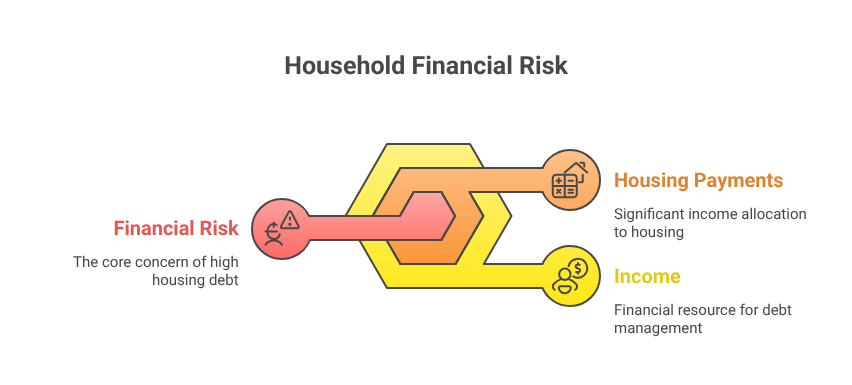
- Many households now commit over 35% of their monthly income to housing payments — a threshold considered financially risky.
France and Italy: The Slow Climb into Debt
In France, government-backed loan schemes encouraged more families to buy, even as rates climbed. Home prices in Paris and Lyon have ballooned, pushing buyers into longer-term mortgages with tighter repayment margins.
Italy’s southern regions are seeing a different pattern. While property prices are lower, younger families are turning to multi-generation loans — borrowing jointly with parents or grandparents — to secure a home.
Across the board, rising interest rates mean monthly payments are no longer predictable or affordable.
3. ECB Rate Hikes: The Cost of Borrowing Rises
To curb inflation, the European Central Bank (ECB) has aggressively increased interest rates. From a record low of 0% in 2021, the rate reached 4.5% in 2024.
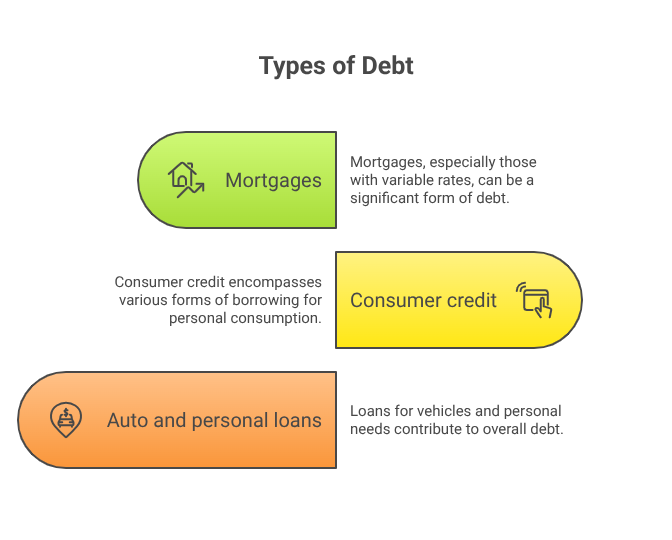
This has directly impacted:
- Mortgages (especially variable-rate ones)
- Consumer credit
- Auto and personal loans
Borrowers with older fixed-rate agreements are relatively safe, for now. But those with variable-rate contracts have seen their payments jump by up to 40%, adding hundreds of euros to their monthly expenses.
Despite higher rates, borrowing hasn’t slowed because people need the money. It’s created a vicious cycle: borrow more to survive today, pay more tomorrow.
4. Flat Wages and Insecure Work
Stagnant wages are compounding the problem. While inflation keeps rising, income has barely moved:
- Germany: Real wage growth has been negative for five straight quarters.
- France: Minimum wage increases have failed to keep pace with rent and food prices.
- Italy: Wage growth has been flat for a decade, one of the worst in the EU.
The gig economy and short-term contracts also contribute to financial instability. In Italy, over 25% of workers under 35 are in temporary or freelance roles with no fixed income, making long-term budgeting and debt repayment harder.
The result? Growing reliance on credit to make ends meet, despite the risks.
5. Changing Borrowing Habits and Consumer Culture
Attitudes toward debt are shifting, particularly among younger generations.
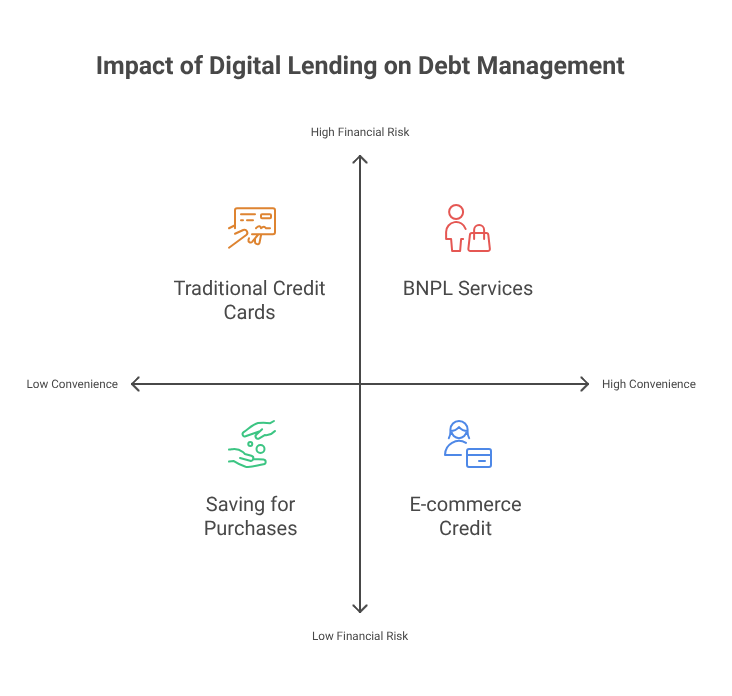
Digital Lending and BNPL (Buy Now, Pay Later)
Apps and platforms offering Buy Now, Pay Later schemes have exploded across Europe, especially in France and Germany. Services like Klarna and Scala Pay have normalized micro-debt for everything from clothes to electronics.
While convenient, they mask the real cost of borrowing and can lead to stacked repayment obligations.
A 2024 study in France found that BNPL users were 3x more likely to miss utility payments than non-users.
E-commerce Credit and Subscription Models
E-retailers now offer credit options at checkout, encouraging consumers to borrow for purchases that previously required saving.
This normalization of casual debt — combined with rising living costs — is making it harder for people to separate essential borrowing from lifestyle-driven debt.
6. Policy Gaps and Financial Literacy Challenges
While EU regulations have improved financial transparency, enforcement and education vary by country.
- In Italy, financial literacy remains low, with just 37% of adults able to calculate compound interest.
- Germany and France fare slightly better, but many consumers still struggle with understanding APRs, loan terms, and long-term debt consequences.
At the same time, national policies to support over-indebted households are underfunded or underused. For example:
- Germany’s debt counselling services have months-long waiting lists.
- France’s “Banque de France” mediation program receives over 200,000 debt distress cases annually, more than it can efficiently handle.
- Italy lacks a nationwide support framework for personal debt, pushing many families to turn to informal or even predatory lenders.
7. Debt as a Threat to National Stability
Rising household debt isn’t just a personal issue — it’s a systemic economic risk.
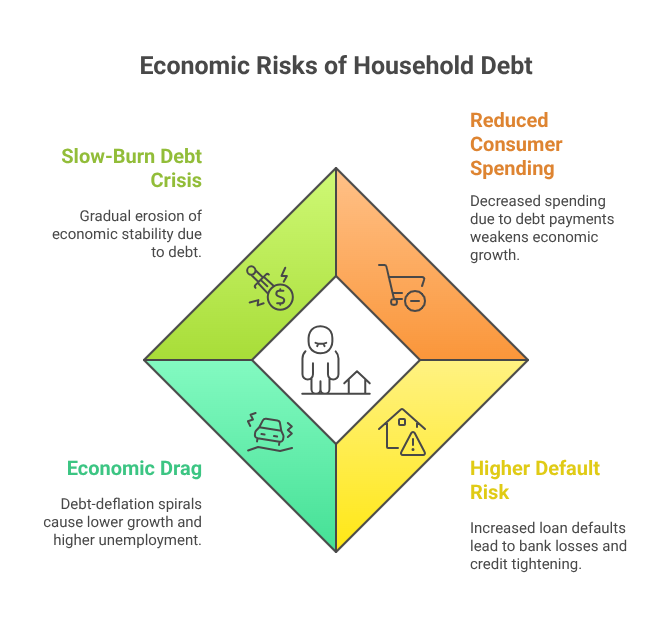
Reduced Consumer Spending
As families allocate more income toward debt payments, they spend less on goods and services. This slowdown in consumer spending, a major pillar of GDP, weakens overall economic growth.
Higher Default Risk
If interest rates continue to climb or job losses increase, more households may begin to default on loans, leading to bank losses and tighter credit conditions.
Economic Drag
Countries with high household debt risk are entering a debt-deflation spiral: less spending, lower growth, higher unemployment, and even more debt.
Unless structural reforms and safety nets are strengthened, these economies could face a slow-burning debt crisis that erodes stability from the inside out.
What Needs to Happen Next
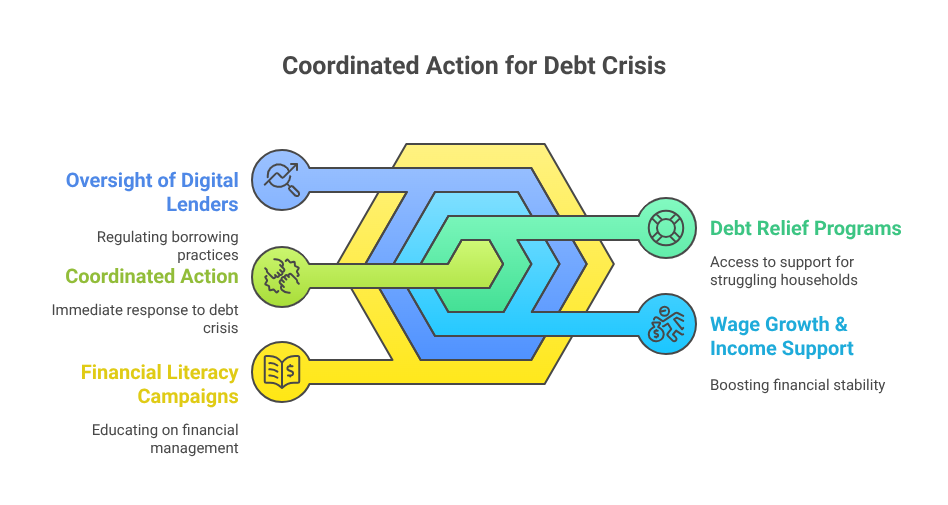
The situation calls for coordinated, immediate action at both the national and EU levels.
1. Broader Access to Debt Relief Programs
Governments need to scale up:
- Free credit counselling
- Accessible loan restructuring services
- Legal protections against aggressive debt collection
2. Real Wage Growth and Income Support
Incentivizing real wage increases, particularly for essential workers, is crucial to restoring balance between income and cost of living.
3. Tightening Oversight of Digital Lenders
As lending becomes digital and decentralized, regulatory bodies must enforce:
- Clear loan disclosures
- APR caps
- Responsible lending checks, especially for BNPL schemes
4. National Financial Literacy Campaigns
Educating citizens on smart borrowing and budgeting isn’t a luxury — it’s a financial survival tool in the modern economy.
The Road Ahead: Will the Debt Spiral Break or Deepen?
Household debt in Germany, France, and Italy is no longer a fringe issue — it’s an urgent warning signal.
What we’re seeing is not a temporary glitch in the system, but a deeper structural problem driven by a mix of economic policy, social change, and financial strain. If left unaddressed, it threatens to drag Europe’s biggest economies into a prolonged period of stagnation, inequality, and instability.
But there’s still time to act. By recognizing the drivers of this crisis and responding with smart, humane, and forward-looking policies, Europe can help families regain control and build a more resilient financial future.