

Why One-Size-Fits-All Digital Visibility Fails in the Receivables Industry
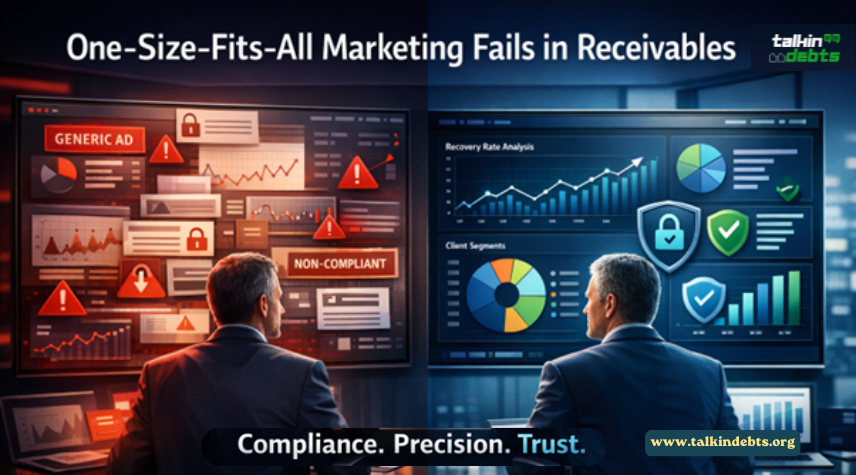
Digital visibility is no longer optional for businesses aiming to grow in competitive markets. However, in the receivables industry—where compliance, reputation, and trust form the foundation of operations—a generic, one-size-fits-all digital marketing strategy can create more risk than reward. While standardized approaches may work in industries like e-commerce or SaaS, they often fail to deliver meaningful results in debt collection and receivables management.
The core issue lies in the mismatch between generic marketing frameworks and the highly regulated, sensitive nature of the receivables ecosystem. Applying broad, templated strategies without industry-specific customization can lead to compliance violations, reputational damage, and poor-quality lead generation. For firms operating in this space, digital visibility must be precise, compliant, and strategically aligned with business objectives.
Understanding the Complexity of the Receivables Industry
The receivables industry faces unique challenges that distinguish it from most other sectors. Debt collection agencies, credit management firms, and financial recovery service providers must adhere to strict regulatory standards while maintaining ethical communication practices.
Unlike traditional industries where aggressive marketing tactics may drive quick conversions, receivables businesses must exercise caution. Every communication—whether digital or offline—must align with legal frameworks and industry guidelines. Regulatory bodies impose strict rules on how companies can engage with debtors and clients, making compliance a central pillar of any marketing strategy.
Additionally, the target audience is highly specialized. Businesses seeking receivables solutions are typically led by finance professionals, procurement heads, or credit risk managers. These decision-makers prioritize reliability, compliance, and proven expertise over flashy marketing messages. As a result, generic campaigns that fail to address these expectations often fall flat.
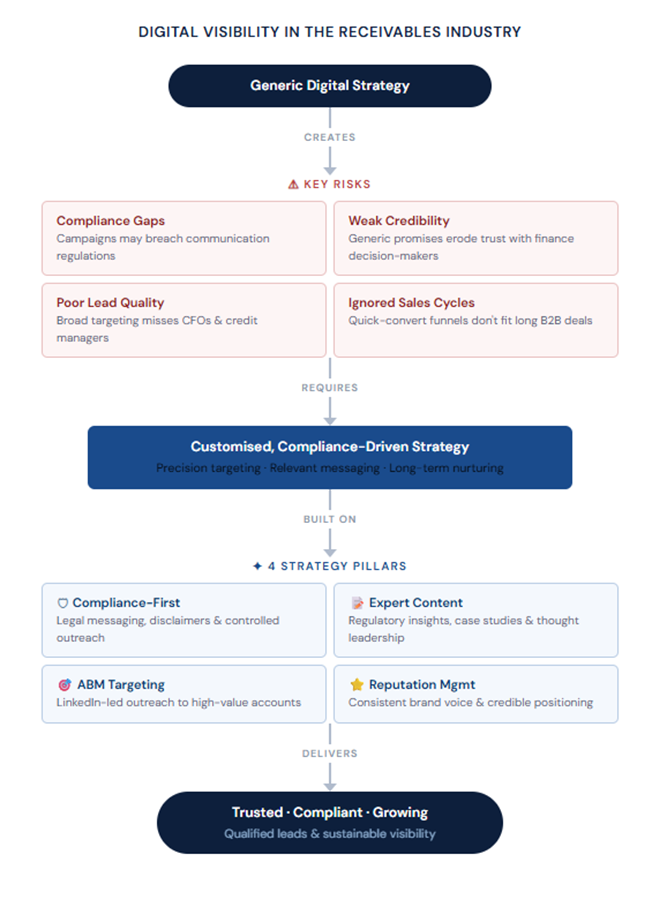
The Hidden Risks of One-Size-Fits-All Digital Visibility
Compliance Blind Spots
One of the most significant dangers of generic digital strategies is the lack of compliance integration. Standard marketing campaigns are often designed to maximize reach and engagement, without accounting for regulatory nuances.
In the receivables industry, even minor oversights—such as misleading claims, improper targeting, or excessive communication—can result in legal consequences. For example, automated email sequences or retargeting ads may unintentionally violate communication guidelines if not carefully structured. A one-size-fits-all approach rarely includes the safeguards needed to prevent such risks.
Generic Messaging Undermines Credibility
Messaging plays a critical role in influencing decision-makers. However, generic marketing templates often rely on exaggerated claims and high-pressure language designed to drive quick conversions.
In a compliance-driven industry, this approach can backfire. Statements like “guaranteed recovery” or “fastest results in the market” not only raise red flags but also erode trust. Clients in the receivables sector are looking for transparency, accountability, and expertise—not unrealistic promises.
Tailored messaging that reflects industry realities is essential for building credibility and establishing long-term relationships.
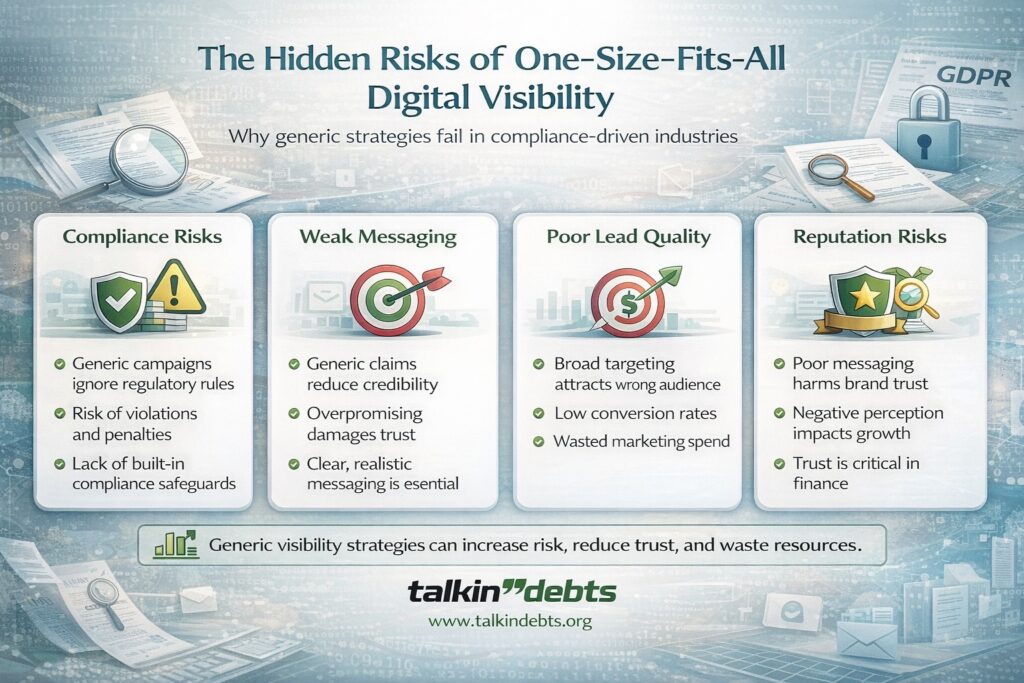
Poor Lead Quality and Wasted Resources
Broad targeting strategies may generate high traffic, but they often fail to deliver qualified leads. In the receivables industry, where services are highly specialized, reaching the wrong audience can significantly impact return on investment.
Generic campaigns typically lack the precision needed to identify and engage key decision-makers. This results in wasted ad spend, low conversion rates, and inefficiencies in the sales pipeline. Without a focused targeting strategy, digital visibility efforts become more of a cost than a growth driver.
Reputation Risks in a Sensitive Industry
Reputation is a critical asset in the receivables industry. Negative perceptions—whether due to aggressive marketing, poor messaging, or compliance issues—can have long-lasting consequences.
Generic visibility strategies often prioritize volume over quality, increasing the risk of reputational damage. For example, poorly placed advertisements or insensitive messaging can attract criticism and harm brand perception. In an industry where trust is paramount, such missteps can be difficult to recover from.
Misalignment with Long Sales Cycles
Receivables services are not impulse purchases. Businesses typically conduct thorough evaluations before selecting a recovery partner, resulting in longer sales cycles.
Generic marketing approaches often focus on immediate conversions, neglecting the importance of nurturing relationships over time. Without a structured engagement strategy, potential clients may lose interest before making a decision. This highlights the need for a more strategic, long-term approach to digital visibility.
The Case for a Customized Digital Visibility Strategy
To overcome these challenges, receivables firms must adopt a tailored approach that aligns with industry dynamics. A customized strategy ensures that every aspect of digital visibility—from content to targeting—is designed with compliance and relevance in mind.
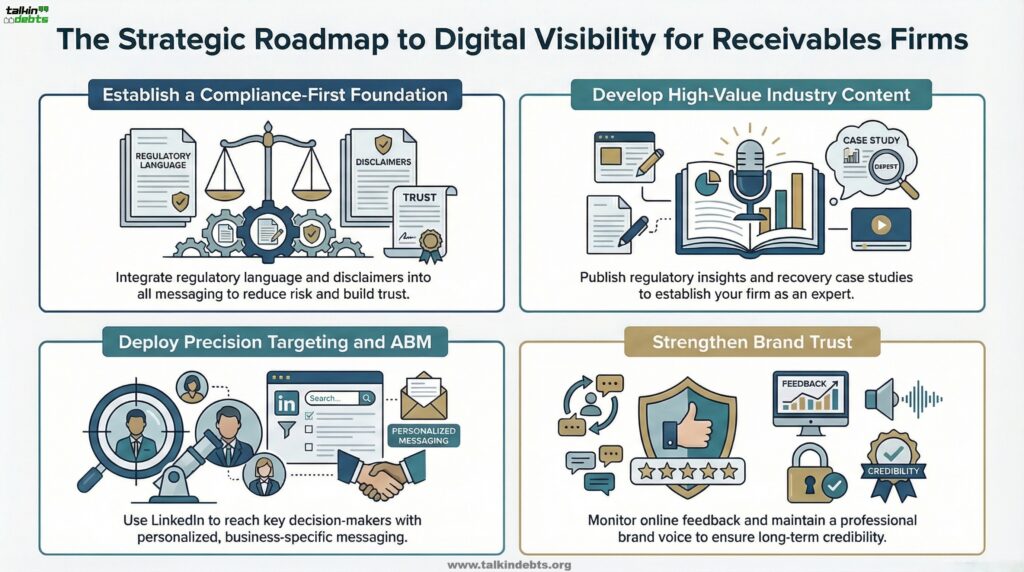
Building a Compliance-First Foundation
Compliance should be integrated into every stage of the marketing process. This includes:
- Developing clear, accurate, and legally compliant messaging
- Ensuring proper use of disclaimers and regulatory language
- Implementing controlled communication strategies
- Regularly reviewing campaigns for compliance adherence
A compliance-first approach not only reduces risk but also enhances credibility, positioning the firm as a responsible and trustworthy partner.
Creating High-Value, Industry-Specific Content
Content marketing is a powerful tool for building authority in the receivables industry. However, it must go beyond generic topics and focus on delivering real value.
Effective content strategies include:
- Insights on regulatory changes and industry trends
- Educational resources for businesses managing receivables
- Case studies showcasing successful recovery strategies
- Thought leadership articles addressing industry challenges
Such content not only improves search visibility but also establishes the firm as an expert in its field.
Leveraging Precision Targeting and ABM
Account-Based Marketing (ABM) is particularly well-suited for the receivables sector. By focusing on high-value accounts and tailoring campaigns to specific organizations, firms can achieve better engagement and conversion rates.
This approach involves:
- Identifying key decision-makers within target companies
- Personalizing messaging based on business needs
- Utilizing platforms like LinkedIn for targeted outreach
- Aligning marketing efforts with sales objectives
Precision targeting ensures that digital visibility efforts are both efficient and effective.
Strengthening Brand Trust Through Reputation Management
In a trust-driven industry, brand perception can significantly influence business outcomes. A strong reputation requires consistent effort across all digital channels.
Key practices include:
- Maintaining a professional and consistent brand voice
- Monitoring and responding to online feedback
- Publishing credible and informative content
- Avoiding aggressive or misleading marketing tactics
Reputation management should be treated as a core component of digital strategy, not an afterthought.
Data-Driven Strategy with Compliance Oversight
Data analytics plays a crucial role in optimizing digital visibility. However, in the receivables industry, performance metrics must be balanced with compliance considerations.
Firms should focus on:
- Tracking lead quality and conversion timelines
- Analyzing engagement patterns among target audiences
- Refining campaigns based on data insights
- Ensuring that optimization efforts remain compliant
This balanced approach enables continuous improvement without compromising regulatory standards.
The Competitive Edge of Tailored Visibility
Organizations that move away from generic strategies and embrace customized digital visibility gain a clear competitive advantage. They are better equipped to navigate industry complexities, build trust with clients, and generate high-quality leads.
Tailored strategies enable firms to:
- Differentiate themselves in a crowded market
- Establish authority and credibility
- Minimize legal and reputational risks
- Achieve sustainable, long-term growth
In an industry where trust and compliance are paramount, these advantages can significantly impact business success.
Rethinking Digital Strategy for Long-Term Success
The receivables industry requires a fundamentally different approach to digital visibility. Generic marketing frameworks, while convenient, fail to address the unique challenges and requirements of this sector.
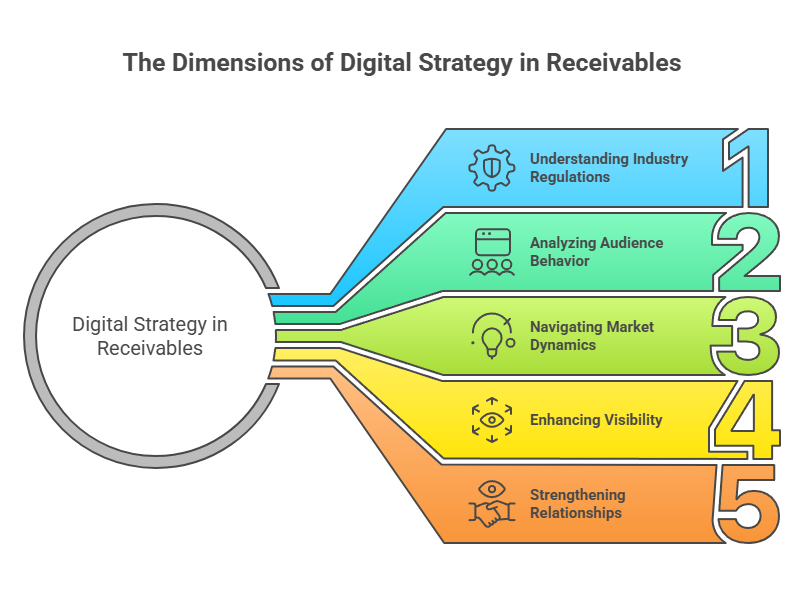
Businesses must shift their focus from broad, templated strategies to customized, compliance-driven frameworks. This involves a deeper understanding of industry regulations, audience behavior, and market dynamics.
By investing in tailored digital strategies, receivables firms can not only enhance their visibility but also strengthen their position as trusted partners.
A Smarter Approach to Digital Visibility
Success in the receivables industry is not about being everywhere—it is about being relevant, credible, and compliant. Digital visibility should be viewed as a strategic asset, not just a marketing function.
Firms that adopt a thoughtful, customized approach will be better positioned to navigate challenges, seize opportunities, and achieve sustainable growth. In a highly regulated environment, precision and professionalism are not optional—they are essential.
A one-size-fits-all strategy may offer short-term convenience, but it ultimately limits potential. A tailored approach, on the other hand, unlocks meaningful visibility, stronger relationships, and long-term success in the receivables industry.
Start with a Free AI Visibility Audit: Check our AI Visibility Services


