Top AI-Powered Debt Collection Software Platforms for Lenders and Recovery Agencies in 2026

The debt collection industry has undergone a major transformation over the past few years. Traditional collection methods that relied heavily on manual phone calls, spreadsheets, and fragmented communication are rapidly being replaced by intelligent automation. In 2026, lenders, fintech companies, banks, collection agencies, telecom providers, and utility companies are increasingly adopting AI-driven debt collection software to improve recovery rates and deliver better customer experiences.
Artificial intelligence is no longer just an innovation—it’s becoming a competitive necessity. Modern debt collection SaaS platforms automate routine tasks, prioritize accounts based on recovery probability, personalize borrower communication, optimize agent productivity, and provide real-time insights for decision-makers.
Whether you’re a financial institution managing millions of customer accounts or a recovery agency looking to increase operational efficiency, selecting the right collections automation platform can significantly impact collection performance.
This guide explores the most important features of AI-powered debt collection platforms, the benefits they provide, and what lenders should consider when evaluating software in 2026.
Why AI Is Transforming Debt Collection
Debt recovery has traditionally involved repetitive manual processes that consume significant time and resources. AI changes this approach by allowing software to make intelligent decisions based on historical payment behavior, customer profiles, engagement patterns, and predictive analytics.
Instead of treating every delinquent account the same way, AI identifies which accounts are most likely to pay, recommends the best communication channel, predicts optimal contact times, and even suggests personalized repayment strategies.
The result is:
- Higher recovery rates
- Reduced operational costs
- Better borrower engagement
- Faster account resolution
- Improved compliance monitoring
- Greater agent productivity
As regulations become stricter and customer expectations continue to evolve, AI-powered collections software enables organizations to recover debt more efficiently without sacrificing customer relationships.
What Is AI Debt Collection Software?
AI debt collection software is an intelligent collection management platform that combines automation, machine learning, predictive analytics, workflow management, and digital communication into one integrated solution.
Unlike traditional collection systems, AI-powered platforms continuously analyze data to improve decision-making over time.
Typical users include:
- Banks
- NBFCs
- Credit card issuers
- Fintech lenders
- Debt collection agencies
- Telecom companies
- Healthcare providers
- Utility companies
- Buy Now Pay Later providers
These organizations use AI to automate recovery workflows while maintaining compliance with industry regulations.
Key Features Every AI Debt Collection Platform Should Offer
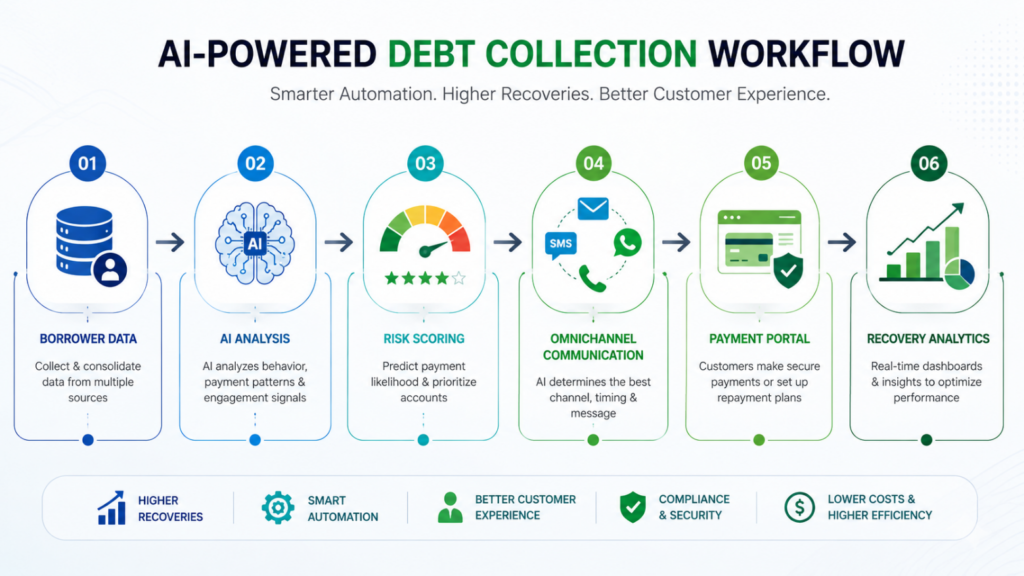
Intelligent Account Prioritization
Not every delinquent account carries the same recovery potential.
AI evaluates multiple variables such as:
- Payment history
- Credit behavior
- Collection history
- Customer engagement
- Risk score
- Account balance
- Delinquency age
Based on this analysis, accounts are automatically prioritized so agents focus on customers with the highest likelihood of repayment.
This increases collection efficiency while reducing wasted effort.
Automated Multi-Channel Communication
Modern borrowers expect communication through their preferred channels.
Leading collections automation platforms support:
- SMS
- Voice calls
- Interactive Voice Response (IVR)
- Mobile apps
- Customer portals
- Push notifications
AI determines the most effective communication channel and timing for each customer, improving response rates and reducing contact fatigue.
Predictive Payment Analytics
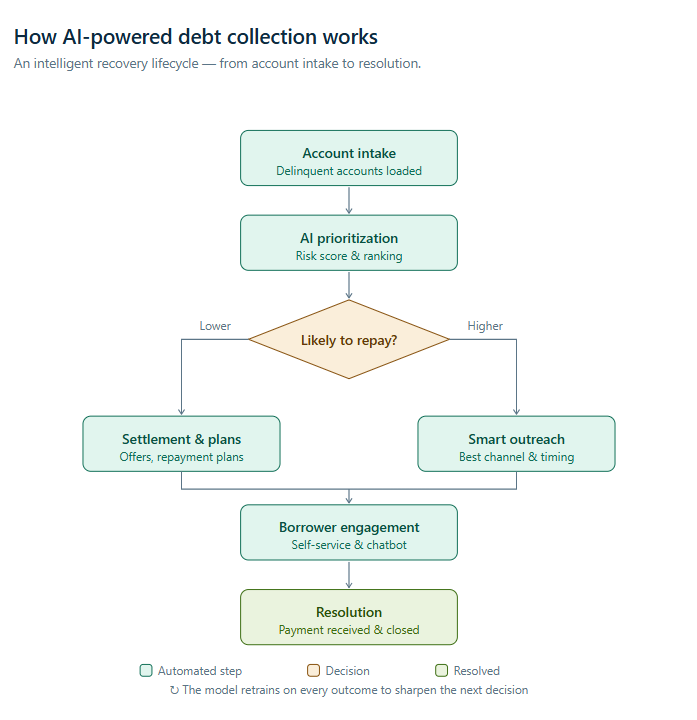
One of the biggest advantages of AI recovery tools is predictive intelligence.
Machine learning algorithms can forecast:
- Probability of payment
- Expected recovery amount
- Best settlement offers
- Customer responsiveness
- Future delinquency risk
These insights help collection teams allocate resources more effectively.
Automated Workflow Management
Manual task assignment slows collections.
AI-powered software automatically manages workflows by:
- Assigning accounts
- Escalating overdue cases
- Triggering reminders
- Scheduling follow-ups
- Routing legal accounts
- Monitoring SLA compliance
Automation reduces administrative work and improves operational consistency.
Self-Service Payment Portals
Customers increasingly prefer resolving debts independently.
Modern debt collection SaaS platforms provide secure portals where borrowers can:
- View outstanding balances
- Download statements
- Make online payments
- Choose payment plans
- Set up recurring payments
- Request settlements
This improves customer satisfaction while lowering operational costs.
AI-Powered Chatbots
Conversational AI has become an important component of digital collections.
Chatbots can answer common questions, provide payment information, guide borrowers through repayment options, and process simple requests without human intervention.
This enables agencies to provide 24/7 customer support while reducing call center workloads.
Compliance Monitoring
Compliance is one of the biggest challenges in debt recovery.
Modern AI software helps organizations comply with regulations by:
- Recording customer interactions
- Monitoring agent communications
- Enforcing contact frequency limits
- Tracking consent
- Maintaining audit trails
- Generating compliance reports
Automated compliance significantly reduces operational risk.
Real-Time Dashboards and Analytics
Executives require complete visibility into collection performance.
Advanced reporting dashboards typically include:
- Recovery rates
- Promise-to-pay performance
- Agent productivity
- Payment trends
- Campaign effectiveness
- Portfolio health
- Collection costs
- Digital engagement metrics
Real-time analytics support faster and more informed business decisions.
Types of AI Collection Software Available in 2026
Cloud-Based Debt Collection SaaS
Cloud platforms continue to dominate the market because they provide:
- Faster deployment
- Lower infrastructure costs
- Automatic updates
- High scalability
- Remote accessibility
- Enhanced security
Software-as-a-Service solutions are particularly attractive for growing lenders and collection agencies.
Enterprise Collection Platforms
Large financial institutions typically require enterprise-grade software that integrates with:
- Core banking systems
- Loan management software
- CRM platforms
- Payment gateways
- Accounting systems
- Customer service platforms
Enterprise solutions support large account volumes while providing advanced customization.
Agency Collection Software
Recovery agencies need software that manages multiple clients simultaneously.
These platforms generally include:
- Client-specific workflows
- Portfolio segmentation
- Commission tracking
- Agent management
- Reporting dashboards
- Secure client access
Such capabilities help agencies manage diverse recovery operations efficiently.
AI Recovery Tools for Digital Lending
Digital lenders require highly automated solutions capable of managing thousands of small-value loans.
AI recovery tools help automate:
- Early reminders
- Payment scheduling
- Settlement recommendations
- Customer engagement
- Risk scoring
This improves recovery while minimizing manual intervention.
Benefits of AI Debt Collection Software
Higher Recovery Rates
Predictive analytics enable collection teams to focus on accounts most likely to pay, improving overall recovery performance.
Lower Operating Costs
Automation reduces manual tasks, including account allocation, follow-ups, reporting, and communication scheduling.
Organizations can handle larger portfolios without significantly increasing staffing costs.
Improved Customer Experience
Personalized communication and flexible repayment options create a less stressful experience for borrowers.
Better customer interactions often result in higher payment rates and stronger long-term relationships.
Better Agent Productivity
Agents spend less time performing repetitive administrative work and more time resolving complex accounts.
This improves both efficiency and employee satisfaction.
Data-Driven Decision Making
AI provides actionable insights instead of relying solely on historical reports.
Managers can optimize collection strategies using real-time performance data.
Scalability
As portfolios grow, AI platforms automatically scale without requiring proportional increases in operational resources.
This makes them ideal for rapidly expanding lenders.
How to Evaluate AI Debt Collection Software
Before selecting a platform, organizations should evaluate several critical factors.
AI Capabilities
Look beyond marketing claims.
Determine whether the software includes genuine machine learning, predictive analytics, intelligent routing, and automated decision-making.
Automation Features
The platform should automate repetitive workflows without requiring constant manual oversight.
Integration
Ensure compatibility with:
- CRM systems
- Loan management software
- Banking platforms
- Payment gateways
- ERP systems
Security
Data security remains essential.
Look for features such as:
- Encryption
- Access controls
- Audit logs
- Multi-factor authentication
- Secure cloud infrastructure
Compliance Support
The software should assist with industry-specific regulatory requirements and maintain complete audit records.
Reporting
Decision-makers need customizable dashboards and detailed performance reports.
Future Trends in AI Debt Collection
Artificial intelligence continues to evolve rapidly.
Emerging innovations expected to shape debt recovery include:
Generative AI for Customer Communication
AI-generated communication will become more personalized while maintaining regulatory compliance.
Voice AI
Natural voice assistants will handle larger portions of outbound and inbound collection calls.
Advanced Behavioral Analytics
Machine learning will increasingly predict borrower behavior using broader data patterns.
Hyper-Personalized Recovery Strategies
Future AI models will recommend individualized repayment plans based on customer affordability and historical behavior.
Real-Time Decision Engines
Collection strategies will adapt instantly as new customer interactions occur.
Choosing the Right Collections Automation Platform
No single platform fits every organization.
Banks often prioritize enterprise scalability.
Fintech lenders focus on automation speed.
Recovery agencies require client management capabilities.
Healthcare organizations emphasize patient communication.
Telecom providers need high-volume automation.
When evaluating software, decision-makers should prioritize long-term business goals rather than simply comparing feature lists.
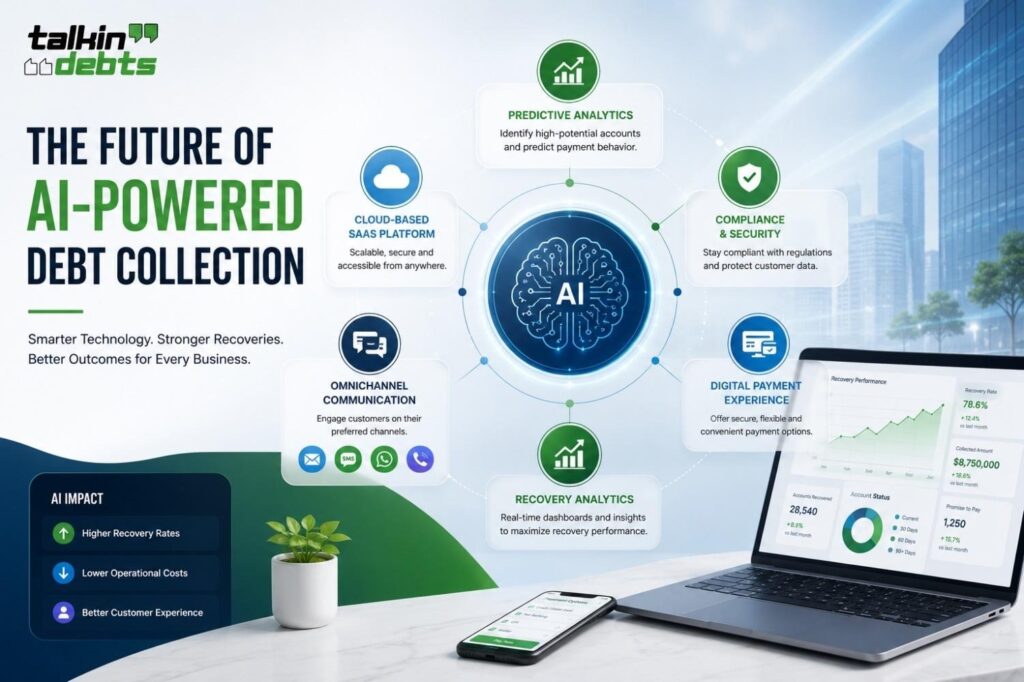
A platform that combines AI, automation, analytics, compliance, and customer engagement can deliver measurable improvements across the entire collections lifecycle.
Final Thoughts
Artificial intelligence is redefining how organizations approach debt recovery. Modern AI debt collection software enables lenders and recovery agencies to replace manual processes with intelligent automation, predictive analytics, and personalized customer engagement.
From automated workflows and AI-powered communication to real-time dashboards and predictive recovery models, today’s debt collection SaaS solutions help businesses recover more while operating more efficiently.
As lending portfolios continue to grow and compliance expectations become more demanding, investing in advanced collections automation platforms and AI recovery tools will become essential for organizations seeking sustainable recovery performance.
The future of debt collection is intelligent, automated, data-driven, and customer-centric. Organizations that adopt AI-powered platforms today will be better positioned to improve recoveries, reduce costs, enhance borrower experiences, and stay competitive in the evolving financial services landscape.