Global Credit Risk Rises as Middle East Conflict Impacts Trade and Lending
April 2026
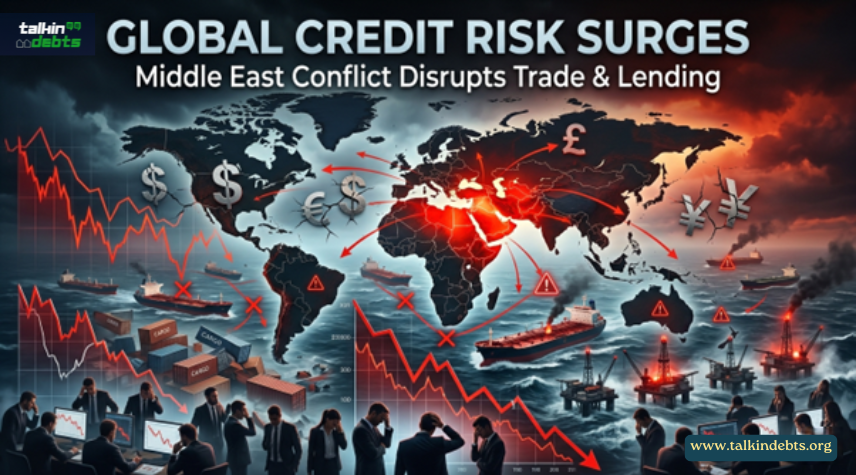
Global credit risk is climbing sharply as escalating tensions in the Middle East begin to ripple through international trade corridors, supply chains, and financial systems. Lenders, investors, and policymakers are increasingly concerned that prolonged geopolitical instability could trigger a new wave of corporate debt stress, tighten global liquidity, and push vulnerable economies closer to financial distress.
Global Credit Risk Rises Amid Middle East Conflict
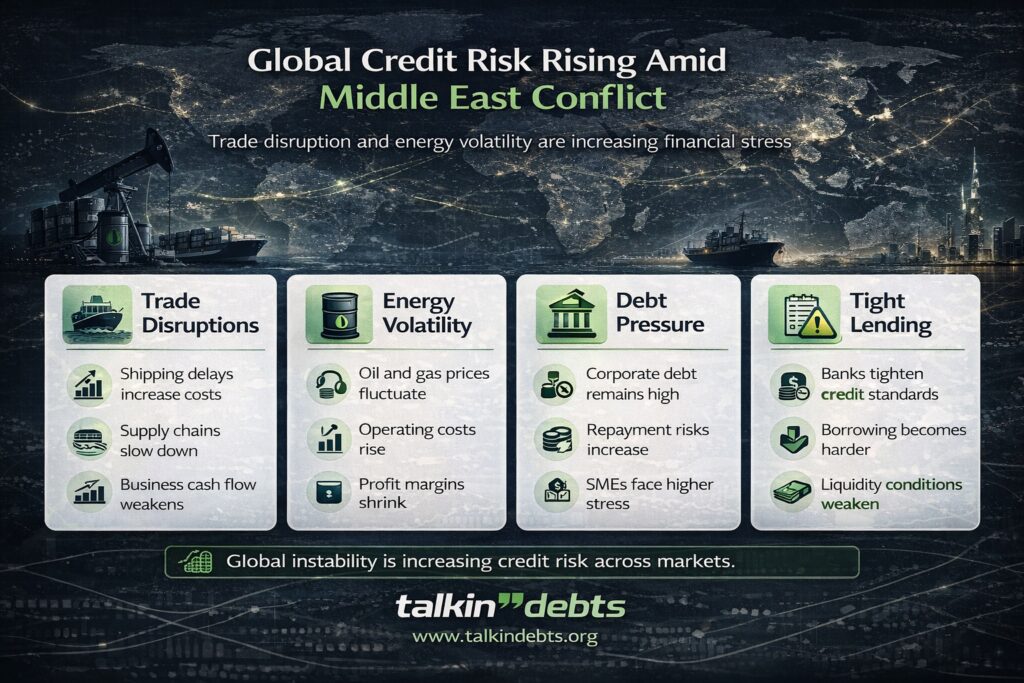
The ongoing conflict has already begun to disrupt key shipping routes, increase energy price volatility, and delay cross-border transactions. These developments are placing immense pressure on companies with high leverage, particularly those dependent on global trade and commodity imports. As uncertainty deepens, credit markets are reacting swiftly—raising borrowing costs, tightening lending standards, and reassessing risk exposure across sectors.
Trade Disruptions Fuel Credit Risk Concerns
One of the most immediate impacts of the Middle East conflict has been the disruption of vital trade routes. Key maritime passages, including those linking Europe, Asia, and Africa, are facing delays due to heightened security concerns and the rerouting of cargo vessels. This has significantly increased shipping costs and extended delivery timelines.
For businesses operating on tight margins, these disruptions are more than logistical inconveniences—they directly affect cash flow, inventory cycles, and working capital. Companies reliant on just-in-time supply chains are particularly vulnerable, as delays can halt production and reduce revenue generation.
As trade slows, credit risk rises. Financial institutions are closely monitoring borrowers exposed to international trade, especially in sectors such as manufacturing, automotive, and electronics. Any prolonged disruption could lead to missed debt payments, restructuring requests, or even defaults.
Energy Market Volatility Adds Pressure
Energy prices have surged in response to the conflict, with oil and gas markets experiencing sharp fluctuations. The Middle East remains a critical hub for global energy supply, and any instability in the region quickly translates into price volatility worldwide.
Higher energy costs are increasing operational expenses for businesses across industries. Transportation, manufacturing, and logistics companies are facing rising fuel costs, which are often difficult to pass on to consumers in competitive markets. This squeezes profit margins and weakens balance sheets.
For heavily indebted companies, the impact is even more severe. Rising costs combined with stagnant or declining revenues can erode their ability to service debt. Credit rating agencies have already begun revising outlooks for firms in energy-intensive sectors, signaling growing concerns about repayment capacity.
Corporate Debt Stress Intensifies
Global corporate debt levels have been elevated for several years, fueled by low interest rates and easy access to credit. However, the current geopolitical environment is exposing the vulnerabilities of highly leveraged companies.
Businesses that expanded aggressively during periods of cheap financing are now facing a very different landscape. Interest rates remain relatively high in many regions, and lenders are becoming more cautious. The added strain of disrupted trade and rising costs is pushing some firms toward financial distress.
Small and medium-sized enterprises (SMEs) are particularly at risk. Unlike large corporations, SMEs often lack the financial buffers needed to withstand prolonged economic shocks. Many are already grappling with post-pandemic recovery challenges, and the current crisis could tip them into insolvency.
Large corporations are not immune either. Multinational companies with complex global operations are facing increased uncertainty, currency fluctuations, and regulatory challenges. These factors are contributing to a broader tightening of credit conditions.
Financial Institutions Tighten Lending Standards
Banks and financial institutions are responding to rising credit risk by tightening lending standards. Loan approvals are becoming more stringent, collateral requirements are increasing, and interest rates on new loans are rising.
This shift is particularly evident in emerging markets, where economic vulnerabilities are more pronounced. Countries heavily reliant on imports or external financing are facing increased borrowing costs, making it harder for businesses and governments to access credit.
Credit availability is a key driver of economic growth. As lending slows, investment declines, and economic activity weakens. This creates a feedback loop where reduced growth further increases credit risk, leading to even tighter financial conditions.
Global banks are also reassessing their exposure to high-risk regions and sectors. Risk management strategies are being updated to account for geopolitical uncertainties, and some institutions are reducing their lending in affected areas.
Geopolitical Risk Reshapes Credit Markets
The current crisis underscores the growing importance of geopolitical risk in shaping credit markets. Investors are increasingly factoring in political instability, conflict risk, and trade disruptions when evaluating creditworthiness.
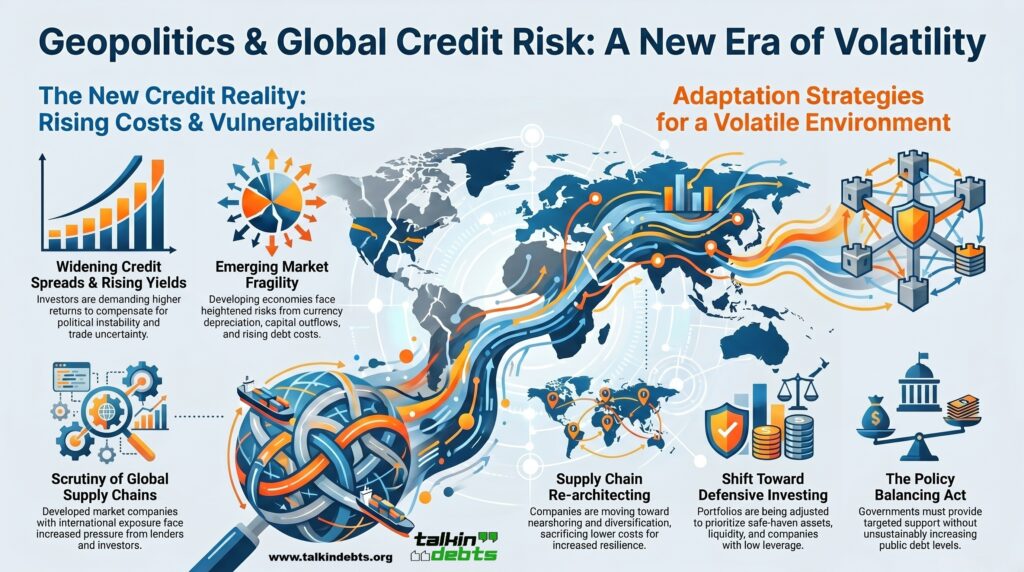
This shift is evident in bond markets, where yields on corporate and sovereign debt have risen in response to heightened risk perceptions. Credit spreads are widening, indicating that investors are demanding higher returns to compensate for increased uncertainty.
Emerging markets are particularly vulnerable to these dynamics. Many developing economies depend on foreign investment and export revenues, both of which can be affected by geopolitical tensions. Currency depreciation, capital outflows, and rising debt servicing costs are becoming significant concerns.
Developed markets are also feeling the impact, albeit to a lesser extent. Companies with global supply chains and international exposure are facing increased scrutiny from investors and lenders.
Supply Chain Realignments and Long-Term Impacts
In response to ongoing disruptions, many companies are rethinking their supply chain strategies. Diversification, nearshoring, and increased inventory buffers are becoming common approaches to mitigate risk.
While these strategies can enhance resilience, they also come with higher costs. Building redundant supply chains and maintaining larger inventories require significant investment. For companies already under financial strain, these adjustments can further pressure balance sheets.
The long-term impact of these changes could reshape global trade patterns and credit dynamics. Regions perceived as more stable may attract increased investment, while high-risk areas could face reduced economic activity and limited access to credit.
Policy Responses and Economic Outlook
Governments and central banks are closely monitoring the situation and considering policy responses to mitigate the impact of rising credit risk. Measures may include targeted financial support for affected industries, adjustments to monetary policy, and efforts to stabilize financial markets.
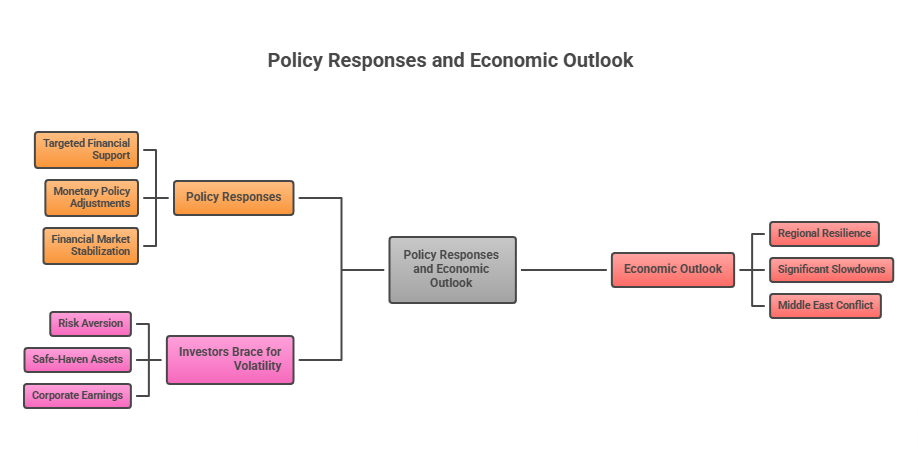
However, policymakers face a delicate balancing act. Providing too much support could increase public debt levels, while insufficient intervention could lead to widespread financial distress.
The global economic outlook remains uncertain. While some regions may demonstrate resilience, others could experience significant slowdowns. The trajectory of the Middle East conflict will play a crucial role in determining the severity and duration of the current crisis.
Investors Brace for Continued Volatility
Investors are preparing for continued volatility in credit markets. Risk aversion is increasing, and portfolio strategies are being adjusted to prioritize stability and liquidity.
Safe-haven assets are attracting renewed interest, while high-yield bonds and riskier investments are facing increased scrutiny. Diversification and risk management are becoming central themes in investment strategies.
Market participants are also paying close attention to corporate earnings, debt levels, and cash flow indicators. Companies with strong fundamentals and low leverage are likely to be better positioned to navigate the current environment.
A Turning Point for Global Credit Risk
The rise in global credit risk highlights the interconnected nature of modern financial systems. Geopolitical events in one region can quickly impact markets, businesses, and economies worldwide.
The current crisis may serve as a turning point, prompting a reassessment of risk management practices, lending strategies, and investment approaches. Financial institutions, corporations, and governments will need to adapt to a more uncertain and complex environment.
As the situation continues to evolve, the focus will remain on stability, resilience, and risk mitigation. The ability to navigate these challenges will determine the trajectory of global credit markets in the months and years ahead.
The Middle East conflict has once again demonstrated that geopolitical risk is not a distant concern—it is a central factor shaping the global economy. And as credit risk rises, the stakes for businesses, lenders, and policymakers have never been higher.