Global Credit Risk Surges as Middle East Conflict Disrupts Trade, Lending, and Corporate Stability
April 2026
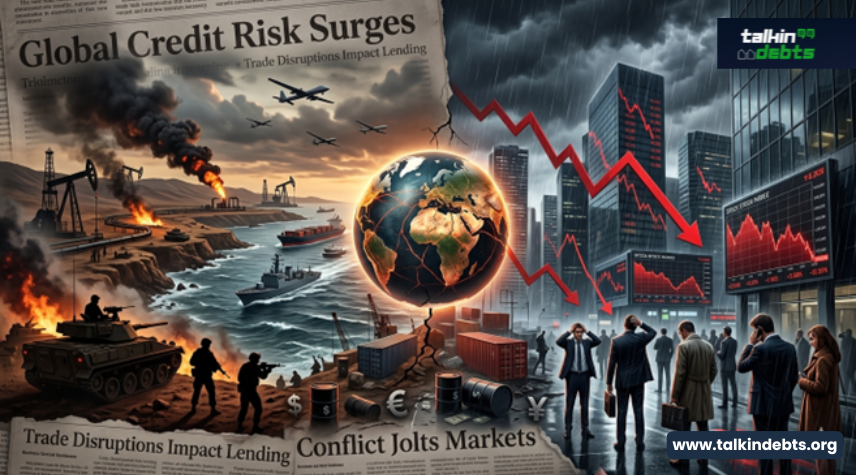
A sharp escalation in geopolitical tensions across the Middle East is sending shockwaves through global financial markets, triggering a significant rise in credit risk across multiple sectors. As trade routes face disruptions, energy prices fluctuate, and investor confidence weakens, lenders and financial institutions are increasingly bracing for a wave of corporate debt stress that could ripple across economies worldwide.
The evolving crisis is no longer confined to regional instability—it is now a global financial concern, with mounting evidence that geopolitical conflict is directly impacting credit markets, borrowing costs, and default probabilities.
Trade Disruptions Begin to Strain Global Supply Chains
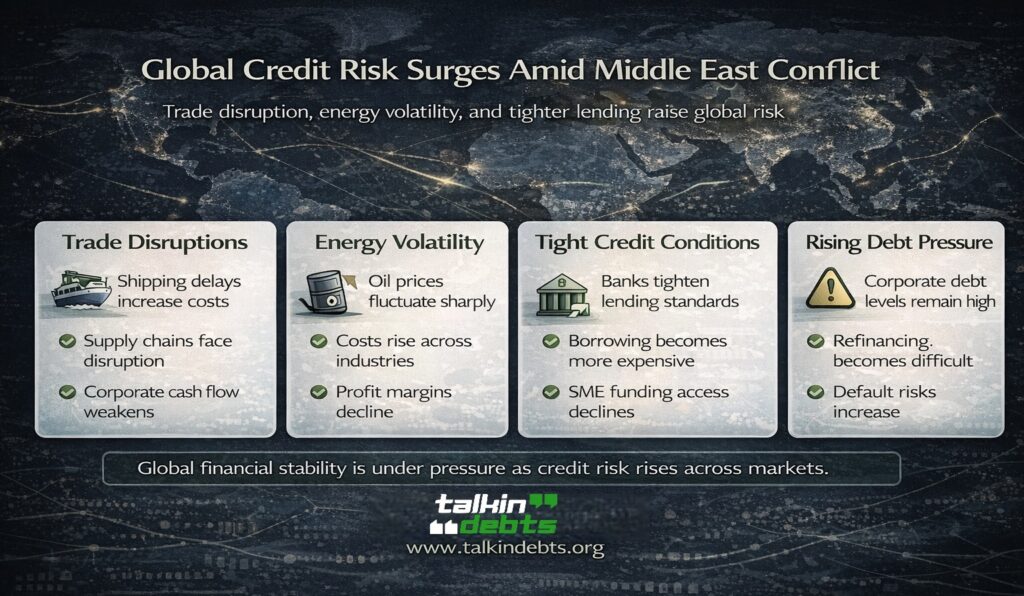
One of the most immediate consequences of the Middle East conflict has been the disruption of critical trade routes, particularly those linked to oil shipments and key maritime corridors. Shipping delays, rising insurance costs, and rerouted logistics have significantly increased operational expenses for global corporations.
Industries heavily dependent on just-in-time supply chains—such as manufacturing, automotive, and electronics—are already reporting cost pressures and delayed production cycles. These disruptions are weakening cash flows, particularly for companies operating with high leverage.
As a result, credit analysts are flagging increased risks of missed debt repayments, especially among firms that were already operating on thin margins before the crisis began.
Energy Price Volatility Adds to Corporate Debt Stress
Energy markets have responded swiftly to the geopolitical tensions, with oil and gas prices experiencing heightened volatility. For energy-importing nations, this has translated into higher input costs, inflationary pressure, and reduced consumer spending power.
Corporations across sectors—from aviation to logistics and heavy industry—are now facing rising expenses that are difficult to pass on to consumers. This is squeezing profit margins and weakening debt servicing capacity.
At the same time, energy producers are benefiting from price spikes, but even within this segment, uncertainty around supply stability and regulatory responses is creating uneven credit outlooks.
The broader impact is clear: fluctuating energy prices are amplifying financial instability, making it harder for companies to maintain predictable earnings and meet debt obligations.
Lending Institutions Tighten Credit Conditions
Banks and financial institutions are responding to the heightened uncertainty by tightening lending standards. Risk premiums are rising, credit approvals are becoming more stringent, and access to capital is narrowing—particularly for small and medium-sized enterprises (SMEs).
This tightening cycle is creating a feedback loop. As companies struggle to secure funding, their liquidity positions weaken further, increasing the likelihood of defaults. In turn, lenders become even more cautious, reinforcing the credit squeeze.
Global credit markets are also witnessing a widening of spreads, particularly in high-yield bonds. Investors are demanding higher returns to compensate for perceived risks, making borrowing more expensive for already vulnerable firms.
Corporate Debt Levels Under Pressure
The timing of this geopolitical shock is particularly concerning, as global corporate debt levels were already elevated. Years of low interest rates had encouraged borrowing, leaving many companies with significant leverage.
Now, with interest rates remaining relatively high in major economies and refinancing becoming more expensive, the pressure on corporate balance sheets is intensifying.
Companies in sectors such as real estate, construction, and retail—already grappling with post-pandemic adjustments—are among the most exposed. Rising debt servicing costs, combined with declining revenues in some cases, are pushing default risks higher.
Credit rating agencies have begun revising outlooks downward for several industries, signaling growing concern over the sustainability of current debt levels in a volatile geopolitical environment.
Emerging Markets Face Heightened Vulnerability
While developed economies are not immune, emerging markets are particularly vulnerable to the rising global credit risk. Many of these economies rely heavily on imports of energy and essential commodities, making them more susceptible to price shocks.
Currency depreciation, capital outflows, and rising borrowing costs are compounding the challenges. Sovereign debt risks are also coming into focus, as governments may need to increase spending to stabilize their economies while facing reduced fiscal space.
For businesses operating in these markets, the combination of macroeconomic instability and restricted access to financing is creating a perfect storm. Defaults among smaller firms are already beginning to rise in certain regions.
Geopolitical Risk Becomes a Central Credit Factor
Traditionally, credit risk assessments have focused on financial metrics such as cash flow, leverage ratios, and market conditions. However, the current situation is highlighting the growing importance of geopolitical risk as a core factor in credit analysis.
Investors and lenders are now incorporating scenario-based assessments that account for potential escalations, prolonged conflicts, and secondary impacts such as sanctions or trade restrictions.
This shift is redefining how creditworthiness is evaluated. Companies with geographically diversified operations, resilient supply chains, and strong risk management frameworks are being viewed more favorably compared to those with concentrated exposure to high-risk regions.
Insurance and Risk Hedging Costs Surge
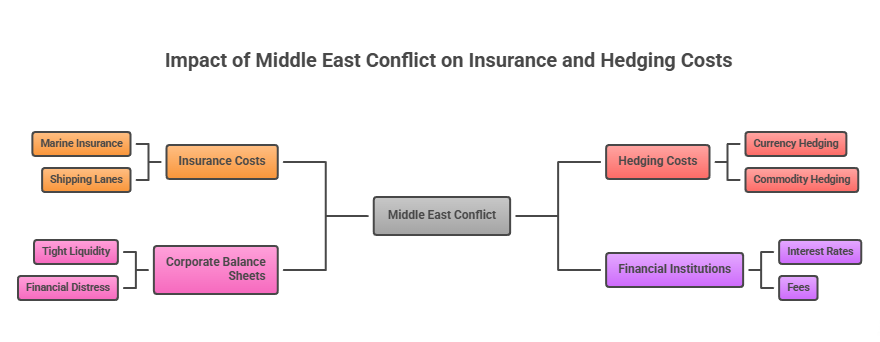
Another significant impact of the Middle East conflict is the sharp increase in insurance and hedging costs. Marine insurance premiums have risen due to heightened risks in key shipping lanes, while currency and commodity hedging costs have also climbed.
These additional financial burdens are further straining corporate balance sheets. For companies already dealing with tight liquidity, the increased cost of risk mitigation can push them closer to financial distress.
Financial institutions are also facing higher costs in managing their own exposure, which is being passed on to borrowers through higher interest rates and fees.
Investor Sentiment Turns Cautious
Global investors are becoming increasingly risk-averse in response to the unfolding crisis. Equity markets have shown signs of volatility, while capital is shifting toward safer assets such as government bonds and gold.
This shift in sentiment is reducing the availability of investment capital for businesses, particularly those in higher-risk categories. Startups and highly leveraged firms are finding it especially difficult to attract funding.
The decline in investor confidence is also affecting corporate valuations, which can have a knock-on effect on borrowing capacity and financial stability.
Sector-Specific Credit Risks Intensify
Certain sectors are experiencing more pronounced credit risks due to their direct or indirect exposure to the Middle East conflict.
- Aviation and Logistics: Rising fuel costs and disrupted routes are impacting profitability.
- Manufacturing: Supply chain disruptions are delaying production and increasing costs.
- Retail: Reduced consumer spending is affecting revenues.
- Construction and Real Estate: High debt levels and rising interest rates are creating repayment challenges.
On the other hand, sectors such as defense and energy are witnessing increased demand, although they too face uncertainties related to policy changes and long-term sustainability.
Central Banks and Policymakers Monitor Closely
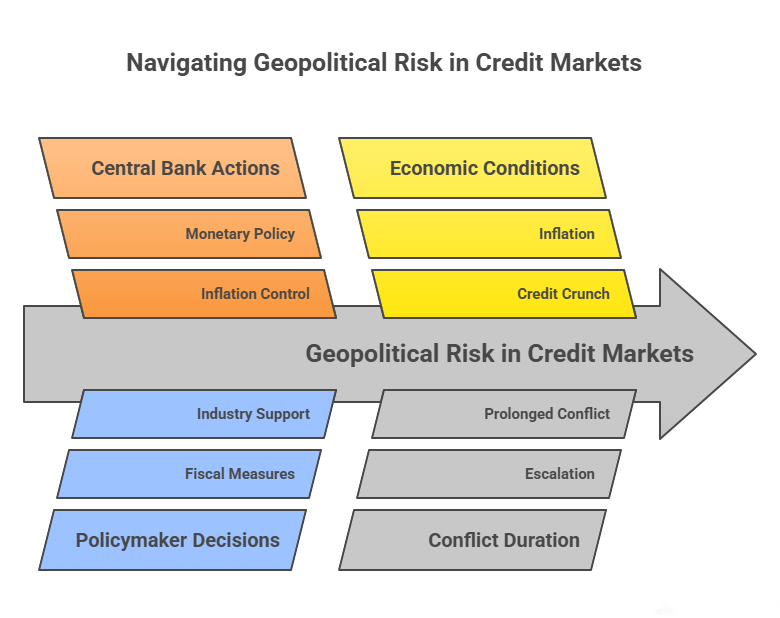
Central banks around the world are closely monitoring the situation, balancing the need to control inflation with the risk of triggering a credit crunch.
Some policymakers may consider easing monetary conditions if the situation worsens, but this comes with its own set of challenges, including currency stability and inflation control.
Governments are also exploring fiscal measures to support affected industries, but the effectiveness of such interventions will depend on the duration and severity of the conflict.
Rising Default Risks Signal Potential Credit Cycle Shift
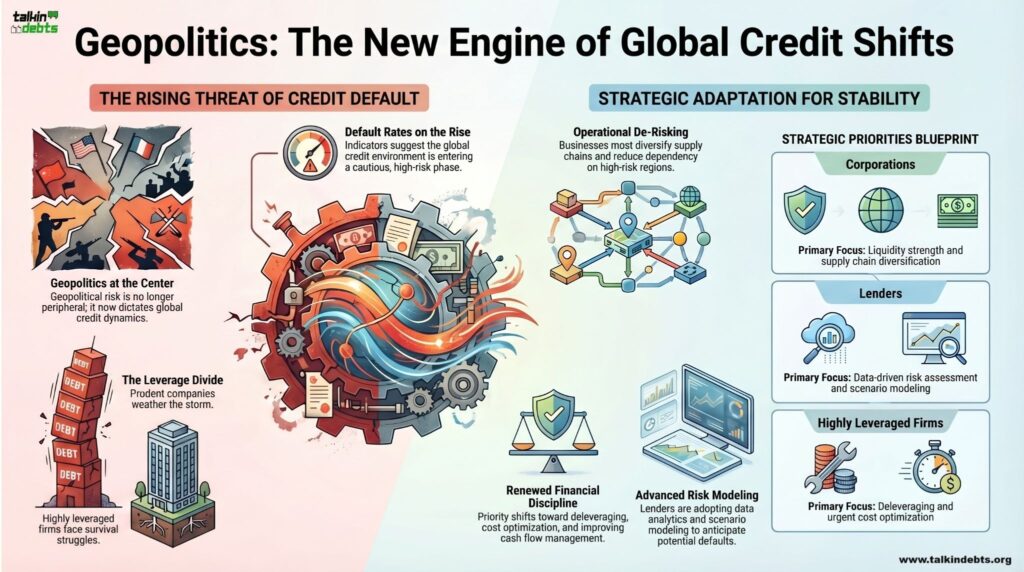
All indicators suggest that the global credit environment is entering a more cautious phase. Default rates, which had remained relatively stable in recent years, are now expected to rise.
Credit analysts warn that if the conflict persists or escalates, the world could see the beginning of a broader credit cycle downturn. This would have far-reaching implications for economic growth, employment, and financial stability.
Companies with strong balance sheets and prudent risk management strategies are likely to weather the storm better, while highly leveraged and vulnerable firms may struggle to survive.
Strategic Adaptation Becomes Critical for Businesses
In this evolving landscape, businesses are being forced to rethink their strategies. Diversifying supply chains, reducing dependency on high-risk regions, and strengthening liquidity positions are becoming essential priorities.
Financial discipline is also gaining renewed importance. Companies are focusing on deleveraging, optimizing costs, and improving cash flow management to navigate the uncertain environment.
Lenders, too, are enhancing their risk assessment frameworks, leveraging data analytics and scenario modeling to better anticipate potential defaults.
Global Financial Stability Faces a New Test
The Middle East conflict has underscored the interconnected nature of the global economy. What begins as a regional geopolitical issue can quickly escalate into a worldwide financial challenge.
As credit risk continues to rise, the resilience of financial systems, corporate balance sheets, and policy responses will be tested. The coming months will be critical in determining whether the current situation stabilizes or evolves into a more severe credit crisis.
For now, one thing is clear: geopolitical risk is no longer a peripheral concern—it is at the center of global credit dynamics, reshaping the way businesses, lenders, and investors operate in an increasingly uncertain world.