Global Debt Clocks Explained: How Institutions Use Real-Time Debt Data for Risk Planning

The numbers never stop moving.
Every second, government borrowing rises, interest payments accumulate, and public liabilities expand across countries. On a global scale, trillions of dollars are added to sovereign and corporate debt totals each year. For policymakers, banks, investors, and financial institutions, waiting for quarterly reports is no longer enough. They need live visibility.
This is where the world debt clock and global debt clock come into play.
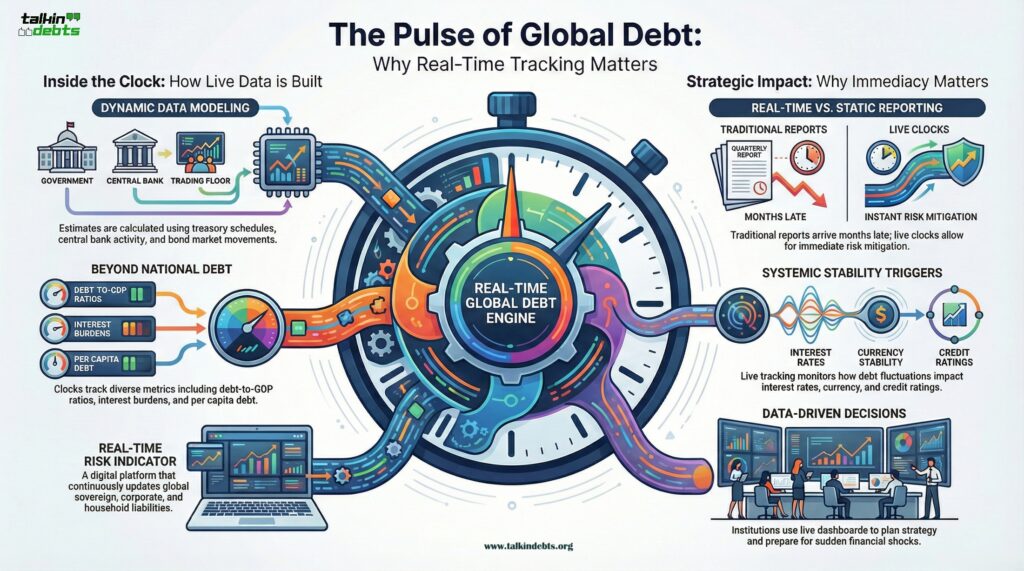
These real-time tracking tools transform complex macroeconomic data into constantly updating dashboards that show how much the world owes at any given moment. What once required spreadsheets and delayed reports is now displayed second by second, helping institutions monitor risk, plan strategy, and prepare for financial shocks.
Behind those flashing numbers lies a powerful risk management system that shapes decisions at the highest levels of global finance.
Understanding how debt clocks work — and how institutions rely on them — reveals why real-time debt data has become essential in modern economic planning.
A world debt clock or global debt clock is a digital platform that continuously updates figures related to:
- National debt levels
- Global sovereign liabilities
- Household and corporate debt
- Debt-to-GDP ratios
- Interest burdens
- Per capita debt
What Is a World Debt Clock or Global Debt Clock?
Instead of static yearly reports, these clocks use live data models that estimate borrowing growth based on:
- Government fiscal deficits
- Treasury issuance schedules
- Central bank activity
- Bond market movements
- Historical growth patterns
As a result, the numbers tick upward every second, reflecting how debt accumulates in real time.
For financial professionals, this is not just a visual tool. It is a live risk indicator.
Why Real-Time Debt Tracking Matters Today
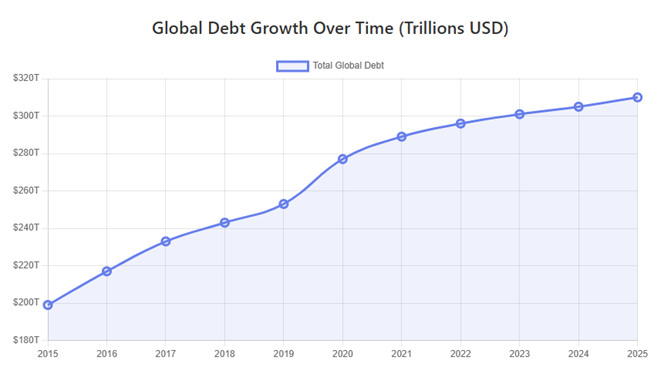
Global debt has reached historically high levels. Governments rely heavily on borrowing to fund stimulus programs, infrastructure, healthcare, defense, and social support. At the same time, corporations use debt for expansion, and households depend on credit for everyday consumption.
The result is a tightly interconnected financial system.
Small changes in debt levels can quickly affect:
- Interest rates
- Currency stability
- Credit ratings
- Market liquidity
- Investor confidence
Traditional reports often arrive months after the fact. By the time institutions react, risks may have already escalated.
The global debt clock provides immediacy, allowing decision-makers to monitor trends as they develop rather than after damage has occurred.
This shift from delayed reporting to real-time visibility has changed how risk planning works across the financial world.
How Institutions Use the Global Debt Clock for Risk Planning
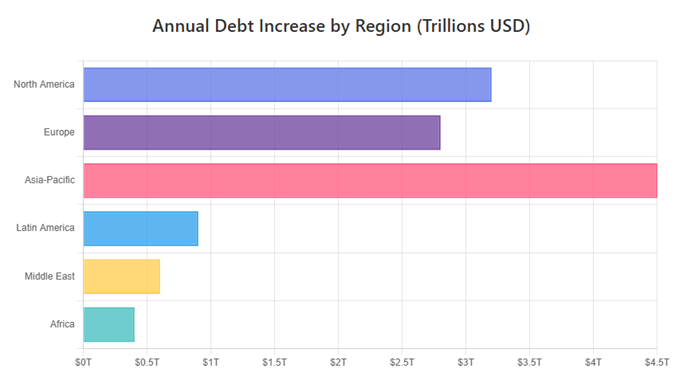
Financial institutions do not simply watch the numbers. They use them as operational signals.
Government Policy Planning
Finance ministries and central banks analyze real-time debt levels to determine:
- How much more borrowing is sustainable
- When to issue bonds
- Whether interest payments are becoming unmanageable
- If austerity or tax adjustments are required
If the debt-to-GDP ratio climbs too quickly, policymakers may tighten spending. If borrowing costs spike, they may restructure maturities or slow issuance.
Debt clocks help them respond faster rather than reacting months later.
Banking Sector Risk Management
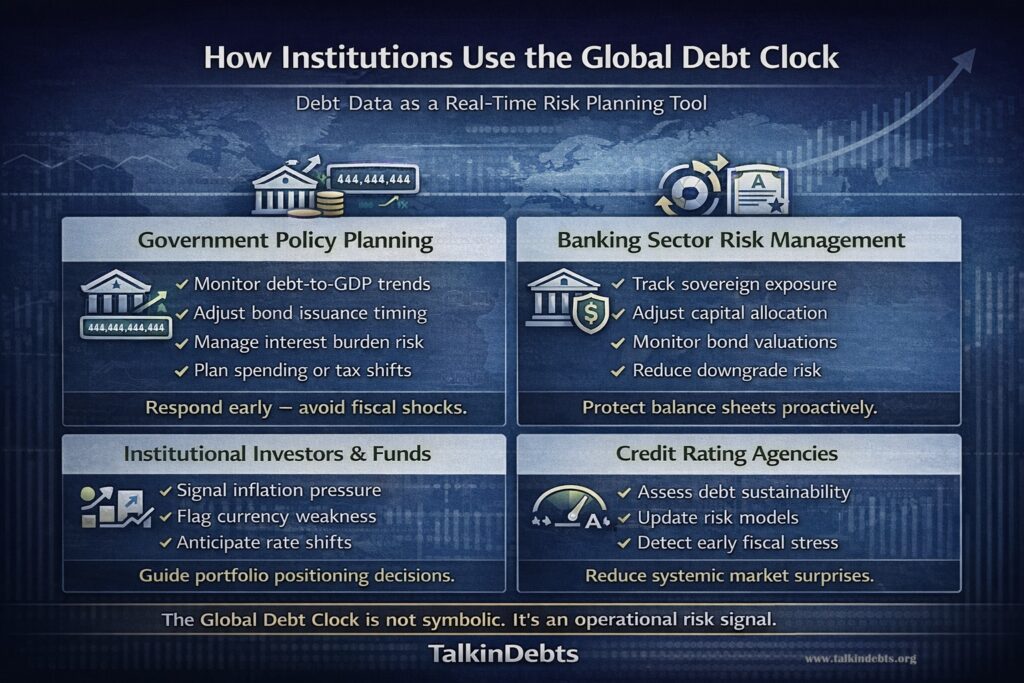
Banks closely track sovereign debt because government stability directly affects:
- Lending conditions
- Liquidity
- Bond valuations
- Capital requirements
When the world debt clock shows rapid increases in national debt, risk officers may reduce exposure to certain bonds or adjust portfolio allocations.
This protects banks from:
- Default risks
- Credit downgrades
- Market volatility
Real-time monitoring allows quicker defensive actions.
Institutional Investors and Funds
Hedge funds, pension funds, and asset managers use global debt data to guide investment strategies.
For example:
- Rising debt may signal future inflation
- Heavy borrowing can weaken currencies
- Large deficits may increase interest rates
These signals influence decisions such as:
- Moving into safer assets
- Hedging currency risks
- Rotating from bonds to equities
- Increasing gold or commodity exposure
Debt clocks provide early warning indicators that help protect capital.
Credit Rating Agencies
Agencies that assign sovereign ratings continuously assess debt sustainability. A rapidly increasing debt burden or higher interest obligations can trigger negative outlooks.
Real-time data helps them:
- Identify stress before crises emerge
- Update risk models quickly
- Provide more accurate ratings
Faster adjustments reduce systemic surprises for markets.
The Mechanics Behind a Global Debt Clock
Although it appears simple, the technology behind a global debt clock is complex.
These platforms typically aggregate data from:
- Treasury departments
- Central banks
- International Monetary Fund
- World Bank
- Bond market feeds
- Economic research databases
Algorithms estimate how much debt accumulates per second based on:
- Current deficit rates
- Scheduled borrowing
- Interest accrual
For example, if a country adds $1 trillion annually, the system converts that into a per-second increase and displays it live.
This modeling creates an almost real-time approximation that updates constantly.
While not perfect to the last dollar, the trend accuracy is highly valuable for strategic planning.
Key Metrics Institutions Watch Closely
Debt clocks present many numbers, but certain indicators matter most for risk analysis.
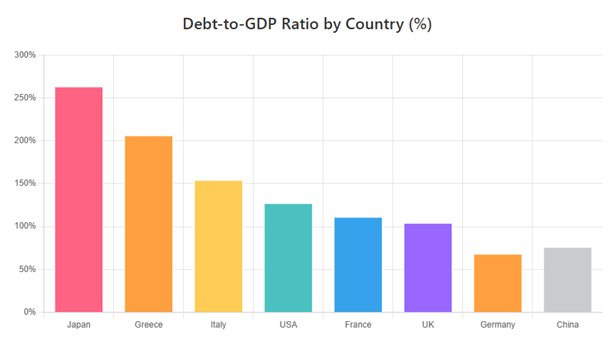
Debt-to-GDP Ratio
Shows whether an economy can realistically support its debt load. High ratios signal sustainability concerns.
Interest Payments as Percentage of Revenue
Indicates how much government income goes toward servicing debt rather than public services.
Per Capita Debt
Provides insight into the burden placed on taxpayers and consumers.
Total Global Debt
Highlights systemic risk across countries and industries.
Borrowing Speed
How fast debt increases each minute or hour reveals fiscal pressure trends.
These metrics help institutions move beyond raw totals to actionable intelligence.
Early Warning Signals from Debt Clocks
Debt data often predicts financial stress before it becomes visible elsewhere.
For example:
- Sudden acceleration in borrowing may indicate emergency spending
- Rising interest obligations can precede fiscal tightening
- High debt growth combined with weak GDP may signal recession risks
- Currency weakness alongside debt spikes can indicate capital flight
Institutions use these signals to prepare contingency plans.
By the time headlines report a crisis, sophisticated players have already adjusted positions using earlier debt indicators.
Real-World Impact on Financial Strategy
The practical implications of monitoring a world debt clock are significant.
A bank might:
- Reduce exposure to government bonds
- Increase reserves
- Tighten lending standards
A government might:
- Delay new spending projects
- Raise taxes
- Extend debt maturities
An investor might:
- Shift into defensive assets
- Increase diversification
- Hedge against inflation
These decisions affect trillions of dollars.
Real-time debt data is not just informational — it directly influences financial flows around the world.
The Growing Importance of Global Debt Transparency
Transparency has become a cornerstone of modern financial stability.
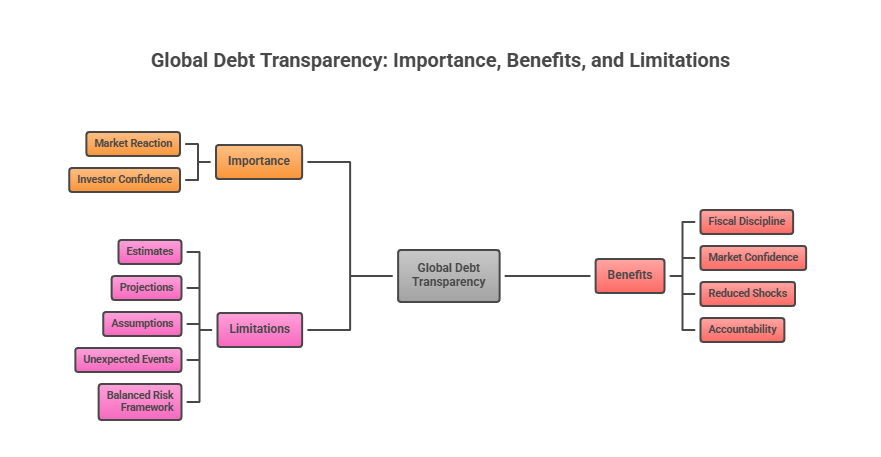
Markets react strongly to uncertainty. When debt levels are unclear or hidden, investors assume higher risk and demand higher returns. This raises borrowing costs and creates instability.
Debt clocks improve transparency by making liabilities visible to everyone.
This visibility:
- Encourages fiscal discipline
- Builds market confidence
- Reduces sudden shocks
- Promotes accountability
Institutions benefit from clearer expectations and fewer surprises.
Limitations and Cautions
While powerful, debt clocks are not perfect forecasting tools.
They rely on:
- Estimates
- Projections
- Assumptions
Unexpected events such as wars, pandemics, or emergency bailouts can distort calculations.
Therefore, institutions treat debt clocks as guides, not absolute truths.
They combine these tools with:
- Economic models
- Scenario analysis
- Stress testing
- Expert judgment
Used together, these approaches create a balanced risk framework.
Why Global Debt Clocks Are Becoming Essential
As economies grow more interconnected, local debt problems quickly become global issues.
A crisis in one country can affect:
- International banks
- Currency markets
- Trade flows
- Investment funds
Real-time awareness is no longer optional.
Institutions that monitor the global debt clock gain:
- Faster reaction times
- Better risk control
- Improved capital allocation
- Stronger resilience
Those who rely solely on delayed reports risk falling behind.
In modern finance, speed equals safety.
The Future of Real-Time Debt Intelligence
Debt monitoring tools are evolving rapidly.
Next-generation platforms are integrating:
- Artificial intelligence
- Predictive analytics
- Machine learning models
- Automated alerts
- Scenario simulations
Instead of just displaying numbers, future debt clocks will forecast:
- Default probabilities
- Interest rate spikes
- Fiscal stress events
This will turn debt clocks from passive dashboards into proactive risk engines.
Institutions will not only see debt growth — they will anticipate its consequences.
Final Thoughts
The world debt clock and global debt clock have transformed how institutions understand financial risk. What once required slow reports and complex analysis is now visible every second.
For governments, banks, and investors, these tools provide critical insights into borrowing trends, sustainability, and potential crises. Real-time debt data enables faster decisions, smarter planning, and stronger protection against economic shocks.
In a world where trillions of dollars move daily, and uncertainty can emerge overnight, having immediate visibility into debt is no longer a luxury.
It is a necessity.
And the numbers will keep ticking.