Debt Recovery SaaS Adoption Accelerates as Agencies Cut Manual Operations

The global debt recovery industry is entering a new phase of digital transformation as agencies rapidly phase out manual processes and adopt cloud-based platforms. What was once a sector driven by spreadsheets, paperwork, and repetitive phone calls is now evolving into a technology-led environment powered by SaaS debt collections systems. Across markets, collection firms of every size are turning to Software-as-a-Service tools to automate workflows, cut costs, improve compliance, and increase recovery rates.
Industry analysts say this shift is no longer experimental. It is structural. Agencies that delay modernization risk falling behind competitors that operate faster, leaner, and more efficiently. As economic uncertainty grows and overdue accounts increase, the need for smarter recovery strategies has pushed SaaS debt collections from a “nice-to-have” upgrade to a business necessity.
For many agencies, the change comes at a critical time. Rising volumes, tighter regulations, and higher staffing costs are making traditional collection methods unsustainable. Technology is quickly becoming the only practical path forward.
Manual Recovery Models Under Pressure
For decades, debt collection operations depended heavily on manual work. Agents tracked cases using spreadsheets, recorded calls by hand, and moved accounts through shared folders or email threads. While workable in the past, these systems struggle under today’s scale.
Manual processes create delays at nearly every step. Accounts sit untouched while teams sort through data. Follow-ups are missed. Notes are inconsistent. Duplicate records become common. These inefficiencies directly impact recovery outcomes and client satisfaction.
The human cost is equally high. Agents spend valuable time on administrative tasks instead of meaningful conversations with debtors. Managers have limited visibility into performance because reporting often takes days or weeks to compile.
As portfolios grow larger and more complex, these outdated methods simply cannot keep up. Agencies are realizing that scaling manual operations means hiring more staff, increasing overhead, and reducing margins — an approach that is no longer viable.
SaaS Debt Collections Moves Into the Mainstream
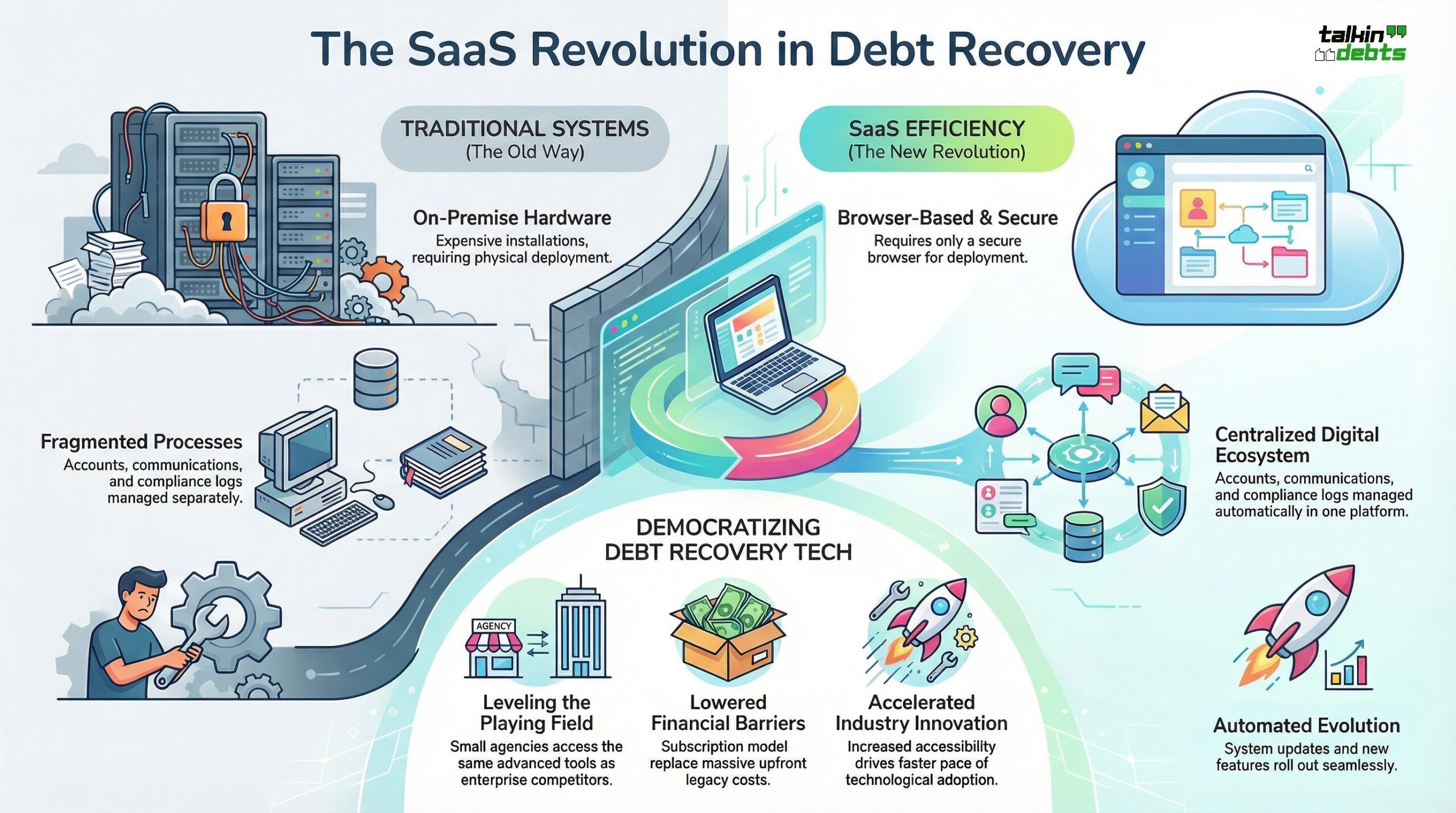
Cloud-based debt recovery platforms are emerging as the solution to these challenges. SaaS debt collections software centralizes operations into a single digital ecosystem where accounts, communications, payments, and compliance logs are managed automatically.
Unlike traditional on-premise systems that require expensive installations and maintenance, SaaS platforms operate through secure browsers. Agencies can deploy them quickly without heavy IT investments. Updates happen automatically, and new features roll out seamlessly.
This accessibility has accelerated adoption across the industry. Small and mid-sized agencies that once lacked the budget for enterprise technology can now subscribe to the same advanced tools used by larger competitors.
The result is a more level playing field — and a faster pace of innovation.
Automation Replaces Repetition
One of the most immediate benefits of SaaS debt collections is automation. Repetitive tasks that once consumed hours are now handled instantly by software.
Follow-up reminders, payment notifications, SMS campaigns, and email sequences can be scheduled automatically. Accounts are prioritized based on risk scoring and recovery probability. Workflows assign cases to agents without manual intervention.
Instead of chasing paperwork, agents focus on negotiation and customer engagement. Productivity rises because time is spent where it matters most.
Managers report that automation alone can reduce manual workloads by 30 to 50 percent. That improvement translates directly into faster recovery cycles and lower operating costs.
Centralized Data Improves Decision-Making
Data fragmentation has long been a problem in debt recovery. Information scattered across spreadsheets and systems makes it difficult to get a clear picture of performance.
SaaS debt collections platforms solve this by consolidating everything into one dashboard. Every interaction, note, and payment is recorded in real time. Teams have instant access to complete account histories.
This visibility allows supervisors to make smarter decisions. They can identify which strategies work best, which accounts require escalation, and which agents need support. Instead of relying on guesswork, agencies use live metrics to guide actions.
Real-time reporting also helps build trust with clients. Creditors expect transparency, and digital dashboards make it easy to share measurable results.
Compliance Becomes Built-In
Regulatory compliance has become one of the biggest concerns for collection agencies worldwide. Laws governing consumer contact, data privacy, and documentation are stricter than ever. Even small mistakes can lead to penalties or legal disputes.
Manual tracking makes compliance risky. Missing records or inconsistent logs expose agencies to unnecessary danger.
SaaS debt collections systems address this by embedding compliance directly into workflows. Communication attempts are automatically logged. Contact limits are enforced through rule-based controls. Audit trails are generated instantly.
Some platforms even update automatically when regulations change, reducing the burden on internal teams. For many agencies, this built-in protection is reason enough to switch.
Digital Payments Speed Up Recoveries
Consumer behavior has also changed. Debtors increasingly prefer digital channels over phone calls or mailed notices. They expect fast, convenient payment options.
Modern SaaS debt collections platforms integrate secure online payment portals, allowing customers to settle balances through mobile devices or self-service dashboards. Automated reminders include direct payment links, making the process frictionless.
The easier it is to pay, the more likely payments are completed. Agencies adopting digital options report noticeable improvements in collection rates and faster cash flow.
This shift benefits both sides. Debtors gain convenience and flexibility, while agencies reduce handling time and administrative work.
Remote Work Strengthens the Case for Cloud
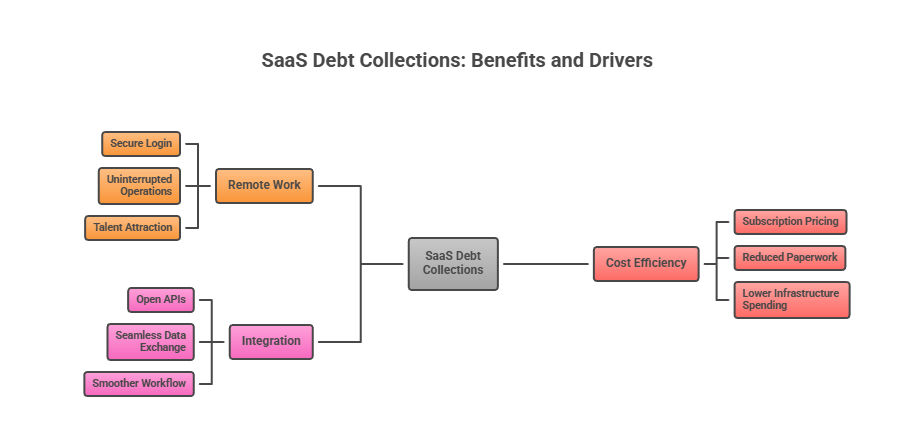
The rise of remote and hybrid work has further accelerated the move to SaaS debt collections. Cloud-based systems allow agents to log in securely from any location, ensuring uninterrupted operations.
Legacy on-premise software often requires complex setups or physical office access. SaaS platforms remove those barriers entirely. Teams collaborate online while managers maintain full oversight.
This flexibility not only supports business continuity but also helps agencies attract talent. Employees value the option to work remotely, and cloud infrastructure makes it possible.
Cost Efficiency Drives Adoption
Beyond performance improvements, cost savings remain a primary driver of SaaS adoption. Subscription pricing eliminates large upfront expenses for hardware and maintenance. Agencies pay predictable monthly fees instead of unpredictable IT costs.
Savings come from multiple areas:
Reduced paper and administrative tasks
Lower infrastructure spending
Fewer manual errors
Less training time
Smaller support teams
By streamlining operations, agencies can handle larger portfolios without increasing headcount. Many firms report achieving more with the same or fewer resources.
In a competitive industry where margins matter, these efficiencies are hard to ignore.
Integration With Modern Financial Systems
Today’s recovery environment requires connectivity. Agencies work alongside creditors, payment processors, credit bureaus, and accounting platforms. Disconnected systems slow everything down.
SaaS debt collections tools are built with integration in mind. Open APIs allow seamless data exchange with external systems, eliminating duplicate entry and improving accuracy.
This interconnected approach creates a smoother workflow from start to finish. Information flows automatically, reducing delays and enhancing service quality.
For clients, it means faster updates and better transparency. For agencies, it means fewer bottlenecks.
A Technology-First Future for Debt Recovery
The rapid rise of SaaS debt collections signals a broader transformation in how the industry operates. Technology is no longer a support function; it is becoming the backbone of the recovery strategy.
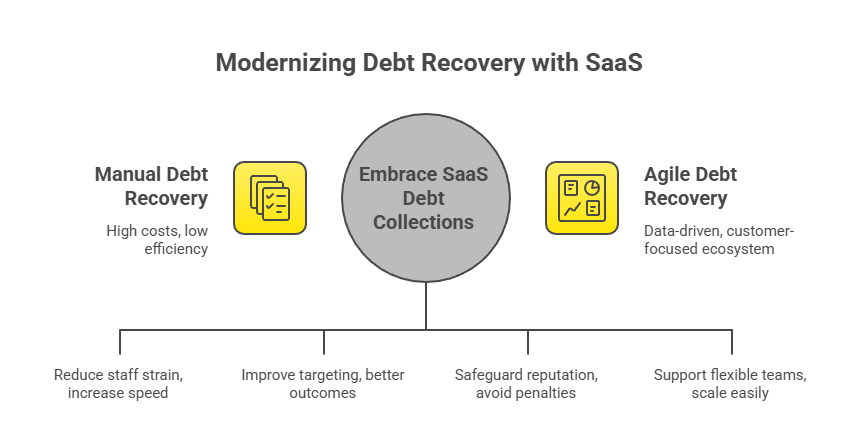
Agencies that embrace digital tools are discovering they can move faster, work smarter, and deliver better outcomes. Automation reduces strain on staff. Analytics improve targeting. Compliance safeguards protect reputations. Cloud access supports flexible teams.
Meanwhile, agencies that cling to manual processes face rising costs and shrinking competitiveness.
The message across the market is clear: modernization is not optional. It is essential for survival and growth.
As adoption accelerates, SaaS debt collections are reshaping the industry into a more agile, data-driven, and customer-focused ecosystem. Manual operations are steadily fading, replaced by intelligent systems designed for scale and efficiency.
Debt recovery is entering a new era — one defined not by paperwork and phone logs, but by platforms, performance metrics, and digital precision. For agencies looking to stay ahead, the future is firmly in the cloud.