Lenders and Collection Firms Assess Impact of Latest Fed Decision

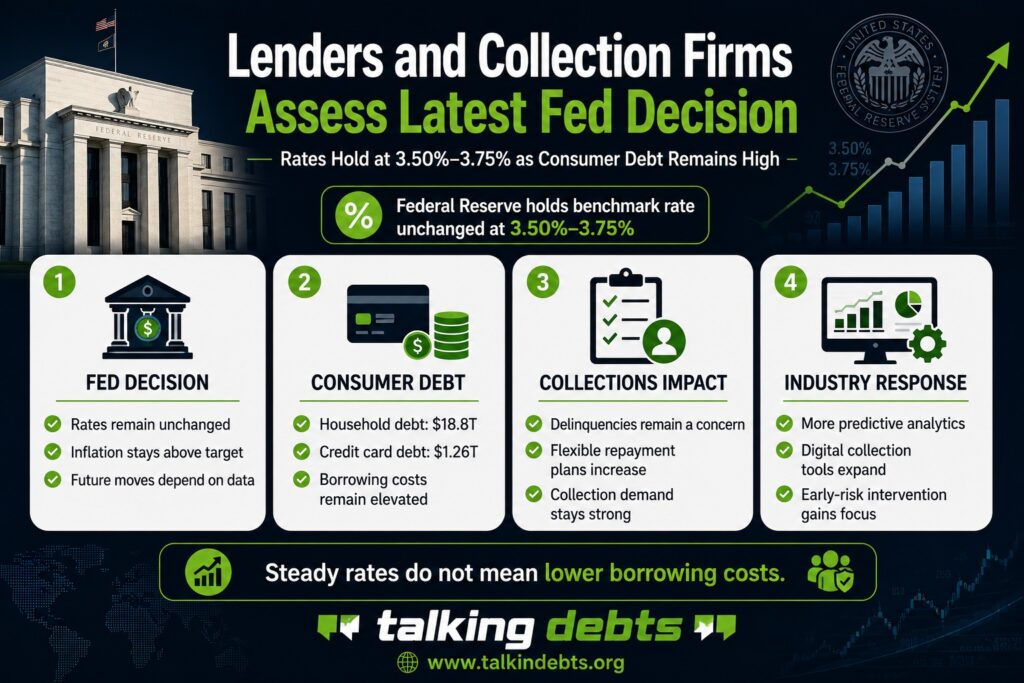
The U.S. Federal Reserve left its benchmark interest rate unchanged at 3.50% to 3.75% on Wednesday, maintaining its current policy stance as officials continue to grapple with inflation that remains above the central bank’s long-term target. The decision, widely expected by financial markets, comes at a time when lenders, debt collection agencies, and recovery firms are closely monitoring signs of growing financial pressure among borrowers.
The Federal Open Market Committee (FOMC) voted to keep rates steady, although three policymakers favored a quarter-point increase, reflecting continued concern that inflation risks have not fully subsided. The split vote highlights the uncertainty facing policymakers as they attempt to balance price stability with economic growth.
Fed Rate Decision Keeps Borrowing Costs Elevated
For the credit and collections industry, the latest decision signals that the higher-interest-rate environment that has shaped consumer lending over the past several years is likely to remain in place for the foreseeable future.
Consumer Debt Remains a Major Concern
Consumer debt levels remain historically high, with U.S. household debt standing at approximately $18.8 trillion. Credit card balances alone have reached $1.26 trillion, underscoring the growing reliance on revolving credit among American consumers. While overall delinquency levels have remained relatively stable, lenders continue to report elevated levels of stress in certain segments of the market, particularly among credit card and auto loan borrowers.
Industry analysts say the Fed’s decision is likely to sustain existing collection volumes rather than trigger a dramatic shift in repayment behavior.
“Borrowers have already spent several years adjusting to higher borrowing costs,” said one financial services analyst following the Fed announcement. “The decision to hold rates steady avoids additional pressure, but it does not provide immediate relief for consumers already carrying substantial debt burdens.”
Lenders Strengthen Collection Strategies
Banks and consumer finance companies have spent much of the past year strengthening their collections strategies as delinquency rates remained above pre-pandemic norms. Creditors have increasingly focused on early-stage intervention programs designed to identify at-risk customers before accounts progress into severe delinquency or charge-off status.
Growing Demand for Collection Agencies
Collection agencies are reporting continued demand from lenders seeking support with rising account inventories. The trend has accelerated investment in digital collections technology, automated customer engagement platforms, predictive analytics, and self-service payment solutions.
Technology Reshapes Debt Recovery
Executives across the recovery sector say technology is playing a larger role in improving customer contact rates and repayment outcomes. Rather than relying solely on traditional collection methods, many organizations are adopting data-driven strategies that allow them to tailor communication and payment options to individual customer circumstances.
Debt Buyers Monitor Secondary Debt Market
The Federal Reserve’s decision is also being closely watched by debt buyers and investors active in the secondary debt market.
As lenders continue managing elevated delinquency volumes, charge-off portfolios remain available for sale across credit card, personal loan, and consumer finance sectors. However, portfolio valuations remain heavily influenced by expectations surrounding future recovery performance.
Recovery Rates Remain a Key Industry Metric
Recovery rates—the percentage of delinquent or charged-off debt ultimately collected—have become a key focus for lenders and investors alike.
Borrowers Seek Flexible Repayment Options
Higher borrowing costs have affected household budgets, leaving some consumers with less disposable income available for debt repayment. Collection firms report that repayment plans and hardship arrangements are becoming increasingly common as borrowers seek flexible solutions to manage their financial obligations.
Employment Supports Repayment Performance
At the same time, stable employment levels have helped prevent a more significant deterioration in repayment performance. Industry participants note that labor market conditions remain one of the most important factors influencing recovery outcomes.
What the Fed Decision Means for Future Interest Rates
The Federal Reserve indicated that future policy decisions will continue to depend on incoming economic data, particularly inflation and employment figures. Inflation has remained above the Fed’s 2% target for more than five years, leading some policymakers to argue that additional tightening may still be necessary if price pressures persist.
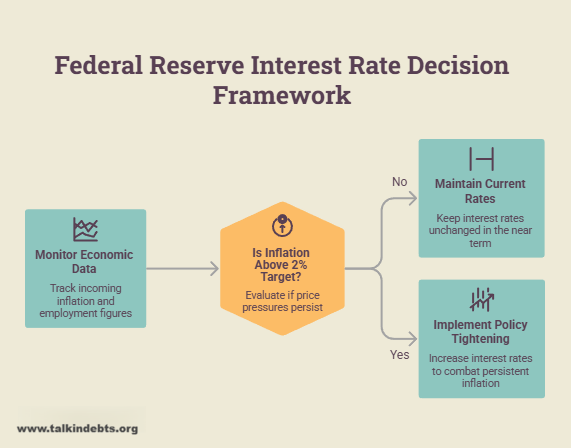
Financial markets are now focusing on upcoming inflation reports and labor market data for clues about the Fed’s next move. While many economists expect rates to remain unchanged in the near term, uncertainty surrounding inflation continues to cloud the outlook. Recent comments from Federal Reserve officials suggest that further policy tightening remains a possibility if inflation fails to show sustained improvement.
Implications for Lenders and Collection Firms
For lenders, the current environment reinforces the importance of risk management and collection performance. Many financial institutions have increased investments in account monitoring, customer engagement, and predictive modeling to identify repayment risks earlier in the credit cycle.
Collection agencies, meanwhile, are preparing for continued demand from creditors seeking to maintain recovery performance amid persistent economic uncertainty.
Outlook for the Credit and Collections Industry
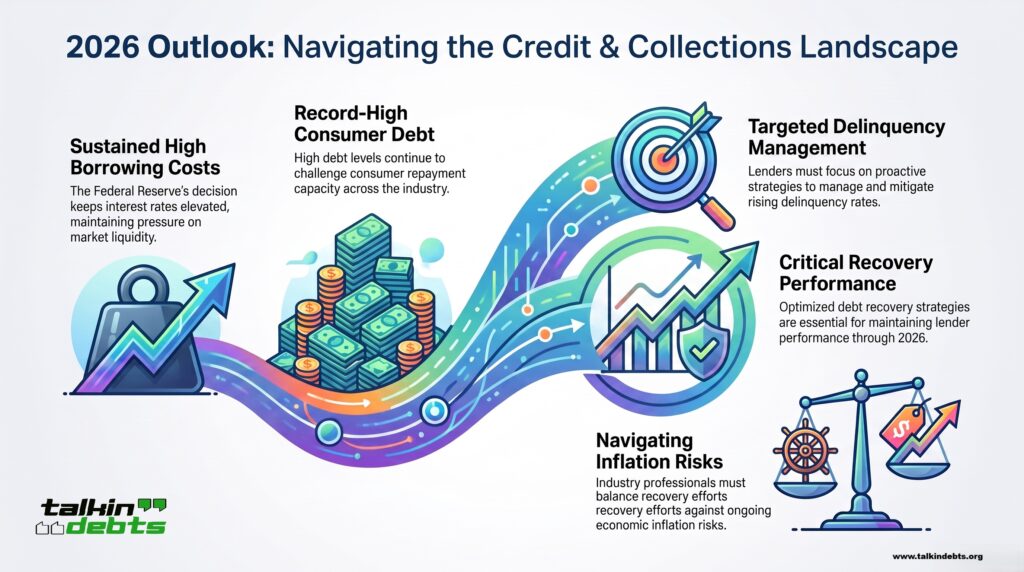
The Federal Reserve’s latest decision may not have changed interest rates, but it sends a clear message to the credit industry: borrowing costs remain elevated, consumer debt remains high, and effective debt recovery strategies will continue to play a critical role in lender performance throughout 2026.
As policymakers weigh future action against inflation risks, lenders and recovery professionals are expected to remain focused on managing delinquencies, improving recoveries, and navigating a challenging credit environment.