Can You Go to Jail for Unpaid Loans in the UAE? (2025 Laws Explained)

What You Need to Know About UAE Loan Default Laws in 2025
In recent years, the UAE has taken significant steps to balance financial enforcement with debtor protection. With millions of residents relying on loans to finance homes, cars, education, and daily needs, the concern over missed repayments is real. Many expats and citizens alike ask: “Can I be jailed for unpaid loans in the UAE?”
The good news is that jail is no longer the automatic outcome for most loan defaults. Legal reforms rolled out by the UAE government between 2022 and 2025 now emphasize resolution, negotiation, and financial literacy. However, it’s still crucial to know what actions could push your case into legal or criminal territory.
This article explores the current landscape of UAE loan laws in 2025 and offers actionable steps to stay legally and financially safe.
Understanding Debt Laws in the UAE
The UAE’s hybrid legal system draws from both civil and Shariah law. In principle, failing to pay a loan is treated as a breach of financial obligation, not a criminal offense. However, when a bounced cheque is involved or if the debtor avoids all contact with lenders and the court, things can escalate quickly.
With the updated laws, the UAE courts are now required to exhaust all civil remedies before approving jail time for any kind of debt-related case. This includes wage garnishment, bank account freezes, and even forced sales of assets. Prison is considered a last resort and often avoided when the debtor shows intent to repay.
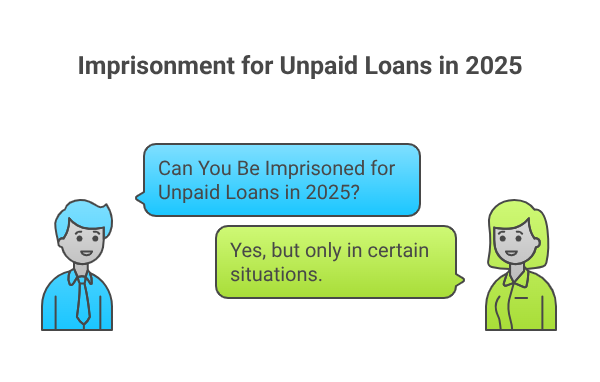
Can You Be Imprisoned for Unpaid Loans in 2025?
Yes, but only in certain situations. The vast majority of loan defaults are now processed as civil disputes, meaning they don’t result in immediate arrests or imprisonment.
However, here’s when jail may be involved:
- Issuing a bounced cheque above AED 200,000
- Failing to respond to multiple court summons
- Engaging in deliberate fraud
- Ignoring a legal repayment agreement ordered by the court
In these cases, the legal system may initiate criminal proceedings, not because of the debt itself, but due to the associated legal violations.
Bounced Cheques: Still a Risk in 2025
The UAE has made progress in decriminalizing bounced cheques, but the law still applies in cases involving large amounts. A cheque that bounces due to insufficient funds—especially if it exceeds AED 200,000—can lead to criminal charges and potential jail time.
Smaller-value cheques are usually handled through civil litigation, and courts now offer digital portals for dispute resolution. However, issuing a cheque without sufficient funds, especially if done knowingly, can still reflect bad faith and escalate matters.
Civil vs. Criminal Cases for Debt
Understanding how UAE law distinguishes between civil and criminal debt-related cases is essential:
| Type of Default | Legal Category | Possible Outcome |
|---|---|---|
| Missed loan instalment | Civil | Collection or court order |
| Ignored court summons | Civil turning to criminal | Travel bans or detention |
| Bounced cheque > AED 200K | Criminal | Jail term or fine |
| Proven fraud | Criminal | Prosecution and sentencing |
The key factor is the debtor’s conduct. If you’re cooperative and responsive, courts typically avoid criminal paths.
How Banks Handle Loan Defaults in 2025
UAE banks have updated their loan recovery processes to align with new regulations. Here’s the current flow:
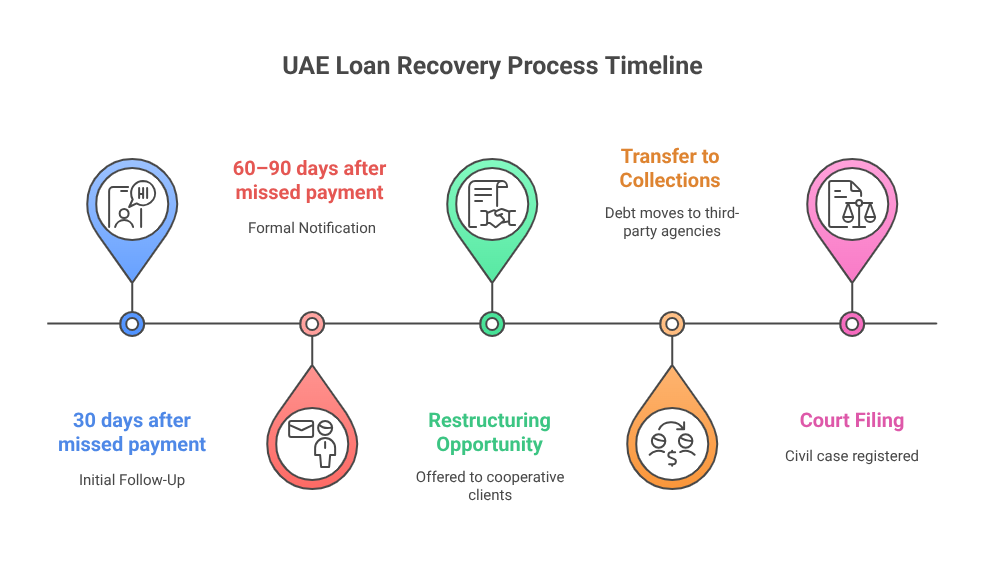
- Initial Follow-Up: Starts within 30 days of a missed payment.
- Formal Notification: A Legal notice is sent after 60–90 days.
- Restructuring Opportunity: Offered to cooperative clients.
- Transfer to Collections: Debt moves to third-party agencies if unresolved.
- Court Filing: Civil case registered, possibly followed by enforcement actions.
Most banks now have internal “hardship assessment units” to evaluate customers’ financial situations and offer custom repayment solutions.
Consequences of Loan Default in the UAE
Even if you’re not jailed, defaulting on a loan in the UAE can set off a cascade of consequences—some legal, others social or economic.
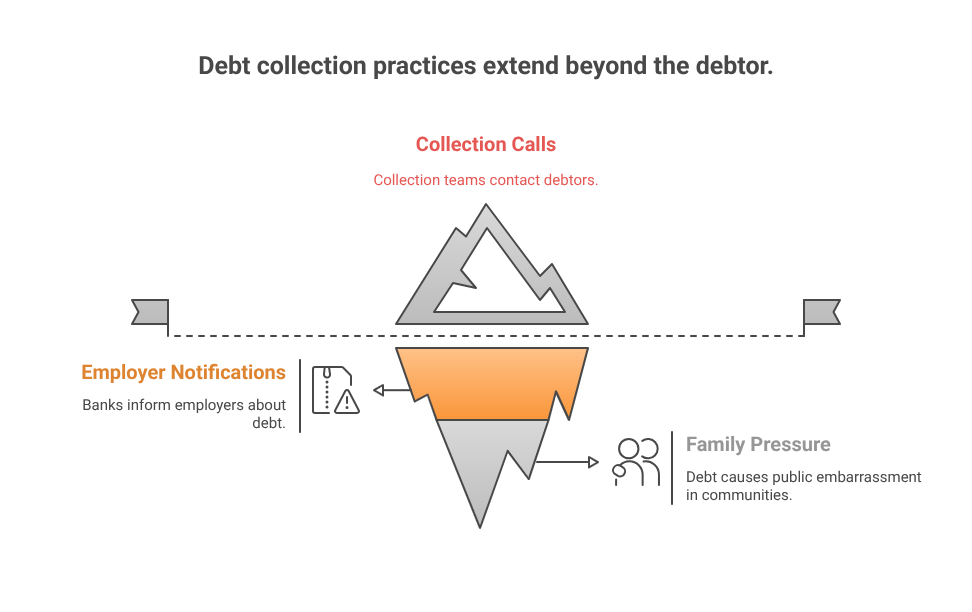
In 2025, lenders will use multiple channels to exert pressure on defaulters:
- Persistent Calls and Emails: Collection teams often contact not just you but also your emergency contacts.
- Employer Notifications: In some cases, banks inform employers, which can jeopardize job security, especially for government or banking roles.
- Family Pressure: In close-knit communities, debt troubles can bring public embarrassment, affecting marriage prospects or business partnerships.
Court enforcement officers may also conduct visits to assess personal assets. If the court orders seizure, you may lose personal belongings, including electronics, vehicles, or luxury goods. Even rented property can be repossessed if the rent is unpaid and related to a credit default.
Role of the UAE Credit Bureau in 2025
One of the most important developments in UAE debt management is the growing power of the Al Etihad Credit Bureau (AECB).
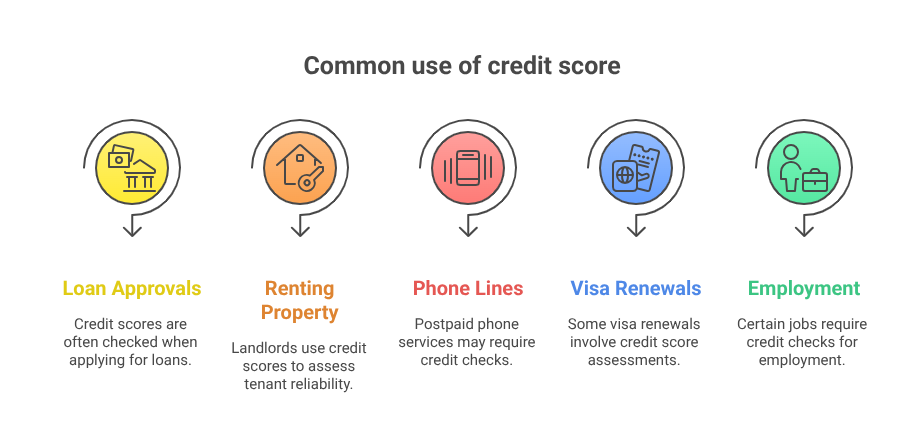
As of 2025, the AECB collects and shares comprehensive credit reports on all residents and businesses. These reports affect:
- Loan and credit card approvals
- Renting apartments or villas
- Getting postpaid phone lines
- Visa renewals in specific sectors
- Employment in finance, aviation, or government
If you default on a loan, your credit score can plummet, making it harder to bounce back financially, even if you’re eventually able to settle the loan. A poor credit record can last for years, affecting your ability to function in the UAE’s credit-reliant economy.
New UAE Legal Reforms in 2025
The UAE has launched forward-thinking legal changes to promote debt rehabilitation:
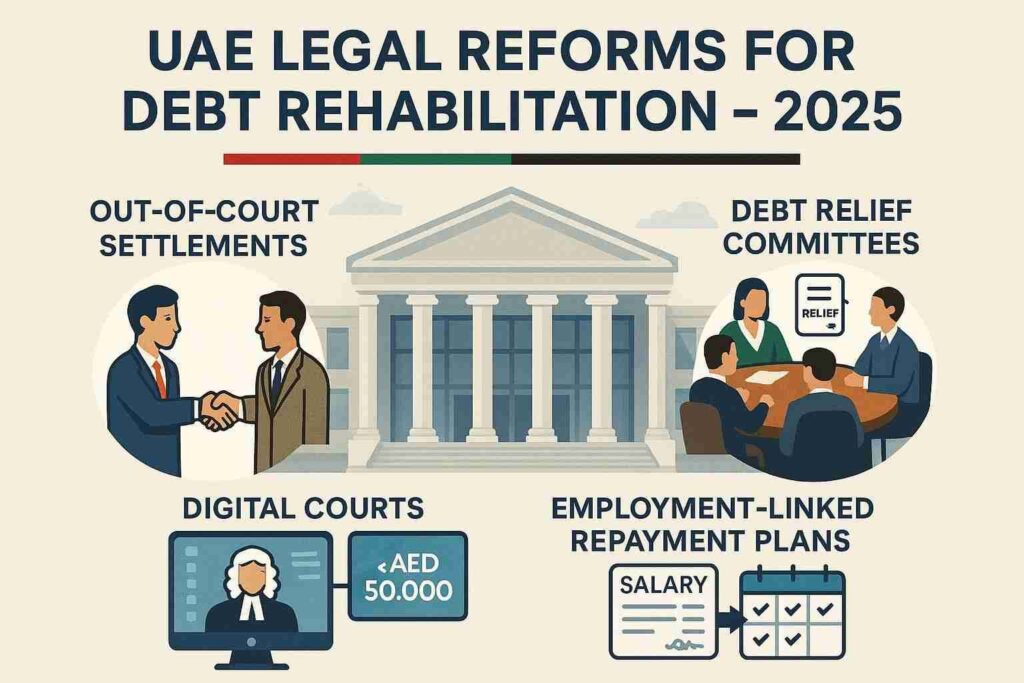
- Out-of-Court Settlements: Courts now encourage banks and borrowers to settle disputes without full litigation.
- Debt Relief Committees: Established to provide solutions for low-income borrowers.
- Digital Courts: Minor debt cases under AED 50,000 can be settled online.
- Employment-Linked Repayment Plans: Some courts link monthly dues to the borrower’s salary level.
These reforms create space for dialogue and resolution, giving borrowers more time and tools to manage their debt legally.
What to Do If You Can’t Repay a Loan
Here’s a step-by-step plan if you’re facing difficulty repaying:
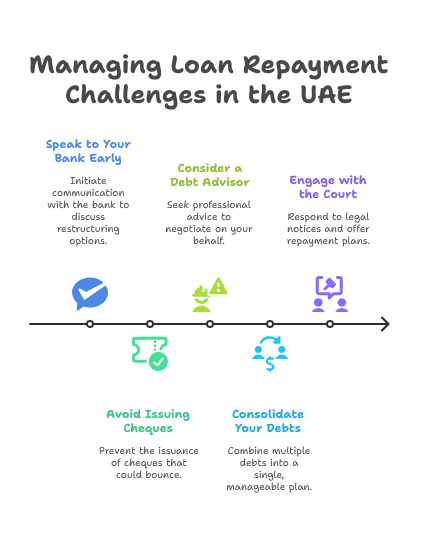
- Speak to Your Bank Early: Don’t wait for default notices. Request restructuring or deferral.
- Avoid Issuing Cheques: If your loan has bounced cheques, cancel or cover them as soon as possible.
- Consider a Debt Advisor: Some firms in the UAE are licensed to legally negotiate on your behalf.
- Consolidate Your Debts: You may be able to combine personal loans and credit cards into a single, manageable plan.
- Engage with the Court: Never ignore legal letters. Showing up and offering repayment plans earns your goodwill.
Being proactive can dramatically reduce your legal risks.
Can Expats Be Deported for Debt?
In general, debt alone is not a deportable offense. However, if a loan default leads to:
- Criminal charges
- Job loss
- Visa expiration without renewal
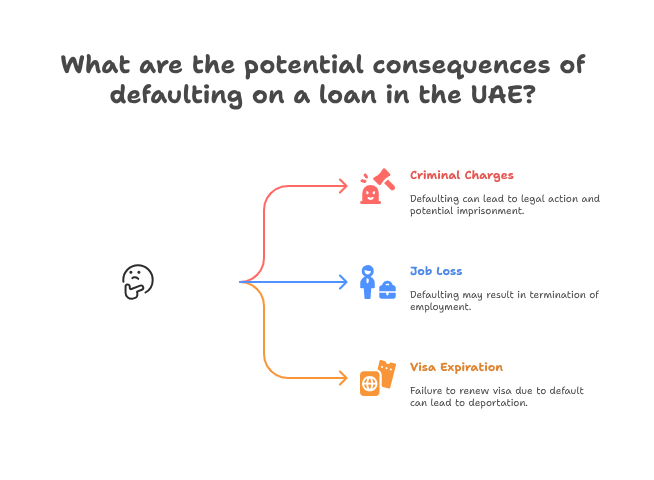
Then deportation may become unavoidable. In such cases, the court may grant deferred deportation, allowing you to settle your debts before leaving.
Always seek legal help before leaving the UAE with outstanding debts.
Final Thoughts
So, once again, can you go to jail for unpaid loans in the UAE in 2025?
The answer is not by default, but it can happen if your case involves:
- Bounced cheques (especially over AED 200,000)
- Repeated court order violations
- Fraudulent intent or deception
- Total non-cooperation with the legal system
If you’re in financial trouble, here are some final takeaways:
- Don’t disappear: Ignoring your bank or the court only increases risk.
- Document everything: Keep a written record of every communication with your lender or lawyer.
- Use legal channels: Rely on licensed advisors, court portals, and authorized debt management companies.
- Think long-term: Even if you’re leaving the UAE, unresolved loans can catch up with you through international collection partners.
Remember, financial hardship is not a crime. With the UAE’s 2025 debt laws, the focus is now on resolution, not retribution. If you act responsibly, communicate clearly, and seek the right help, you can protect your freedom, finances, and future.