EU’s New Debt Regulations: How They Affect Consumers in 2024

In 2024, the European Union enacted transformative debt regulations that reshaped how consumers across the bloc engage with credit and manage personal debt. These reforms aim to curb predatory lending, standardize loan transparency, and reinforce financial stability among consumers.
Whether you’re applying for a credit card, taking out a personal loan, or using buy-now-pay-later (BNPL) services, these new rules affect you directly. In this article, we’ll break down what’s changed, how it impacts your daily financial decisions, and what steps you should take to protect your financial health in this new environment.

What Are the EU’s New Debt Regulations?
The latest debt regulations, part of the revised Consumer Credit Directive (CCD) and the Debt Recovery Harmonization Initiative, introduce sweeping changes designed to protect consumers and encourage responsible lending.
The core objectives include:
- Preventing over-indebtedness
- Increasing transparency in lending practices
- Standardizing debt recovery laws across EU nations
- Enhancing borrower rights and protections
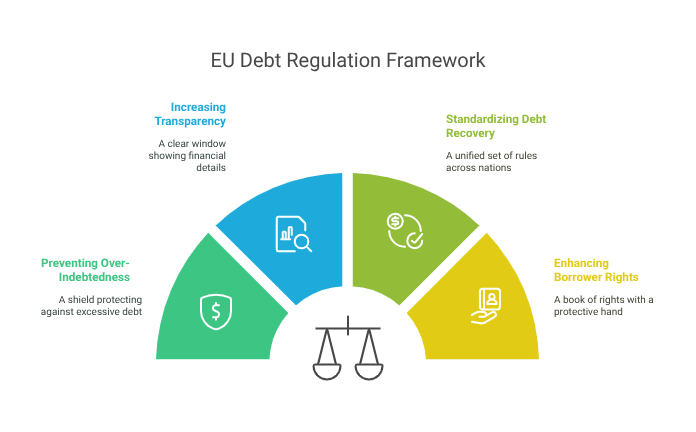
These regulations came into force in early 2024 and apply across all 27 member states, with enforcement handled by each country’s financial regulatory authority.
Key Components of the 2024 EU Debt Regulations
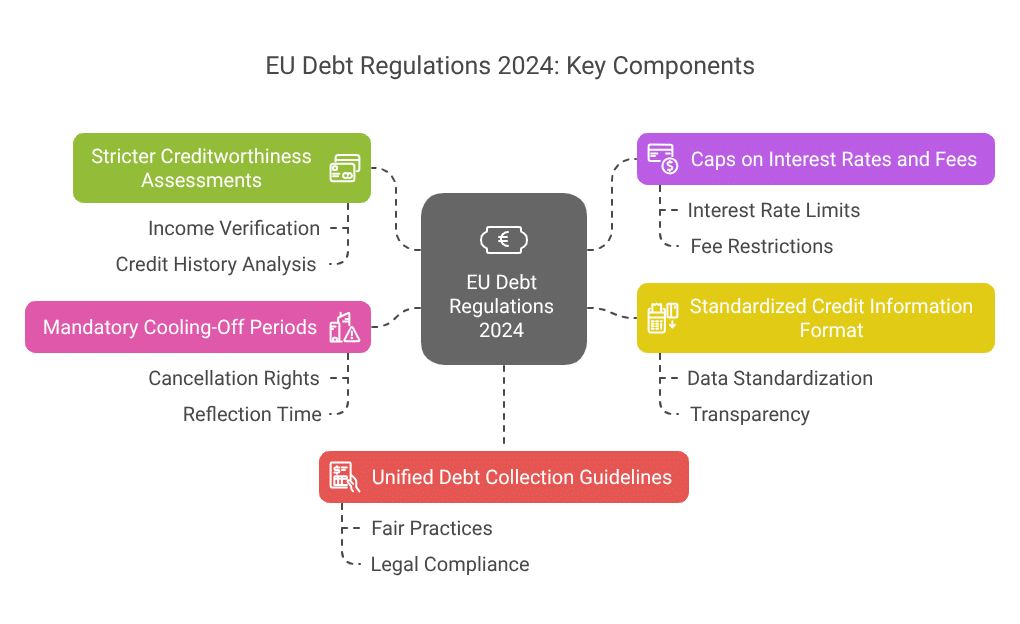
1. Stricter Creditworthiness Assessments
Under the new rules, lenders must perform comprehensive credit checks that go beyond a surface-level credit score. They are now required to assess:
- Proof of income
- Existing liabilities and financial commitments
- Household expenses
- Employment status and history
Why it matters:
This ensures that loans are issued only to borrowers who can realistically afford to repay them. While it may become harder to qualify for credit, this regulation reduces the risk of falling into a debt trap.
2. Caps on Interest Rates and Fees
To protect vulnerable borrowers, the EU has introduced interest rate caps and limits on additional fees, especially for high-risk, short-term credit like payday loans. Penalty charges for late payments are also capped.
Impact on consumers:
Borrowers will no longer face exorbitant fees or compounding interest that balloon small loans into major debts. These limits make loan repayment more manageable and predictable.
3. Standardized Credit Information Format
Every lender must now use a uniform format to present key credit information, including:
- Annual Percentage Rate (APR)
- Total cost of credit
- Loan term and repayment schedule
- Penalties for non-repayment
Consumer benefit:
This format simplifies the loan comparison process. Consumers can now make more informed choices by clearly understanding what each loan will cost.
4. Mandatory Cooling-Off Periods
Borrowers now have a 14-day window to withdraw from a credit agreement without incurring penalties or fees. This applies to all types of consumer loans.
Why this matters:
It gives consumers time to reconsider decisions and seek better alternatives if needed—offering critical breathing room before financial commitments become binding.
5. Unified Debt Collection Guidelines
Debt collection practices varied widely across EU countries. The new regulations standardize debt recovery laws, ensuring fair and ethical treatment of debtors. Key provisions include:
- Prohibition of harassment and intimidation
- Restrictions on the number of collection attempts per month
- Requirement for debt collectors to provide clear and accurate information
Effect on consumers:
Consumers are now protected from aggressive collection tactics. Disputes can be resolved through official complaint channels and ombudsman services.
Country-Level Flexibility and Implementation
While the EU sets the baseline, individual countries have some room to:
- Impose stricter interest rate caps
- Adopt softer or tougher penalties for lender non-compliance
- Implement custom monitoring systems for enforcement
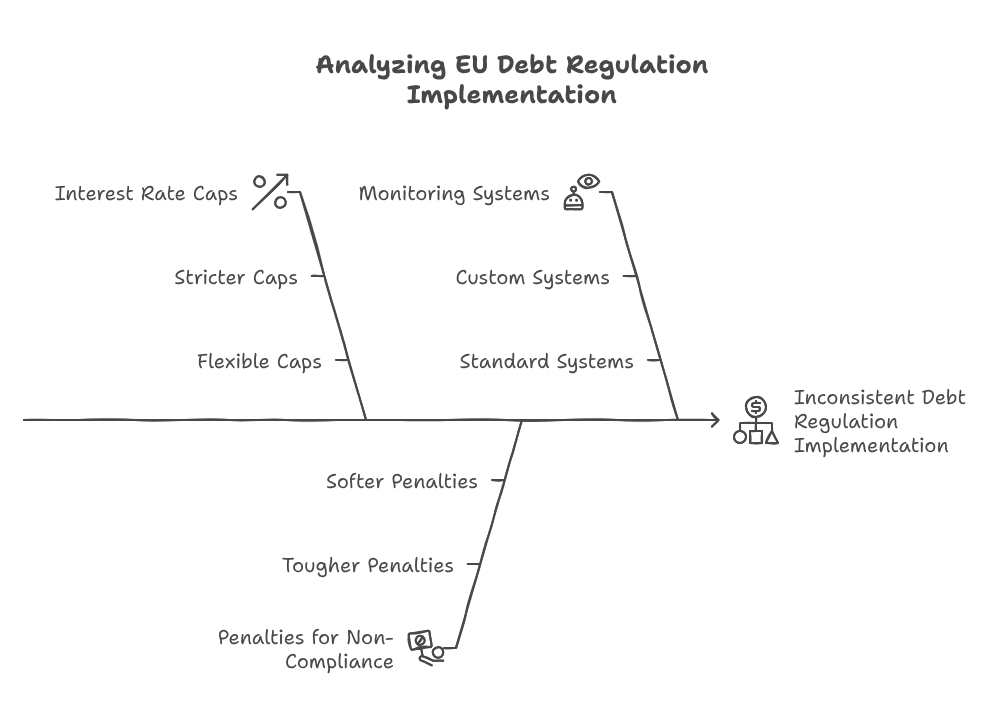
For example, Germany has opted for more rigorous enforcement mechanisms, while countries like Greece are focusing on integrating the changes gradually over a longer timeline.
What consumers should do:
Stay informed about national-level changes. Regulators may issue public guidelines or update local consumer finance laws reflecting these new EU-wide rules.
How Different Types of Debt Are Affected
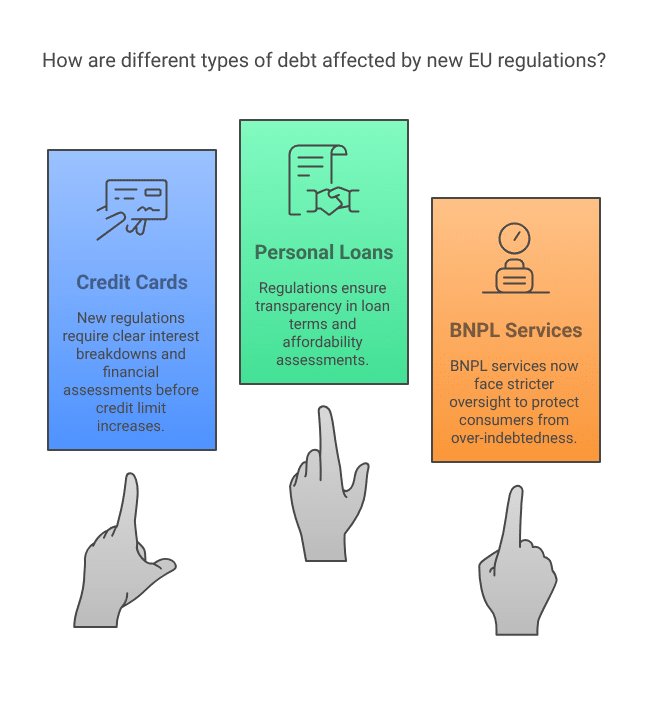
Credit Cards
- Monthly statements must now include a clear breakdown of interest, minimum repayment estimates, and the projected time to clear the debt.
- Lenders must assess a cardholder’s financial standing before increasing credit limits.
Personal Loans
- Cross-selling of payment protection insurance or other add-ons is now optional, not automatic.
- Loan advertisements must include full transparency around APR and repayment schedules.
Buy Now, Pay Later (BNPL) Services
- These platforms are now classified as credit services.
- BNPL providers must conduct credit checks and issue disclosures like traditional lenders.
Mortgages
Although the rules primarily target unsecured debt, mortgage providers are encouraged to align with the same principles of transparency and fairness. Borrowers applying for home loans can expect greater visibility into their rights, costs, and risks.
Why the 2024 Regulations Were Introduced
The motivation behind the changes lies in troubling financial trends observed across the EU:
- Rising household debt: Many households became overleveraged post-pandemic.
- Unregulated credit growth: Fintech and BNPL services expanded rapidly, with little oversight.
- Disparities in consumer protection: Borrower experiences varied drastically depending on the country.
The new regulations aim to build a cohesive and protective financial framework that benefits consumers across borders.
How Consumers Can Adapt to the New Rules
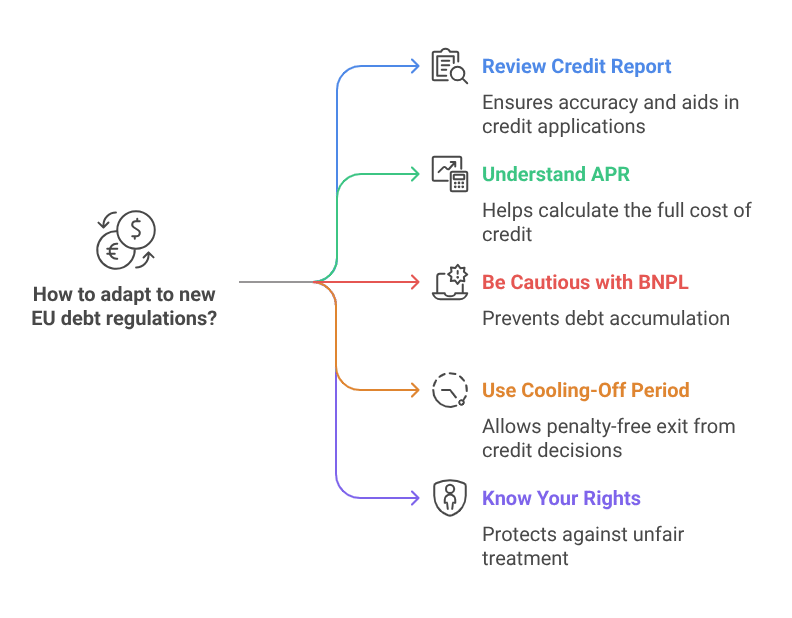
1. Review Your Credit Report
Ensure your information is accurate and up to date. Lenders will rely heavily on this when evaluating your credit applications. You can request free annual credit reports from your national credit bureau.
2. Understand APR and Total Cost of Credit
Always calculate the full cost, not just the monthly payment. This is now easier thanks to standardized disclosures, but it’s still essential to read all terms before signing a loan agreement.
3. Be Cautious With BNPL and Short-Term Loans
While now regulated, these can still lead to debt if not used responsibly. Treat them like traditional credit instruments—not like free money.
4. Use the Cooling-Off Period Wisely
If you regret a credit decision, take advantage of the 14-day window to exit without penalties. Don’t wait until you feel trapped in a long-term commitment.
5. Know Your Rights
If you’re being treated unfairly by a lender or collector, contact your country’s financial regulator or consumer protection agency. You can also file formal complaints through the EU’s official complaint mechanisms.
Long-Term Impact of the EU’s Debt Regulations
The new framework is expected to reshape the financial landscape over the next decade. Anticipated outcomes include:
- Improved financial literacy across the EU
- Fewer defaults due to better risk assessments
- More competitive lending environment driven by transparency
- Increased trust between consumers and financial institutions

Furthermore, the rules are expected to spark innovation within the financial sector. Digital lenders and fintech startups will need to build compliance features into their platforms, which may lead to smarter, more secure financial products in the market.
Challenges Ahead
Despite the benefits, there are some growing pains:
- Stricter lending may exclude some consumers, especially those with poor credit histories.
- Lenders face higher compliance costs, which may be passed on to consumers.
- Smaller credit providers and startups could struggle to meet regulatory demands.
Some critics argue that these rules may make accessing credit harder for low-income households. However, policymakers believe that any short-term exclusion is a worthwhile trade-off for long-term financial protection and system-wide stability.
Final Thoughts
The EU’s new debt regulations of 2024 are a monumental step toward protecting consumers and promoting responsible lending. While these rules introduce new hurdles for both borrowers and lenders, they ultimately aim to build a stronger, more transparent, and fair financial system across Europe.
Consumers should seize this moment to take control of their financial futures, armed with better information, stronger protections, and more rights than ever before.