Global Debt Levels Surge as Governments Increase Borrowing Amid Ongoing Middle East Conflict
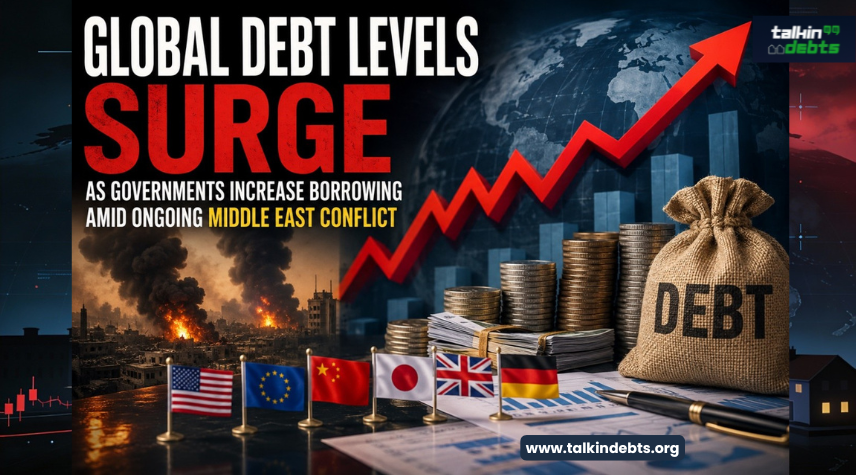
Global debt levels are climbing rapidly in 2026 as governments across the world ramp up borrowing to manage rising military spending, energy shocks, inflation pressures, and slowing economic growth linked to the ongoing Middle East conflict. Economists warn that the latest wave of sovereign debt increases could trigger long-term financial instability, particularly for developing economies already struggling with weak currencies, rising interest rates, and growing repayment burdens.
From the United States and Europe to emerging economies in Asia, Africa, and Latin America, governments are issuing new debt at an aggressive pace to stabilize their economies while funding defense operations, fuel subsidies, social welfare programs, and infrastructure protection measures. Financial institutions are now closely monitoring global debt levels in 2026 as concerns grow over fiscal sustainability and the risk of future debt crises.
Government Borrowing Trends Accelerate Across Major Economies
The latest government borrowing trends reveal a sharp increase in sovereign debt issuance since tensions in the Middle East escalated. Nations facing economic disruptions caused by oil price volatility, shipping delays, and geopolitical uncertainty are relying heavily on borrowing to maintain public spending and prevent economic slowdown.
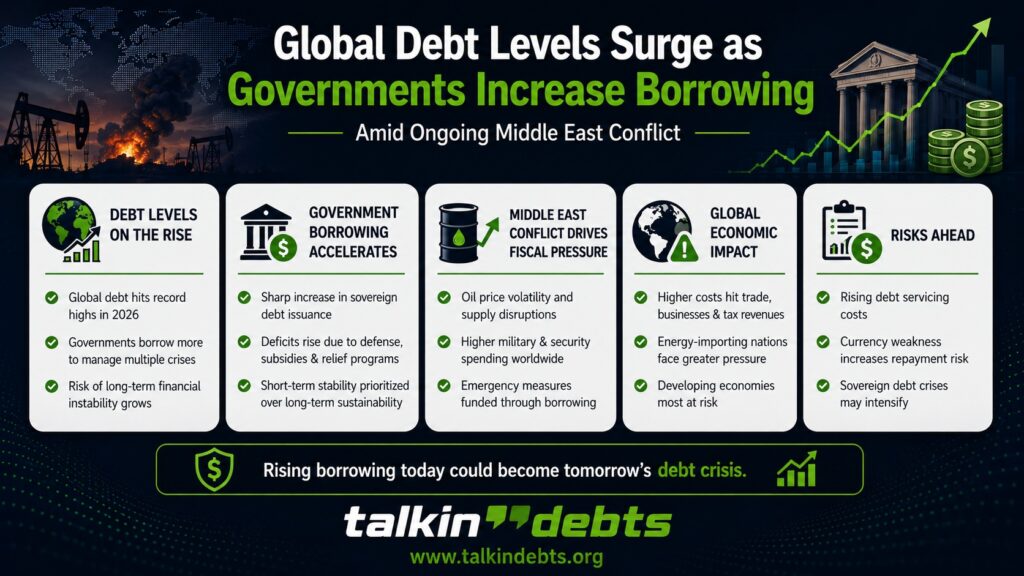
Several major economies have announced expanded fiscal packages in response to the crisis. Increased defense budgets, emergency energy subsidies, and inflation relief programs are pushing national deficits higher. Analysts say governments are prioritizing short-term economic stability even if it means significantly increasing long-term debt obligations.
The sovereign debt increase is particularly noticeable among countries dependent on imported energy. Higher fuel and transportation costs have forced many governments to introduce subsidy programs to shield households and businesses from inflation. These emergency measures are being financed largely through additional borrowing.
Central banks are also under pressure. While inflation remains elevated in many regions, slowing economic activity is making it difficult for policymakers to maintain aggressive interest rate policies. This creates a complicated environment where governments continue borrowing despite already high debt servicing costs.
Middle East Conflict Intensifies Fiscal Pressure Worldwide
The ongoing Middle East conflict is creating economic ripple effects far beyond the region itself. Oil-producing nations are increasing military expenditure and security spending, while oil-importing nations are struggling with rising energy costs and supply chain disruptions.
Shipping routes through critical trade corridors remain vulnerable, increasing freight costs and insurance premiums for international trade. Businesses worldwide are facing higher operational expenses, which in turn reduces tax revenue growth for governments. To compensate, many administrations are borrowing more heavily.
The International Monetary Fund and global credit agencies have repeatedly warned that prolonged geopolitical instability could accelerate sovereign debt increase trends throughout 2026 and beyond. Several countries are now allocating larger portions of their annual budgets toward defense preparedness and emergency economic support.
In Europe, governments are expanding security and military investments while also funding energy diversification projects to reduce dependence on unstable fuel markets. In Asia, several nations are boosting strategic reserves and increasing infrastructure spending to protect supply chains. These initiatives require enormous capital, leading to rising national debt levels.
Global Debt Levels 2026 Reach New Historic Highs
Economists estimate that global debt levels in 2026 may surpass previous records established during the COVID-19 pandemic era. Combined public and sovereign debt is now rising faster than global economic growth in many countries.
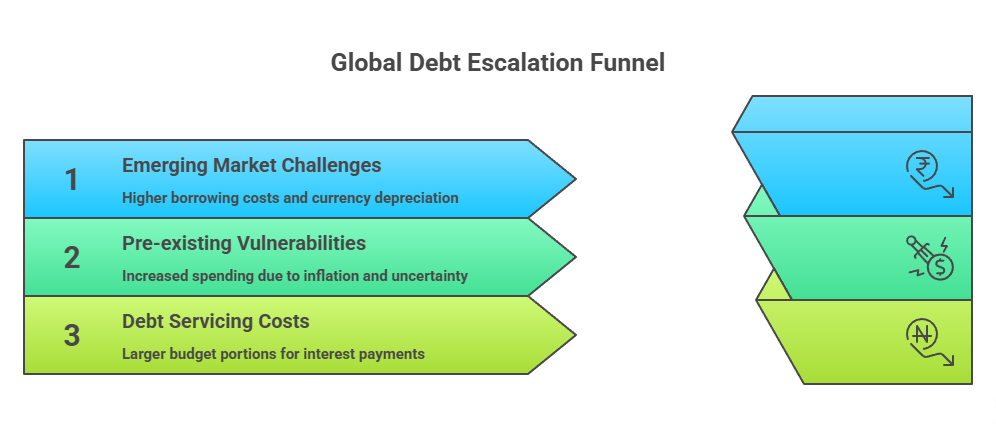
The problem is not limited to advanced economies. Emerging markets are facing even greater challenges because borrowing costs remain significantly higher for nations with weaker currencies or lower credit ratings. Currency depreciation is making foreign-denominated debt more expensive to repay, increasing the risk of financial distress.
Countries already carrying heavy debt loads before the Middle East conflict began are now particularly vulnerable. Governments that relied on borrowing during the pandemic have less fiscal flexibility today, yet many are still being forced to increase spending due to energy inflation and economic uncertainty.
Debt servicing costs are also becoming a major concern. As interest rates remain relatively elevated globally, governments are spending larger portions of their budgets simply paying interest on existing debt. This reduces available funding for healthcare, education, infrastructure, and economic development.
Financial analysts warn that if current government borrowing trends continue unchecked, several economies could face debt restructuring pressures within the next few years.
Sovereign Debt Increase Raises Concerns Over Financial Stability
The rapid sovereign debt increase is triggering fears among investors and global financial institutions. Credit rating agencies are closely reviewing fiscal conditions in several countries where debt-to-GDP ratios have risen sharply over the past year.
A growing number of governments are issuing long-term bonds to secure funding before borrowing costs rise further. However, increased debt issuance can also create pressure on bond markets, potentially pushing yields higher and making future borrowing even more expensive.
Some economists believe the current situation resembles earlier periods of global financial stress, where geopolitical instability combined with aggressive public borrowing created long-term economic risks. They argue that while emergency spending may be necessary, governments must eventually introduce sustainable fiscal strategies to prevent future crises.
Another concern involves the possibility of reduced investor confidence. If markets begin doubting a country’s ability to manage rising debt obligations, borrowing costs can increase rapidly. This scenario could place enormous pressure on fragile economies already dealing with inflation and weak growth.
Banks and financial institutions are also exposed to sovereign debt risks because many hold large quantities of government bonds. Any instability in debt markets could therefore affect broader financial systems globally.
Rising Military Expenditure Drives Borrowing Needs
One of the primary reasons behind the surge in global debt levels in 2026 is the sharp increase in military and defense spending. Governments are expanding defense budgets amid growing fears of wider regional instability and potential security threats.
The United States, several European nations, and Middle Eastern countries have all announced substantial increases in military allocations. Defense modernization programs, weapons procurement, cybersecurity investments, and troop deployments are requiring billions in additional spending.
This rise in war-related expenditure is occurring at a time when many countries are already struggling with weak economic growth. As a result, governments are increasingly financing military expansion through debt rather than through higher tax revenues.
Defense contractors and energy firms may benefit from increased public spending, but ordinary taxpayers could eventually face the burden of higher debt repayments. Economists warn that prolonged conflict-related borrowing could limit future economic flexibility and increase pressure on future generations.
Developing Economies Face Growing Debt Risks
Developing countries are among the most vulnerable to the current sovereign debt increase. Many low-income nations are heavily dependent on imported fuel and food supplies, both of which have become more expensive due to geopolitical disruptions.
These countries often face higher borrowing costs because investors view them as riskier markets during periods of global uncertainty. As a result, governments may be forced to accept expensive loans simply to maintain essential public services and stabilize domestic economies.
Several developing economies are already spending more on debt repayments than on healthcare or education. Rising global debt levels in 2026 could worsen poverty and inequality if governments are forced to reduce social spending to meet repayment obligations.
International financial organizations are urging wealthier nations and lenders to support debt restructuring efforts and provide emergency financial assistance where necessary. Without coordinated global action, economists fear a wave of debt crises could emerge across vulnerable regions.
Currency instability is another major issue. When local currencies weaken against the U.S. dollar, foreign debt becomes significantly more expensive. This creates additional strain on national budgets and increases the likelihood of fiscal instability.
Inflation and Energy Prices Add to Fiscal Burdens
The Middle East conflict continues to influence oil and gas markets, contributing to inflationary pressure worldwide. Governments are spending heavily to offset rising living costs and prevent public dissatisfaction.
Fuel subsidies, transportation support programs, and energy tax reductions are becoming common policy responses. While these measures may provide temporary relief for households and businesses, they are also contributing to larger budget deficits.
Higher inflation creates a difficult environment for governments because it increases operational costs across nearly every sector. Public wages, infrastructure projects, and welfare programs become more expensive, forcing governments to allocate additional funds.
At the same time, slower economic growth reduces tax collection efficiency. This combination of rising spending and weaker revenue growth is accelerating government borrowing trends across multiple regions.
Financial experts warn that persistent inflation linked to geopolitical instability could keep debt levels elevated for years if governments continue relying on borrowing instead of implementing structural reforms.
Investors Closely Watch Sovereign Debt Markets
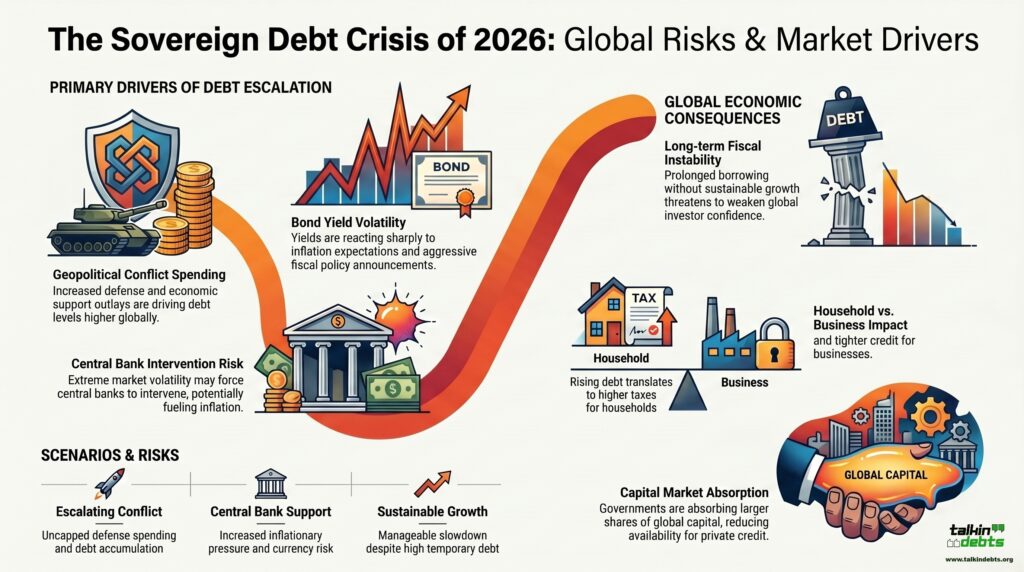
Global investors are paying close attention to sovereign debt increase trends as they assess risks in bond and currency markets. Government bond yields have become increasingly volatile as markets react to geopolitical developments, inflation expectations, and fiscal policy announcements.
Investors typically view government bonds as relatively safe assets, but rising debt burdens can weaken confidence if fiscal conditions deteriorate significantly. Countries with unstable political environments or weak economic growth may face greater scrutiny from investors.
Some analysts believe central banks could eventually be forced to intervene if debt market volatility becomes severe. However, central bank intervention may also create inflation concerns if governments continue expanding borrowing aggressively.
Global financial markets are therefore entering a period of heightened uncertainty. The interaction between war-related spending, inflation, interest rates, and debt accumulation is creating a complex economic environment that may shape fiscal policy for years to come.
Economic Outlook Remains Uncertain
The future direction of global debt levels in 2026 will depend heavily on geopolitical developments and the duration of the Middle East conflict. If tensions escalate further, governments may continue increasing defense and economic support spending, driving debt even higher.
Economists remain divided on whether the current borrowing wave will lead to a manageable slowdown or a more serious global debt crisis. Some argue that strong economies can absorb higher debt temporarily, especially during periods of geopolitical emergency. Others warn that prolonged borrowing without sustainable growth could create severe long-term fiscal instability.
For households worldwide, rising sovereign debt may eventually translate into higher taxes, reduced public services, or prolonged inflationary pressure. Businesses may also face tighter credit conditions if governments absorb a larger share of global capital markets.
As governments continue balancing national security concerns with economic stability, the issue of sovereign debt increase is expected to remain one of the defining financial challenges of 2026. The combination of war spending, inflation control measures, and slowing economic growth is reshaping fiscal policy across the world and raising important questions about the sustainability of current government borrowing trends.