Middle East Crisis Triggers New Volatility in Global Debt Markets
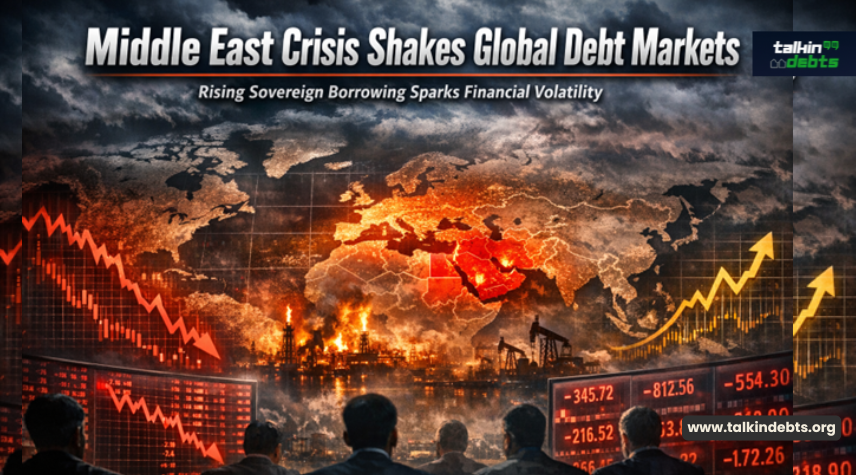
The escalating Middle East crisis is sending shockwaves through global financial systems, triggering fresh volatility in global debt markets and raising concerns over a widening sovereign debt crisis. As geopolitical tensions intensify, governments across regions are ramping up borrowing, unsettling bond markets, and heightening investor anxiety worldwide.
Financial analysts warn that the current geopolitical risk in debt markets could reshape global capital flows, disrupt bond yields, and accelerate debt accumulation at a time when many economies are already under fiscal strain.
Geopolitical Tensions Drive Market Uncertainty
The Middle East has long been a focal point of geopolitical instability, but the latest escalation is having a far more immediate and measurable impact on financial markets. Investors are increasingly reacting to uncertainty, pulling funds from riskier assets and shifting toward safe-haven government bonds such as U.S. Treasuries.
This shift has created uneven movements in bond yields. While yields in some developed economies are declining due to increased demand, emerging markets are witnessing rising borrowing costs as investors reassess risk exposure.
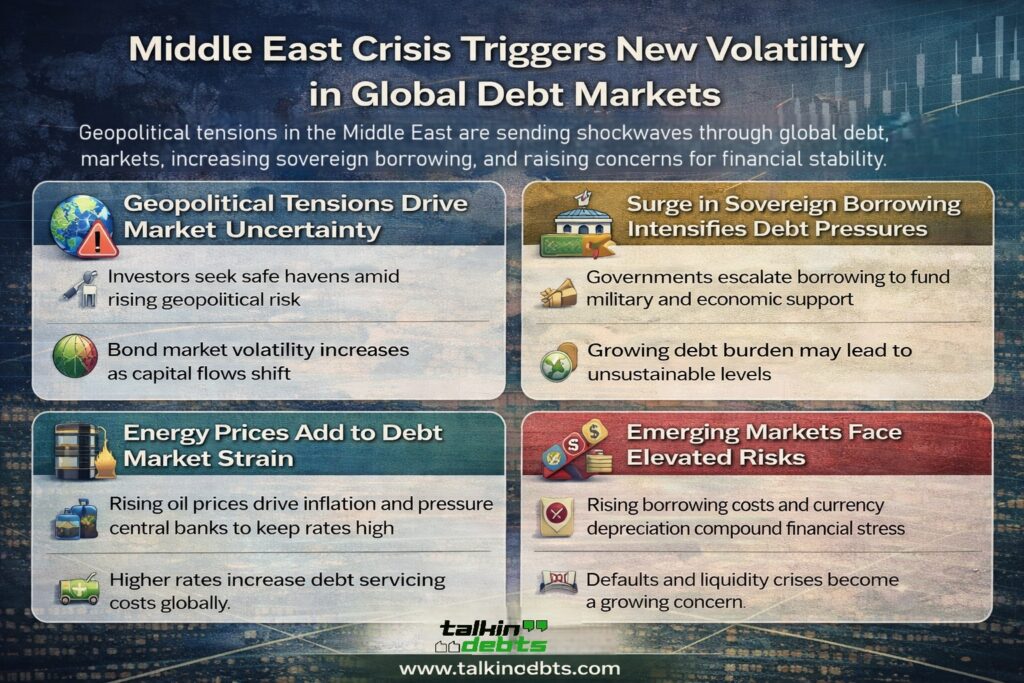
Market strategists highlight that geopolitical risk in debt markets often leads to sudden repricing of sovereign bonds. Countries perceived as vulnerable to external shocks or dependent on energy imports are particularly exposed to capital outflows.
Surge in Sovereign Borrowing Intensifies Debt Pressures
As military spending rises and economic support measures expand, governments are turning to debt markets to finance their needs. This surge in sovereign borrowing is adding pressure to already elevated debt levels globally.
In several regions, fiscal deficits are widening rapidly. Governments are issuing new bonds to fund defense expenditures, stabilize domestic economies, and cushion the impact of rising energy prices.
The result is a growing sovereign debt burden that could become unsustainable if interest rates remain high. Economists caution that the current trajectory may lead to a broader sovereign debt crisis, particularly in developing economies with limited fiscal space.
Bond Markets React with Heightened Volatility
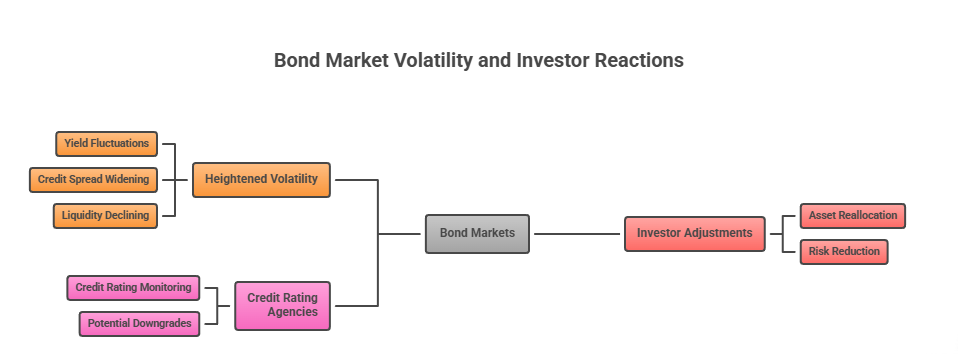
Global bond markets are experiencing increased volatility as investors attempt to price in geopolitical risks. Sudden fluctuations in yields, widening credit spreads, and declining liquidity are becoming more frequent.
Institutional investors are adjusting their portfolios to hedge against uncertainty. This includes reallocating assets toward safer instruments while reducing exposure to high-risk sovereign debt.
Credit rating agencies are also closely monitoring developments. Any downgrade in sovereign credit ratings could further amplify volatility, increasing borrowing costs and reducing investor confidence.
Energy Prices Add to Debt Market Strain
One of the most immediate economic consequences of the Middle East crisis is the surge in energy prices. Oil and gas markets are highly sensitive to disruptions in the region, and any escalation can lead to sharp price increases.
Higher energy costs are feeding into inflation, forcing central banks to maintain tighter monetary policies for longer periods. This creates a challenging environment for governments attempting to manage debt.
Rising interest rates increase the cost of servicing existing debt, while new borrowing becomes more expensive. This dual pressure is intensifying the impact of the sovereign debt crisis across multiple economies.
Emerging Markets Face Elevated Risks
Emerging markets are particularly vulnerable to the current wave of volatility in global debt markets. Many of these economies rely heavily on external borrowing and are sensitive to shifts in investor sentiment.
Currency depreciation is another major concern. As capital flows out of emerging markets, local currencies weaken, making it more expensive to repay foreign-denominated debt.
Countries with high levels of external debt and limited foreign exchange reserves are at risk of facing liquidity crises. In extreme cases, this could lead to sovereign defaults, further destabilizing global financial systems.
Investor Sentiment Shifts Toward Safe Havens
In times of geopolitical uncertainty, investor behavior tends to shift dramatically. The current crisis is no exception, with a clear move toward safe-haven assets.
Government bonds from stable economies, gold, and other low-risk investments are attracting increased demand. This shift is altering global capital flows and creating imbalances in financial markets.
While safe-haven demand can stabilize certain segments of the market, it also exacerbates volatility elsewhere. Riskier assets, including high-yield bonds and emerging market debt, are experiencing significant outflows.
Central Banks Navigate Complex Challenges
Central banks are facing a delicate balancing act as they respond to the evolving crisis. On one hand, they must address inflationary pressures driven by rising energy prices. On the other, they need to ensure financial stability amid volatile debt markets.
Policy decisions are becoming increasingly complex. Maintaining high interest rates may help control inflation, but could worsen the sovereign debt crisis by increasing borrowing costs.
Some central banks may consider targeted interventions to stabilize bond markets, but such measures carry their own risks, including potential distortions in market functioning.
Global Financial Stability at Risk
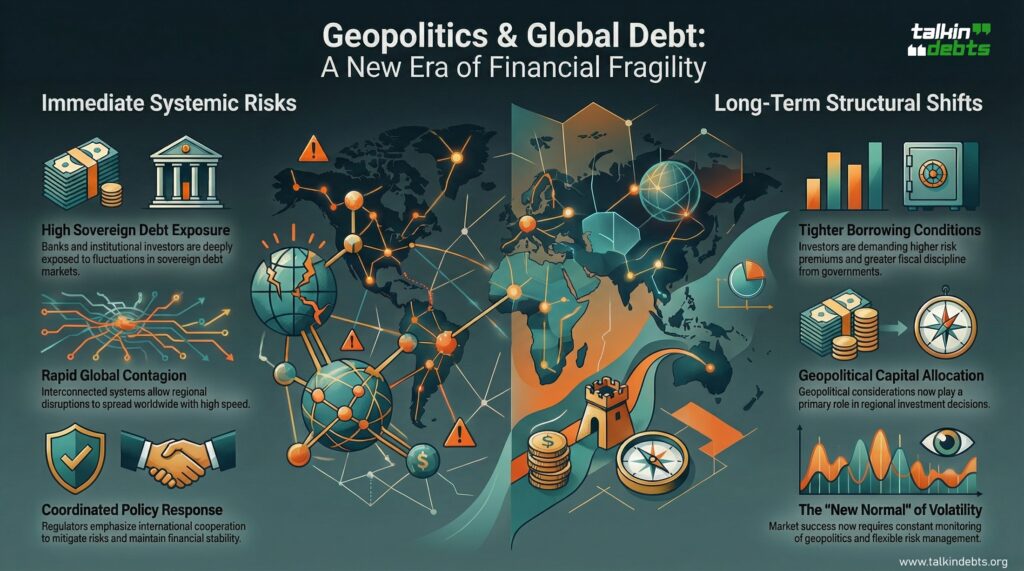
The intersection of geopolitical conflict and financial vulnerability is raising concerns about broader global financial stability. The interconnected nature of modern financial systems means that disruptions in one region can quickly spread worldwide.
Banks, investment funds, and institutional investors are all exposed to sovereign debt in varying degrees. A sharp deterioration in debt markets could have cascading effects across the financial system.
Regulators and policymakers are closely monitoring the situation, emphasizing the need for coordinated international responses to mitigate risks.
Long-Term Implications for Debt Markets
Beyond immediate volatility, the Middle East crisis could have lasting implications for global debt markets. Structural changes in investor behavior, risk assessment, and capital allocation may reshape the financial landscape.
Governments may face increased scrutiny over fiscal policies, with investors demanding greater transparency and discipline. This could lead to tighter borrowing conditions and higher risk premiums.
Additionally, geopolitical considerations are likely to play a more prominent role in investment decisions, influencing how capital is allocated across regions.
Outlook: Navigating an Uncertain Future
The outlook for global debt markets remains highly uncertain as the Middle East crisis continues to evolve. Much will depend on the trajectory of the conflict, energy market dynamics, and policy responses from governments and central banks.
Market participants are preparing for continued volatility, with a focus on risk management and diversification. Analysts suggest that maintaining flexibility and closely monitoring geopolitical developments will be critical in navigating the current environment.
While the full impact of the crisis is yet to unfold, one thing is clear: geopolitical risk in debt markets is now a central factor shaping global financial stability.
Global Debt Markets Enter a New Phase of Risk
The current wave of instability marks a turning point for global debt markets. The combination of rising sovereign borrowing, heightened geopolitical tensions, and shifting investor sentiment is creating a complex and challenging environment.
As governments continue to rely on debt to finance their responses to the crisis, the risk of a prolonged sovereign debt crisis cannot be ignored.
For investors, policymakers, and financial institutions, the message is clear—adaptation and vigilance will be essential in navigating this new era of uncertainty in global debt markets.