Regulatory Compliance in the Modern Debt Industry: What Businesses Must Prepare For

In an increasingly globalized financial environment, regulatory compliance in the modern debt industry is no longer optional — it’s essential. Debt collection agencies, lenders, and financial service providers face evolving legal frameworks that govern how they interact with consumers, manage data, and enforce repayment. Staying ahead of compliance requirements not only protects businesses from costly penalties but also fosters trust, transparency, and sustainable growth.
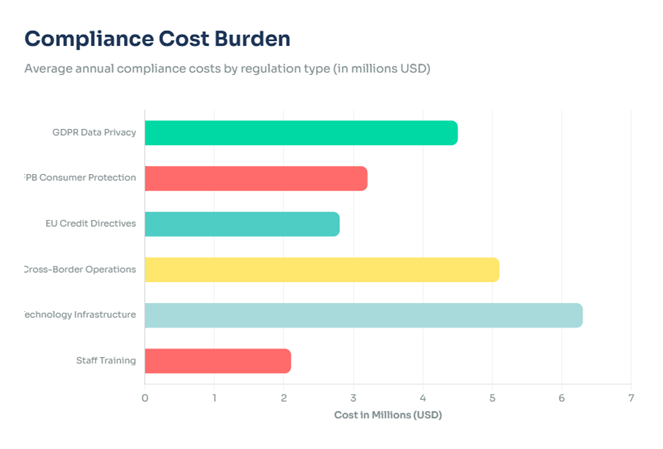
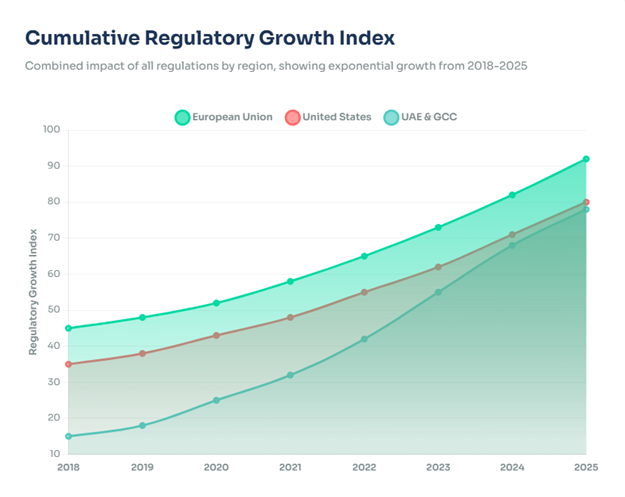
This comprehensive analysis explores the most impactful regulations shaping the debt industry today, including GDPR (General Data Protection Regulation) in Europe, CFPB (Consumer Financial Protection Bureau) updates in the United States, EU consumer credit directives, and emerging regulatory frameworks in the UAE and GCC (Gulf Cooperation Council) region. Understanding these regulations is critical for businesses operating domestically and internationally.
Why Compliance Matters in the Debt Industry
Regulatory compliance refers to adhering to laws, guidelines, and standards relevant to business operations. In the debt industry, compliance is tied to:
- Consumer protection
- Data security and privacy
- Fair lending and collection practices
- Cross-border financial activities
Non-compliance can lead to severe consequences — including fines, legal action, reputational damage, and loss of license. As regulators increase scrutiny on how debts are collected and how sensitive data is handled, businesses must invest in robust compliance programs.
GDPR: A Global Standard for Data Privacy
The General Data Protection Regulation (GDPR) is the benchmark for data protection laws worldwide. Enforced since May 25, 2018, GDPR affects any organization that processes personal data of residents in the European Union (EU) and European Economic Area (EEA) — including debt collection data.
Key GDPR Requirements for the Debt Industry
Debt businesses must comply with several core GDPR principles:
- Lawful Basis for Processing: You must establish a valid legal reason to collect and process personal data. In debt collection, this often falls under legitimate interests, but this must be documented and balanced against consumer privacy rights.
- Consent and Transparency: When consent is required, it must be explicit, informed, and revocable. Consumers must understand how their data will be used.
- Data Minimization: Only collect data that is directly relevant to the debt collection process.
- Storage Limitation: Personal data cannot be stored indefinitely. Data retention policies must align with law and business purpose.
- Data Subject Rights: Individuals have the right to access, correct, delete, or restrict the processing of their personal data.
Failing to comply with GDPR can result in fines of up to €20 million or 4% of global annual turnover — whichever is higher. For debt collection agencies handling extensive consumer profiles, these penalties underscore the importance of airtight data governance.
Practical Steps to Ensure GDPR Compliance
- Conduct a data protection impact assessment (DPIA).
- Maintain detailed records of processing activities (RoPA).
- Implement advanced security controls (encryption, access management).
- Establish procedures for data breach notifications within 72 hours.
- Train staff on data privacy best practices.
GDPR has become a model for global privacy laws — with many countries adopting similar frameworks — making it crucial for modern debt businesses to embed GDPR compliance into their operational DNA.
US CFPB Updates: Consumer Protection in a Changing Landscape
In the United States, the Consumer Financial Protection Bureau (CFPB) is the primary regulatory body governing debt collection and consumer financial services. The CFPB enforces laws such as:
- Fair Debt Collection Practices Act (FDCPA)
- Consumer Financial Protection Act
- Telemarketing Sales Rule (TSR) (as it relates to debt collection communications)
Recent CFPB Regulatory Trends
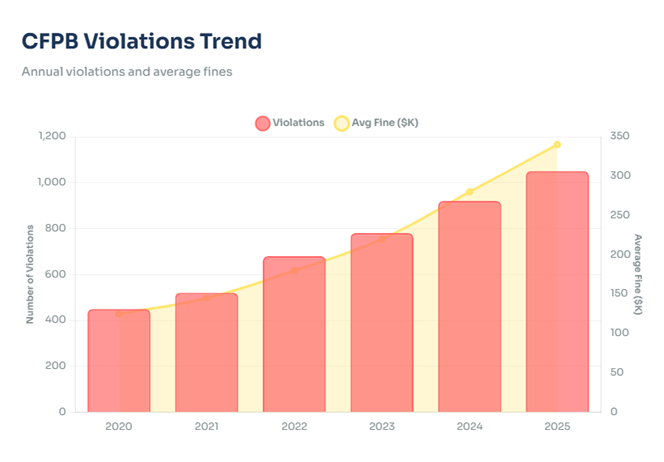
The CFPB has signaled a renewed focus on strengthening consumer protections within the debt market. Recent updates and supervisory priorities include:
- Stricter Communication Limits: Rules defining permissible contact methods (calls, texts, emails) and frequency limits to protect consumers from harassment.
- Enhanced Verification Requirements: Collection agencies may face more stringent standards for verifying debts before contacting consumers.
- Digital Communication Oversight: Text messaging, email, and automated systems are increasingly regulated to prevent deception and abuse.
In 2025, the CFPB proposed updates aimed at modernizing debt collection standards — particularly around electronic communication and dispute resolution processes. While some proposals are pending final rulemaking, debt businesses must prepare for tighter enforcement and clearer guidance.
Compliance Strategies for CFPB Regulations
- Implement contact frequency tracking systems to ensure limits aren’t exceeded.
- Update dispute handling workflows to align with CFPB expectations.
- Provide ongoing training on FDCPA and federal rules to call center agents and collections staff.
- Maintain comprehensive audit trails for communications and compliance decisions.
Proactive compliance not only reduces legal risk but also positions debt businesses as ethical partners in financial recovery — a competitive advantage in a regulated environment.
EU Consumer Credit Directives: Standardizing Fairness Across Member States
Beyond GDPR, the European Union has established several consumer credit directives that impact how credit and debt services are marketed, disclosed, and managed throughout member countries.
The Consumer Credit Directive (CCD) and Its Impact
The EU Consumer Credit Directive (2008/48/EC) harmonizes rules for consumer credit agreements across EU member states. Key provisions include:
- Clear Pre-Contractual Information: Lenders must provide standardized information about credit terms, fees, and repayment obligations.
- Annual Percentage Rate (APR) Transparency: Consumers must be informed of the true cost of credit.
- Right of Withdrawal: Borrowers have a cooling-off period after signing a credit agreement.
- Assessment of Creditworthiness: Lenders must evaluate consumers’ ability to repay before extending credit.
These rules ensure that debt and credit markets operate fairly and transparently. For debt collection agencies, compliance means understanding the underlying credit agreement terms and respecting consumer rights established before the debt enters collection.
Implementation Across the EU
EU directives are implemented by individual member states, which can lead to variations in enforcement and interpretation. This requires debt businesses to:
- Monitor local regulatory updates
- Update contracts, disclosures, and call scripts
- Train staff on jurisdiction-specific requirements
Complying with EU consumer credit directives is essential for businesses operating across borders in Europe, especially as the EU continues to strengthen protections for borrowers.
Emerging Regulations in the UAE and GCC: A New Frontier
The Middle East — particularly the United Arab Emirates (UAE) and the Gulf Cooperation Council (GCC) — is rapidly developing regulatory frameworks for financial services, including the debt industry.
Regulatory Developments in the UAE
The UAE has emerged as a financial hub with a strong commitment to compliance, transparency, and consumer protection. Key developments include:
- Federal Decree-Law Regulations: Laws governing financial institutions, data privacy, and electronic transactions.
- Central Bank of the UAE Guidelines: Requirements for customer due diligence, anti-money laundering (AML), and risk management.
- Digital Data Protection Law: The UAE’s comprehensive data protection law, which aligns with global principles similar to GDPR.
These regulations affect how debt collection practices are conducted, especially in terms of:
- Consumer data handling
- Electronic communication and notification
- Cross-border debt servicing
GCC-Wide Alignment
While each GCC country (including Saudi Arabia, Qatar, Bahrain, Kuwait, and Oman) has its own legal system, there is a growing trend toward harmonization of financial regulations. Common themes include:
- Enhanced data privacy protections
- Stronger consumer credit oversight
- Implementation of AML and counter-terrorism financing (CTF) controls
- Digital identity and e-transaction frameworks
For international debt businesses, this presents both challenges and opportunities. Adapting to GCC regulations requires localized legal expertise, technology investments, and vigilant compliance monitoring.
Operationalizing Compliance: Best Practices for Debt Businesses
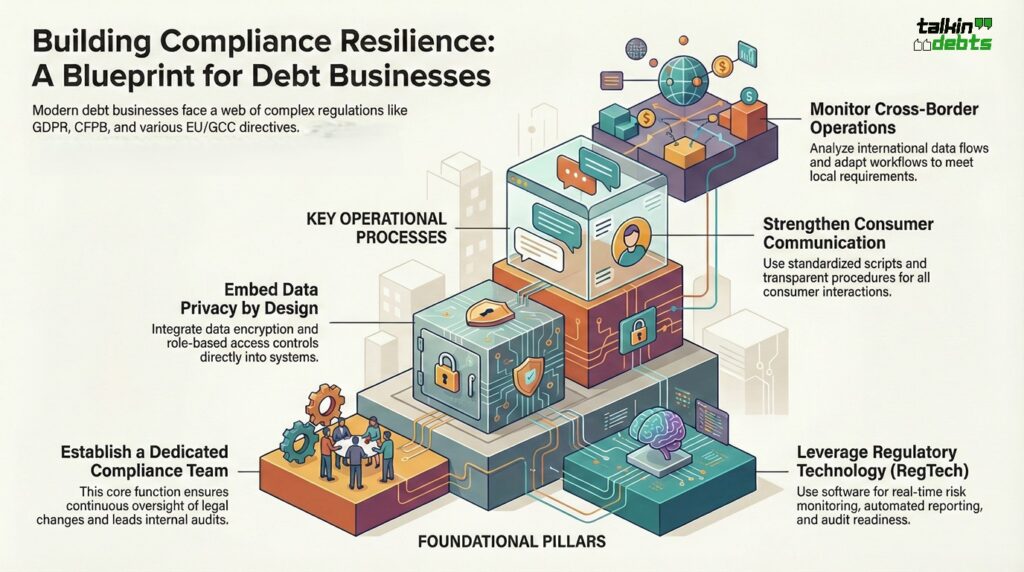
Staying compliant with GDPR, CFPB updates, EU directives, and UAE/GCC regulations demands a strategic, technology-driven approach. Here’s how modern debt businesses can build compliance resilience:
1. Establish a Dedicated Compliance Team
A core compliance function ensures continuous oversight of legal changes. This team should:
- Monitor regulatory updates across jurisdictions
- Train staff on compliance standards
- Lead internal audits and risk assessments
2. Leverage Regulatory Technology (RegTech)
RegTech solutions — including compliance management software, automated reporting tools, and secure data platforms — streamline adherence to complex regulatory requirements. Benefits include:
- Real-time risk monitoring
- Automated documentation and reporting
- Audit readiness
3. Implement Data Privacy by Design
Embedding privacy into systems and processes ensures compliance with data laws like GDPR and UAE data protection rules. This includes:
- Encryption of sensitive data
- Role-based access controls
- Secure data retention policies
4. Strengthen Consumer Communication Protocols
Clear, compliant communication is essential. Best practices include:
- Standardized scripts and disclosures
- Consent-based electronic communication
- Transparent dispute resolution procedures
5. Monitor Cross-Border Operations
Global debt practices require understanding how regulations interact across regions. Compliance leaders must:
- Analyze cross-border data flows
- Map regulatory overlaps
- Adjust workflows for local requirements
Looking Ahead: The Future of Regulatory Compliance
The compliance landscape in the debt industry will continue to evolve. Emerging trends likely to shape future regulation include:
- AI and Automation Oversight: As debt businesses adopt artificial intelligence for scoring and communication, regulators will refine guidelines to ensure fairness and transparency.
- Stronger Consumer Rights: Expect expanded rights related to digital communication, dispute resolution, and data access.
- Global Privacy Convergence: More countries will adopt GDPR-like data protection laws, requiring universal privacy compliance frameworks.
- Sustainability and Ethical Standards: ESG (Environmental, Social, Governance) principles are beginning to influence financial regulations, including responsible collection practices.
Preparing for these changes means building adaptable compliance systems, investing in training, and fostering a culture of ethical decision-making.
Conclusion
In the modern debt industry, regulatory compliance is a strategic imperative. From GDPR’s stringent data privacy requirements to the CFPB’s evolving consumer protection standards, EU directives’ harmonized fairness, and emerging UAE/GCC legal frameworks, businesses must be proactive, informed, and agile.
Success in compliance is not just about avoiding penalties — it’s about building trust, enhancing operational integrity, and positioning your business for long-term growth. By adopting technology solutions, establishing strong governance, and staying abreast of global regulatory trends, debt businesses can confidently navigate the complex compliance landscape and excel in an era of heightened regulatory scrutiny.