

UAE’s New Insolvency and Bankruptcy Framework to Boost Corporate Transparency
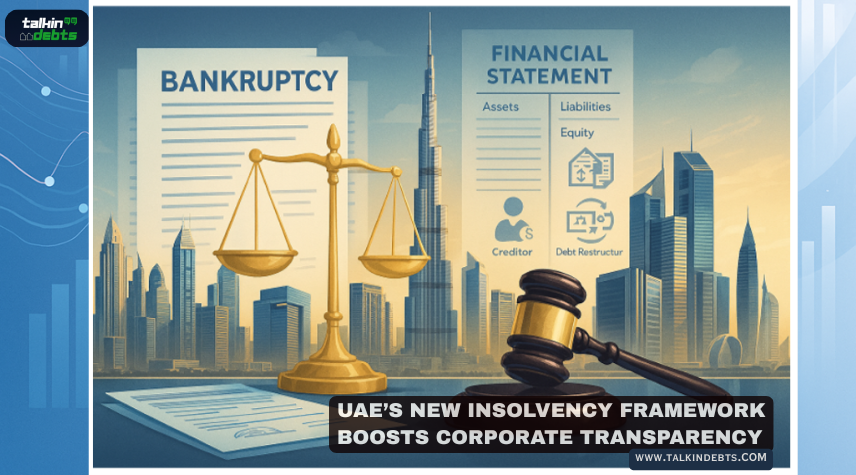
The United Arab Emirates has introduced an updated insolvency and bankruptcy framework designed to strengthen corporate transparency, improve creditor protection, and streamline debt restructuring procedures across the region. The reforms mark one of the most significant updates to the country’s commercial governance system in recent years, aligning the UAE more closely with global legal standards and supporting its ambition to become a leading financial and business hub in the Middle East.
Legal analysts say the revised framework is expected to enhance confidence among lenders, attract foreign investors, and modernise restructuring practices across sectors, including real estate, contracting, trade, retail, logistics, and technology. The measures target gaps previously identified in corporate turnaround processes and provide clearer mechanisms for distressed companies seeking court-supervised restructuring.
Greater Transparency Requirements for Companies Under Financial Stress
One of the central elements of the updated regime is the introduction of stronger disclosure obligations for businesses experiencing financial difficulty. Companies are now required to report early signs of insolvency risk, maintain up-to-date financial records, and provide complete information during court-led or out-of-court restructuring discussions.
Regulators say these transparency requirements are intended to prevent sudden collapses, reduce information asymmetry between debtors and creditors, and ensure that corporate distress is identified early enough to allow viable companies to restructure rather than liquidate.
Legal experts note that the reforms could significantly reduce the number of unexpected corporate failures, especially among small and medium-sized enterprises (SMEs) that previously lacked structured reporting systems.
Improved Protections and Rights for Creditors
The updated framework introduces stronger safeguards for secured and unsecured creditors. The reforms ensure that creditors receive clearer visibility into a company’s financial position and are consulted earlier in the restructuring process. They also expand creditor voting rights during restructuring proposals and strengthen the priority of claims during liquidation.
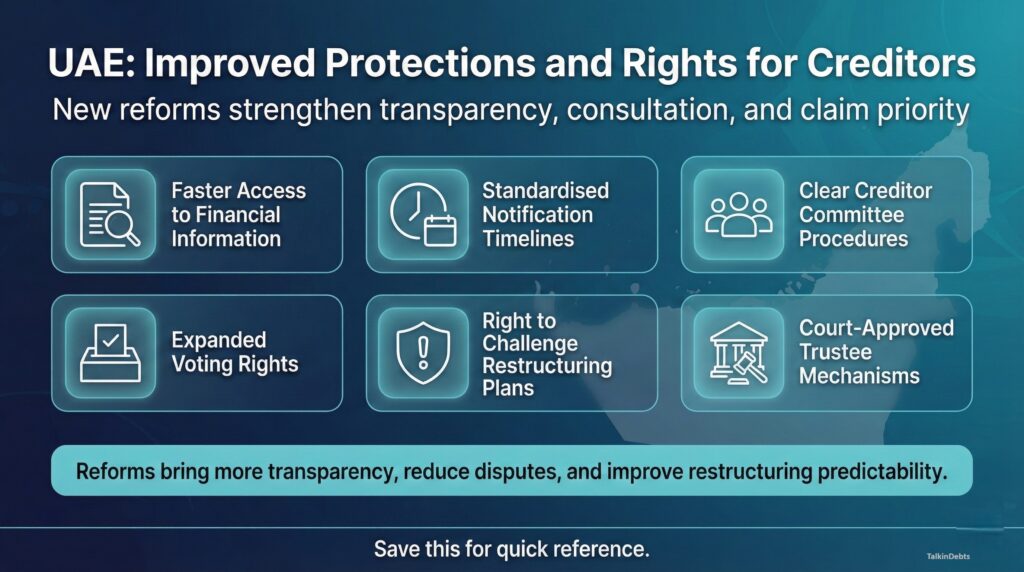
Key enhancements include:
- Faster access to financial information
- Standardised timelines for creditor notifications
- Clearer procedures for forming creditor committees
- Expanded rights to challenge restructuring plans
- Transparent mechanisms for appointing court-approved trustees
Industry observers say the new measures are designed to balance the interests of debtors and lenders, reducing disputes and improving the predictability of restructuring outcomes.
Streamlined Debt Restructuring Procedures
The UAE’s revised legislation introduces simplified restructuring procedures aimed at reducing delays, lowering costs, and improving efficiency in insolvency cases. The rules clarify the steps required to initiate restructuring, the responsibilities of appointed trustees, and the timeline for creditor approvals.
Among the key procedural updates:
- A unified restructuring track for distressed companies
- Stronger oversight of restructuring plans by courts
- Strict deadlines for submitting and approving restructuring proposals
- Accelerated procedures for SMEs to access restructuring protection
- Mechanisms to facilitate pre-packaged restructuring agreements
Restructuring practitioners say the streamlined process will reduce uncertainty, encourage early filings, and help viable businesses return to normal operations more quickly.
Focus on Corporate Rescue Over Liquidation
The new framework places greater emphasis on rehabilitating companies rather than liquidating them. Courts are granted broader powers to support restructuring, oversee debtor operations and enable management to continue running the business under supervision.
Authorities say this shift reflects international best practices, particularly models used in Europe and Asia, where corporate rescue frameworks have helped preserve economic value, protect jobs and reduce the spillover effects of corporate defaults.
Legal analysts believe the UAE’s approach will encourage companies to seek help earlier, reducing the stigma associated with restructuring and promoting a more transparent corporate culture.
Enhanced Role for Licensed Insolvency Practitioners
The reforms introduce clearer professional standards for insolvency practitioners, including licensing requirements, guidelines for case management and stricter accountability measures. Practitioners will play a central role in overseeing restructuring plans, managing creditor interactions and ensuring that distressed companies comply with disclosure rules.
Industry specialists say the introduction of licensing and governance standards will raise the quality of insolvency services in the market and limit the involvement of unqualified consultants, which has been a longstanding concern in complex corporate cases.
Alignment With GCC and Global Standards
The updated framework brings the UAE closer to insolvency practices adopted in advanced jurisdictions. The reforms also complement ongoing GCC-wide efforts to standardise corporate governance, enhance financial transparency, and improve cross-border restructuring cooperation.
Regional analysts say improved coordination between Gulf regulators could support smoother handling of multi-jurisdictional insolvency cases, especially for conglomerates and regional corporates operating in multiple GCC markets.
The UAE’s reforms also strengthen its position relative to global financial centres, with the new regime incorporating features seen in the UK, Singapore, Australia, and leading European markets.
Impact on Banks, Lenders, and Financial Institutions
Banks and lenders are expected to benefit from clearer legal protections, more predictable recovery processes, and increased transparency from borrowers. Several UAE-based financial institutions have been pushing for stronger creditor rights, particularly following periods of rising corporate defaults in the construction and trading sectors.
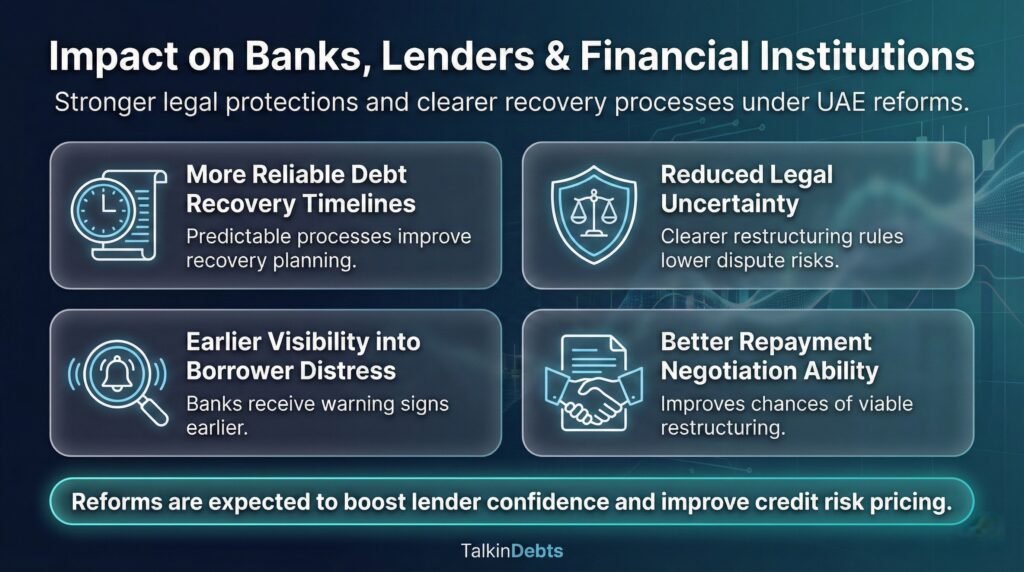
Key areas of positive impact for lenders include:
- More reliable debt recovery timelines
- Reduced legal uncertainty during restructuring
- Earlier visibility into borrower distress
- Enhanced ability to negotiate viable repayment plans
Banking industry representatives say the reforms could lead to improved lending confidence and better pricing of credit risk.
Corporate Sector Expected to Be More Proactive in Addressing Financial Distress
The new framework is expected to encourage companies to address solvency issues earlier rather than delaying restructuring attempts. The rules impose penalties for failing to disclose insolvency risks on time or for obstructing court-supervised processes.
Legal advisers say this will motivate management teams to seek professional assistance sooner and avoid the deterioration of financial conditions that can make restructuring difficult or impossible.
SMEs, which form a major part of the UAE economy, are expected to benefit from simplified procedures, faster access to restructuring protection, and clearer guidance on compliance requirements.
International Investors Welcome Greater Clarity
Foreign investors have long advocated for clearer insolvency rules in the UAE, particularly those involved in long-term financing, trade credit, and cross-border investment. The updated framework provides a more structured and transparent process for dealing with corporate distress, reducing perceived legal risk and strengthening investor confidence.
Investment analysts say that predictable insolvency outcomes are essential for attracting private equity, venture capital, global lenders and institutional investors into the market.
Potential Increase in Corporate Filings Expected
While the updated framework is intended to stabilise the corporate environment, analysts expect an initial rise in restructuring filings as companies adjust to the new requirements. Firms that previously delayed addressing financial problems may seek relief under the reformed regime.
Specialists suggest that increased filings should not be viewed as a sign of worsening corporate health but rather as an indication that distressed businesses are engaging with the legal system earlier and more transparently.
Positioning the UAE as a Regional Leader in Corporate Governance
The reforms are part of broader efforts to reinforce the UAE’s reputation as a transparent and well-regulated business environment. Policymakers say modern insolvency laws are essential for a diversified economy and for sustaining investor interest across sectors such as finance, logistics, energy, healthcare, technology and manufacturing.
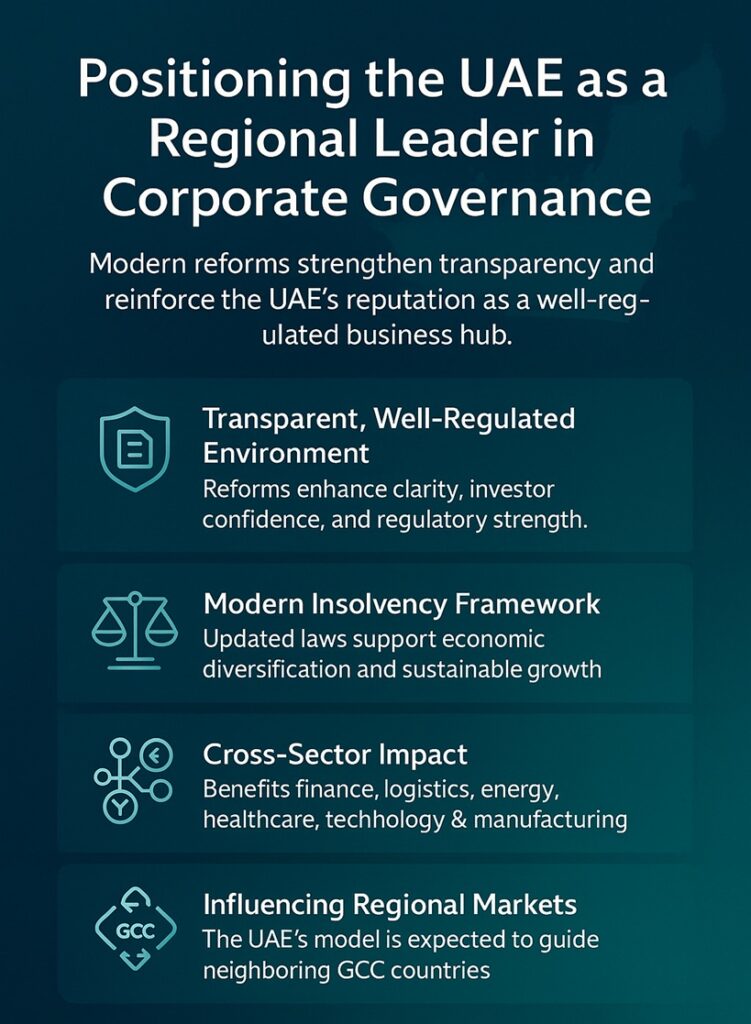
Analysts note that the UAE’s updated framework is likely to influence neighbouring markets and could serve as a model for other GCC countries seeking to enhance their own insolvency regimes.


