

Saudi Debt Clock Trends: Are We Moving Toward a Balanced Budget?
Riyadh, July 2025 — As Saudi Arabia continues its ambitious transformation under Vision 2030, a critical question has emerged: Are the Kingdom’s fiscal strategies finally guiding the nation toward a balanced budget? The latest data from the Saudi Debt Clock reveals key trends in public debt, deficit reduction, and sovereign fund performance, providing crucial insights into the economic direction of the country.
This in-depth report investigates whether Saudi Arabia is edging closer to a balanced fiscal future—or if warning signs are still flashing behind the numbers.
A Snapshot of Saudi Arabia’s National Debt
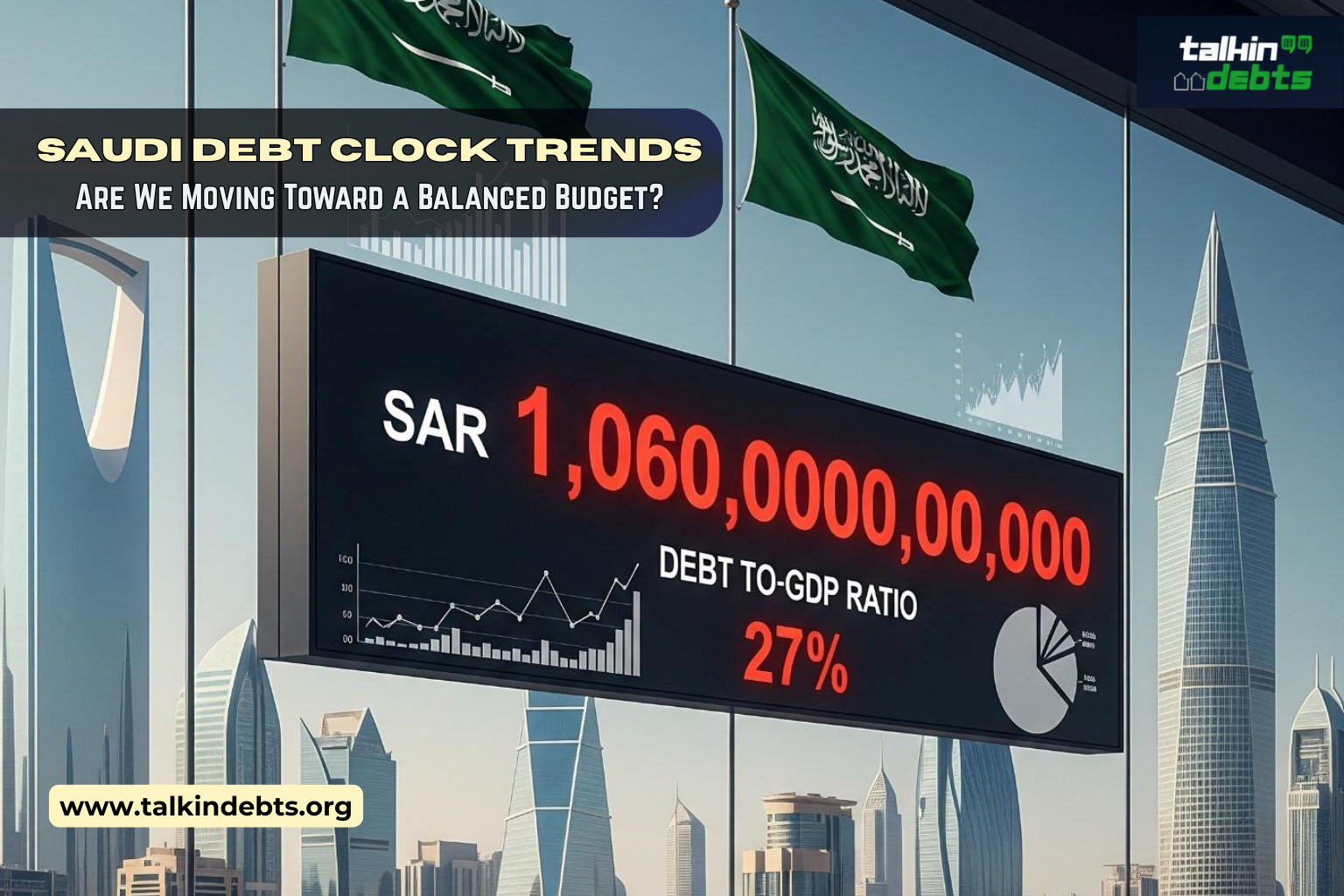
As of mid-2025, Saudi Arabia’s public debt stands at approximately SAR 1.06 trillion ($282 billion USD), reflecting a debt-to-GDP ratio of about 27%. This figure is significantly lower than that of many advanced economies, and well within the 50% ceiling set by the Ministry of Finance. While the current debt levels remain manageable, the trend lines are what truly matter.
In the wake of COVID-19 and the oil market crash of 2020, Saudi Arabia saw its debt-to-GDP ratio climb sharply. However, in recent years, the Kingdom has demonstrated considerable fiscal restraint. The government has reined in spending, boosted non-oil revenues, and gradually reduced budget deficits.
Debt Clock Insight: According to the Saudi Debt Clock, the rate of debt accumulation has slowed significantly since 2023, and projections for 2026 suggest only a marginal increase—if oil revenues remain strong and diversification plans stay on course.

Budget Surpluses and Deficits: The Tipping Point
One of the most important indicators of fiscal health is the national budget balance. For the first time in nearly a decade, Saudi Arabia posted a budget surplus in 2022, thanks to high oil prices and spending reforms. Although that surplus shrank in 2023 and 2024 due to increased public investment in giga-projects, it marked a turning point in fiscal management.
Current Budget Standing (2025):
- Revenues: SAR 1.3 trillion
- Expenditures: SAR 1.37 trillion
- Deficit: SAR 70 billion (5.3% of GDP)

While the Kingdom is operating at a slight deficit in 2025, analysts say this is largely strategic. Much of the current spending is directed toward Vision 2030 projects, including NEOM, the Red Sea Project, and digital infrastructure. These are not recurring expenses but capital investments aimed at long-term economic sustainability.
Vision 2030 and Economic Diversification
The backbone of Saudi Arabia’s fiscal strategy is economic diversification. Historically dependent on oil revenues—which at one point accounted for over 90% of state income—the Kingdom is investing heavily in sectors like tourism, technology, renewable energy, and logistics.
Key non-oil revenue sources have seen notable growth:
- VAT collections have increased by over 80% since their introduction in 2018.
- Zakat and corporate taxes from private firms are on the rise.
- Tourism revenues, boosted by liberalized visa policies, are projected to surpass SAR 100 billion in 2025.
These developments have allowed the government to lessen its dependency on crude exports, giving it more room to manoeuvre fiscally and reduce the volatility of budget planning.
Saudi Sovereign Wealth Funds: Financial Cushion or Future Risk?
Saudi Arabia’s Public Investment Fund (PIF) plays a dual role: it fuels domestic mega-projects and acts as a global investor. The fund’s assets under management (AUM) have ballooned to over $1.2 trillion, with stakes in companies ranging from Lucid Motors to global real estate, tech startups, and energy ventures.
Crucially, the PIF is also being used to backstop fiscal policy. While this creates an additional safety net, critics warn that an overreliance on the PIF could obscure real budgetary weaknesses.
Still, the Ministry of Finance maintains that the fund’s structure is robust, with diversified assets and a mandate aligned with Vision 2030’s goals. Moreover, drawing from PIF reserves is viewed as preferable to international borrowing, which would increase the national debt burden.

Oil Prices: The Wild Card in Budget Planning
Despite diversification efforts, oil prices remain a dominant variable in Saudi fiscal policy. In 2025, Brent crude has averaged around $83 per barrel—a comfortable price point for the Kingdom, which has a fiscal breakeven oil price of approximately $78.
However, any sharp decline in oil prices could jeopardize the Kingdom’s budget balance. To mitigate this, Saudi Arabia has participated actively in OPEC+ output controls, helping stabilize the market and preserve revenue predictability.
Additionally, the creation of fiscal buffers—emergency reserves to cushion against oil shocks—has been a key strategy. These funds can be deployed quickly to bridge short-term budget gaps without resorting to more debt.
IMF and Moody’s View: Mixed but Encouraging
In recent reports, both the International Monetary Fund (IMF) and Moody’s Investors Service have acknowledged Saudi Arabia’s fiscal improvements but also cautioned against over-optimism.
- IMF Assessment (2025): Praises the Kingdom’s “commitment to fiscal discipline,” while warning that “continued diversification is essential to maintain budgetary sustainability.”
- Moody’s Rating: Currently at A1 with a stable outlook, citing the Kingdom’s low debt-to-GDP ratio and strong foreign reserves, but noting risks related to oil dependency and regional instability.
This balanced evaluation suggests that while the Saudi Debt Clock is slowing, it hasn’t stopped ticking.
Youth Population and Social Spending Pressures
Saudi Arabia has a rapidly growing, youthful population, with more than 60% under the age of 30. This presents both an opportunity and a challenge for fiscal planners.
To maintain social cohesion and reduce unemployment, the government has increased spending on:
- Education and upskilling programs
- Housing initiatives
- Healthcare modernization
These are essential for long-term stability but can pressure short-term fiscal metrics. Balancing these needs without reigniting the debt spiral is a key challenge moving forward.
Digital Reforms and Fiscal Transparency
One of the most underreported achievements of Saudi Arabia’s economic reform is the adoption of digital public finance systems. The introduction of platforms like Etimad for procurement and Tahakom for traffic fines has increased transparency and reduced leakage.
Moreover, the Ministry of Finance publishes regular budget performance reports, offering a level of openness rarely seen in the region.
These reforms not only improve investor confidence but also enhance domestic fiscal accountability—helping to slow down debt growth and improve planning accuracy.
Are We Headed Toward a Balanced Budget?
The data suggests that Saudi Arabia is inching closer to a balanced budget, though not without challenges. The slowdown in debt accumulation, coupled with increased non-oil revenues and strategic investments, points to a well-structured fiscal roadmap.
However, the path forward is narrow. Achieving balance will depend on:
- Sustained oil revenues or successful hedging against volatility
- Execution of Vision 2030 initiatives without runaway costs
- Maintaining social spending without unsustainable borrowing
- Building strong institutions that resist political and market shocks

Public Sentiment: A Growing Appetite for Fiscal Responsibility
Interestingly, public discourse in Saudi Arabia has also shifted. On social media and in civic forums, there is growing awareness of national debt levels and budget allocations. Citizens increasingly question large-scale spending projects and demand clarity on outcomes.
This public pressure for fiscal responsibility is a healthy sign, reflecting a maturing society that understands the link between government spending, national debt, and long-term prosperity.
A Clock That’s Slowing—but Still Ticking
The Saudi Debt Clock is not ringing alarm bells—but it’s not silent either. The Kingdom has made commendable progress in slowing the pace of debt, diversifying income streams, and laying the groundwork for a sustainable fiscal future. However, it still walks a tightrope between ambition and caution.
As 2026 approaches, the key question remains: Will Saudi Arabia make history by balancing its budget without relying heavily on oil? The answer, like the ticking of the debt clock, depends on discipline, diversification, and determination.


