What to Do If You’re Getting Threatening Debt Calls: A Step-by-Step Action Plan

Debt is difficult to manage under normal circumstances, but when you start receiving threatening debt calls from collectors, it can feel overwhelming. The raised voices, intimidating language, and constant pressure can make you feel trapped and powerless. But here’s the truth: you have rights, and you are not alone.
Whether the call is from a legitimate agency or a scammer pretending to collect money, there are steps you can take to protect yourself. Across regions such as the Middle East, North Africa, India, the UK, Australia, and Europe, laws regulate how debt collectors must behave. Once you know the rules and how to respond, you can stop the harassment and take back control of your situation.
Step-By-Step Plan To Stop Debt Threats
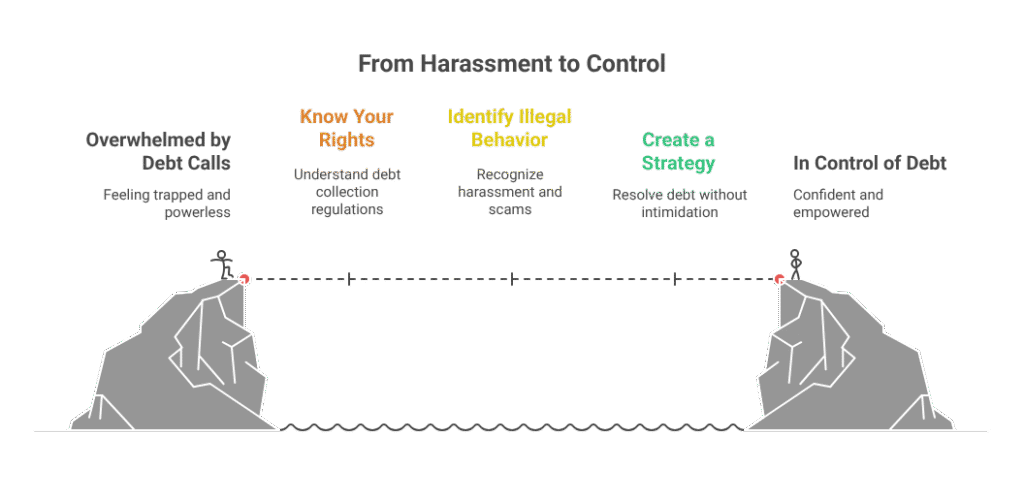
This guide offers a detailed step-by-step plan for handling threatening debt calls, identifying illegal behaviour, and creating a strategy to resolve debt without intimidation.
Step 1: Stay Calm and Don’t Panic
Threatening callers want to scare you. They use aggressive voices, exaggerated consequences, and time pressure to push you into immediate payment. The first and most important rule is: stay calm.
- Pause before responding. Breathe deeply and remind yourself that you are in control.
- Don’t argue or shout back. Escalating the conversation only fuels aggression.
- Never provide payment details on the spot. Scammers, in particular, rely on impulsive decisions.
For example, imagine a caller says, “If you don’t pay within two hours, the police will arrest you.” This is a classic intimidation tactic. In most countries, unpaid consumer debt is not a criminal offense. Knowing this helps you stay calm and avoid falling into their trap.
Step 2: Verify the Caller’s Identity
Legitimate debt collection agencies follow rules and provide clear information. Scammers, on the other hand, pressure you to pay without verification. To protect yourself:
- Ask for full identification. Request the caller’s full name, company name, mailing address, and direct phone line.
- Demand a written notice. In the UK, Europe, India, Australia, and many Middle Eastern countries, collectors must send a written notice or validation of debt.
- Cross-check your records. Check your bank statements, loan documents, or credit report to confirm if the debt is real.
⚠️ Red flag: If a caller refuses to provide written proof, insists you pay immediately, or becomes aggressive when you ask for details — it’s likely a scam.
Step 3: Know Your Rights in Debt Collection
One of the strongest protections you have is the law. Most regions enforce strict rules against harassment, intimidation, and threats.
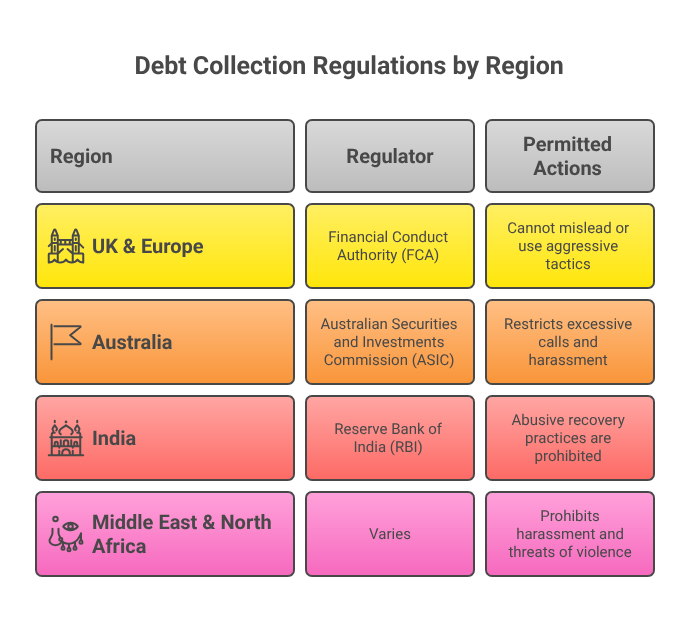
- UK & Europe: Regulated by the Financial Conduct Authority (FCA) and EU consumer laws. Collectors cannot mislead you or use aggressive tactics.
- Australia: The Australian Securities and Investments Commission (ASIC) restricts excessive calls and harassment. Collectors must treat you with respect.
- India: The Reserve Bank of India (RBI) has issued guidelines warning lenders against abusive recovery practices. Banks can face penalties for violations.
- Middle East & North Africa: Rules vary, but most countries prohibit harassment, especially threats of violence, reputational harm, or unlawful seizure of property.
Common illegal practices across regions include:
- Using abusive language.
- Threatening physical harm.
- Threatening jail time for civil debt.
- Contacting you at odd hours (late nights or very early mornings).
- Revealing your debt to family, friends, or employers.
Knowing these rights transforms the conversation. Once you realize what collectors cannot do, their threats lose power.
Step 4: Keep a Detailed Record of Every Call
Documentation is your definition. If you ever need to report harassment or take legal action, records will protect you.
Maintain a debt collection call log that includes:
- Date and time of each call.
- Caller’s name, company, and phone number.
- A summary of what was said.
- Specific threats or abusive language were used.
In some countries, you may also record calls (check your local laws). Even if you cannot record, written notes are still valuable evidence.
Step 5: Control How Collectors Contact You
You have the right to decide how debt collectors communicate with you. If the calls are unbearable:
- Request written communication only. Send a formal letter or email asking collectors to stop calling and communicate in writing.
- Block numbers. Use your phone’s call-blocking features or apps to reduce harassment.
- Keep everything in writing. Written communication creates a paper trail that protects you.
In many countries, once you request written communication, collectors must comply or risk legal penalties.
Step 6: Report Abusive Calls to Authorities
If collectors cross the line, don’t stay silent — report them. Here’s where you can file complaints:
- UK: Financial Conduct Authority (FCA) or Financial Ombudsman Service.
- Europe: National consumer protection agencies in each country.
- Australia: Australian Financial Complaints Authority (AFCA).
- India: Reserve Bank of India (RBI) or local consumer dispute redressal forums.
- Middle East & North Africa: Ministries of Consumer Protection or financial regulators in respective countries.
Regulators have the power to investigate, fine, or even shut down abusive agencies. By reporting, you not only protect yourself but also others facing similar harassment.
Step 7: Recognize the Most Common Threats
Collectors often recycle the same threats, hoping you won’t know your rights. Here are some common ones — and why they’re misleading or illegal:
- “The police will arrest you.” → Personal debt is not a criminal matter in most countries. Jail is not the solution.
- “We’ll take your house tomorrow.” → Property seizure requires a court process and judgment. It cannot happen overnight.
- “We’ll inform your employer.” → In most jurisdictions, sharing debt details with third parties violates privacy laws.
- “You’ll never get credit again.” → While missed payments affect your credit score, credit recovery is possible over time.
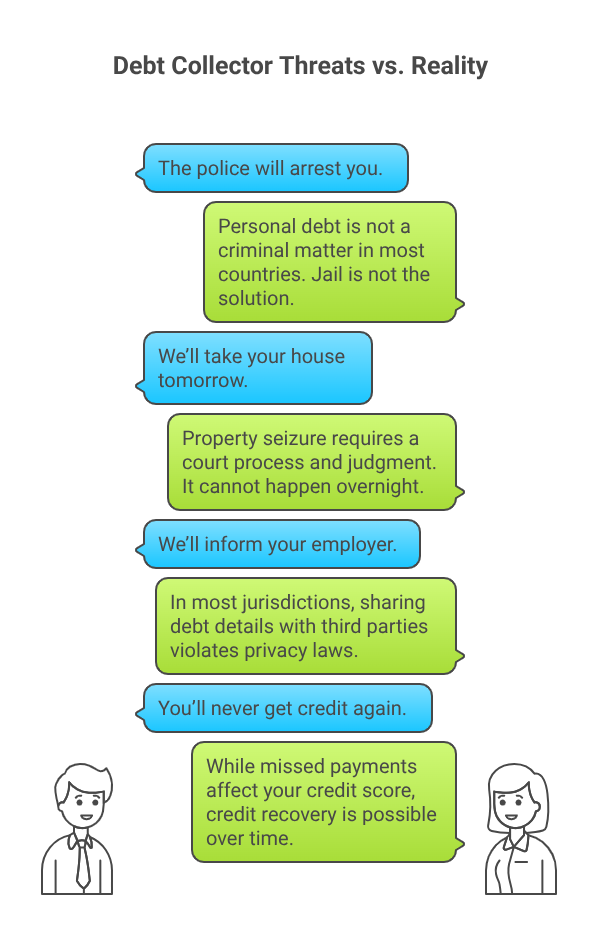
Once you recognize these scare tactics, they lose their ability to frighten you.
Step 8: Take Control of Your Debt
Threatening calls are often a symptom of a larger problem — difficulty managing debt. Instead of waiting for collectors to call, be proactive.
- List all your debts. Include balances, interest rates, and due dates.
- Prioritize essentials. Pay for rent, food, and utilities first.
- Contact creditors directly. Many creditors offer hardship programs with reduced payments.
- Explore consolidation. In Europe, India, and Australia, debt consolidation loans are common solutions.
- Seek restructuring. In the Middle East, banks often allow debt restructuring to ease repayment pressure.
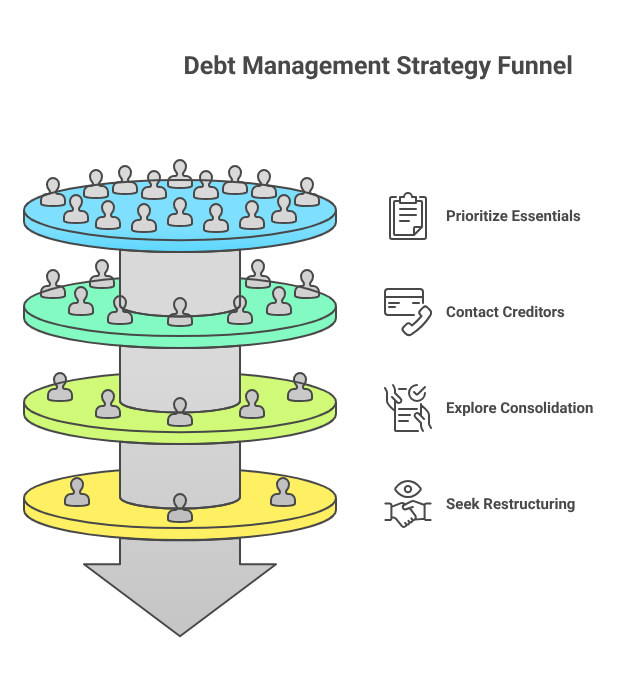
Being proactive reduces collector pressure and gives you control over repayment.
Step 9: Get Professional Help When Needed
If you feel overwhelmed, don’t hesitate to seek support. Professional help can make the situation easier:
- Debt counselling services: Many countries have free or low-cost financial counsellors.
- Legal advice: Consumer rights lawyers can protect you against unlawful harassment.
- Debt settlement or restructuring agencies: Reputable firms can negotiate directly with creditors.
⚠️ Tip: Avoid “too good to be true” agencies that promise instant debt relief. Always verify their reputation.
Step 10: Build Long-Term Protection Against Harassment
Once you’ve dealt with threatening calls, it’s important to safeguard your future. Here are strategies to prevent harassment going forward:
- Regularly check your credit reports for errors or fraudulent entries.
- Set up automated payments for essential debts to avoid late fees.
- Maintain clear records of all loans, repayments, and agreements.
- Educate yourself on consumer laws in your country.
Knowledge is your best definition. When you know your rights, collectors are less likely to intimidate you.
A Real-Life Example: How One Person Fought Back
Consider this scenario:
A young professional in the UK began receiving calls from an unknown number. The caller claimed she owed money on a loan she never took. He threatened to “send the police” if she didn’t pay within 24 hours. Instead of panicking, she asked for written proof. The caller refused. She documented the calls, reported them to the Financial Ombudsman, and blocked the number. It turned out to be a debt collection scam.
Her calm, methodical response protected her from losing money and prevented further harassment. This story illustrates the power of knowing your rights and acting strategically.
Final Thoughts
Receiving threatening debt calls can be frightening, but harassment is never acceptable. Across the Middle East, North Africa, India, the UK, Australia, and Europe, laws exist to protect you from intimidation, false threats, and abusive behaviour.
By staying calm, verifying legitimacy, documenting every call, and reporting unlawful practices, you can stop harassment in its tracks. If the debt is genuine, take proactive steps to resolve it. If it’s not, stand firm against scams and intimidation.
Debt may be a challenge, but your dignity and rights are non-negotiable. By following this comprehensive step-by-step plan, you’ll not only manage the calls — you’ll regain control over your financial future.