Exodus of Debt: Why 20% of Expats Are Leaving UAE Without Paying Loans Amid Golden Visa Loophole Abuse

Dubai, UAE 2025 – The UAE, a beacon for expatriates seeking prosperity and luxury, faces a mounting crisis: an estimated 20% of expatriates are departing without settling their debts, capitalizing on vulnerabilities in the Golden Visa program. Dubbed the “Exodus of Debt,” this trend threatens the UAE’s financial stability and its reputation as a trusted global hub. This report examines the causes, mechanisms, impacts, and potential solutions to this issue, spotlighting the Golden Visa’s role in enabling these defaults.

The Golden Visa: A Magnet with Flaws
Introduced in 2019, the UAE Golden Visa program was designed to attract wealth, talent, and innovation by offering long-term residency, 5 or 10 years, without requiring a local sponsor. It targets investors, skilled professionals, and entrepreneurs, aligning with the UAE’s vision to diversify its economy through initiatives like Dubai’s AI Week and the Dubai Programme for Gaming 2033. Eligibility includes real estate investments of AED 2 million, exceptional professional achievements, or successful startups.
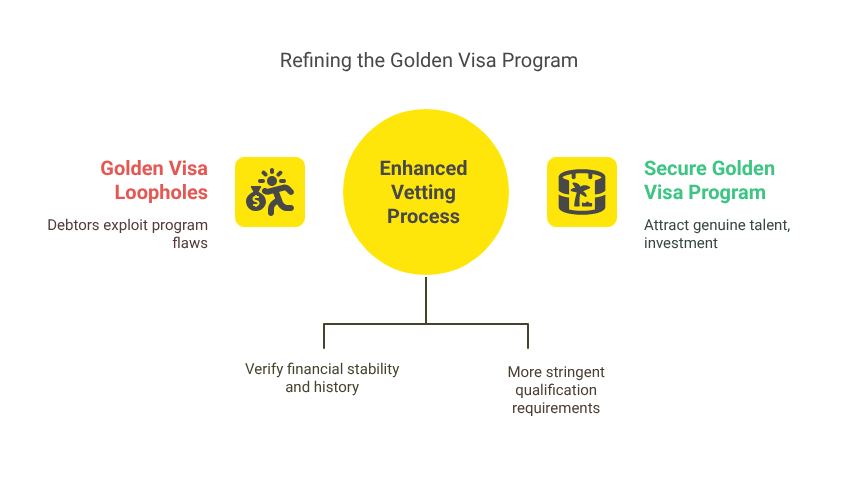
The program has been a resounding success, attracting global talent and capital. In 2024, it expanded to include gaming professionals, nurses, and top university graduates, boosting the UAE’s appeal in tech and creative sectors. Yet, its flexibility has created loopholes, allowing some expats to secure loans, liquidate assets, and leave without repaying debts, undermining the program’s intent.
Scale and Impact of the Debt Exodus
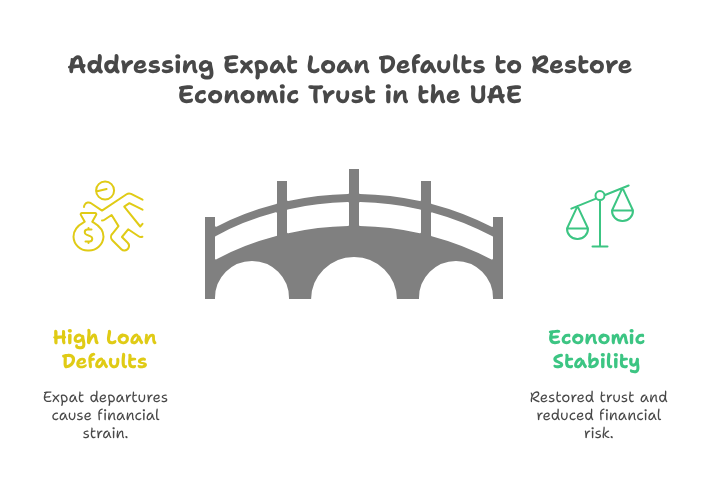
Banking sources report that around 20% of expatriates leaving the UAE in 2024 and early 2025 have defaulted on loans, ranging from personal credit to multimillion-dirham business financing. The financial toll is significant, with unpaid debts potentially reaching billions of dirhams annually. Key impacts include:
• Rising Non-Performing Loans (NPLs): Up 15% in the past year, straining banks.
• SME Struggles: Small businesses face losses from unpaid invoices, disrupting supply chains.
• Social Tensions: Locals express frustration over expats who live extravagantly on borrowed funds, only to vanish.
“It’s not just about money—it’s about trust,” said Amina Al-Zaabi, a Dubai-based entrepreneur. “When expats default and flee, it hurts our community and economy.”
Exploiting the Loophole
The Golden Visa’s structure enables abuse through several mechanisms. Holders, perceived as stable residents, gain easy access to credit with minimal oversight. A typical scenario involves securing a visa through a AED 2 million property purchase, obtaining loans against it, then selling the asset and transferring funds abroad before leaving. Contributing factors include:
• 180-Day Entry Visa: Allows applicants to enter, transact, and exit before full vetting.
• Fragmented Credit Tracking: Inconsistent monitoring across emirates delays default detection.
• Limited Extradition: Few agreements with other countries hinder debt recovery.
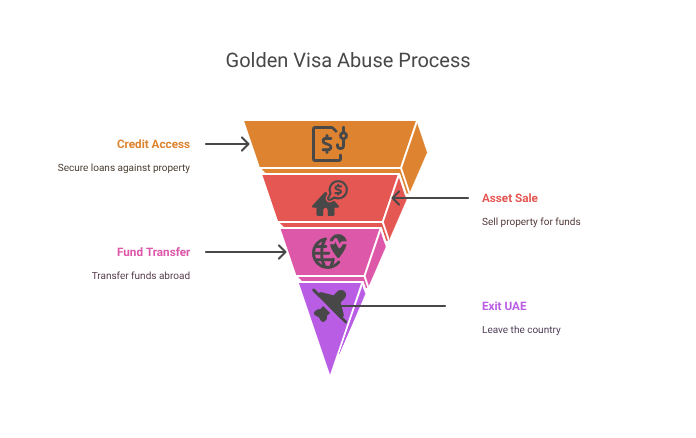
This lack of accountability lets defaulters exploit the UAE’s open financial system, often leaving creditors with little recourse.
Human Stories Behind the Crisis
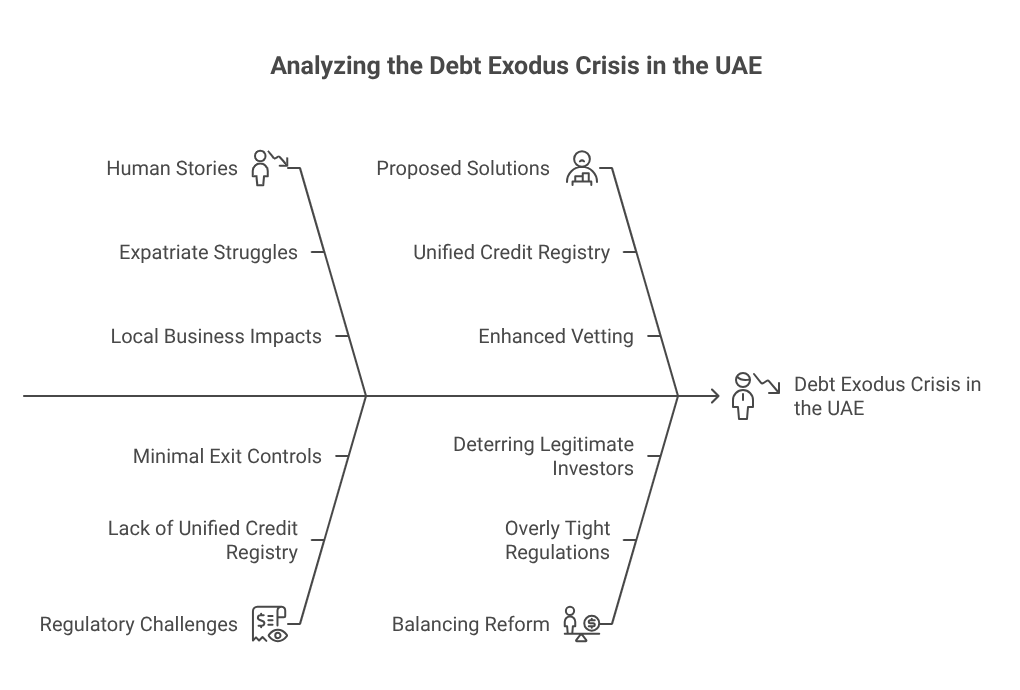
The debt exodus carries a human toll. One Indian expatriate arrived in Dubai in 2022 with a Golden Visa obtained through a real estate investment. She borrowed AED 1.3 million to launch a tech startup but was forced to abandon the venture amid global tech layoffs. Unable to repay the debt, she left the UAE in 2025. “I came with big dreams, but the market crashed, and I had no way out,” she shared anonymously.
Local businesses are also feeling the impact. A supplier based in Sharjah reported losing AED 180,000 after a Golden Visa-holding client defaulted on payments for construction materials. “These defaults cripple us,” he said. “We trust expats to build our economy, but some betray that trust.”
Regulatory Challenges
The UAE has taken steps to curb misconduct, including stricter Golden Visa vetting and 2024 Central Bank measures to enhance credit monitoring. However, gaps remain. The lack of a unified credit registry across emirates hinders real-time tracking, and exit controls for Golden Visa holders are minimal compared to Labor dispute checks. Pursuing defaulters abroad is also challenging due to jurisdictional barriers.
Balancing reform with the UAE’s pro-business ethos is critical. Overly tight regulations could deter legitimate investors, dimming the country’s allure as a global hub. “We need solutions that protect our system without scaring away talent,” said Dr. Fatima Al-Sayed, an economist at Zayed University.
Proposed Solutions
To address the loophole, experts propose targeted reforms:
• Unified Credit Registry: A centralized system to monitor loans across emirates.
• Enhanced Vetting: Rigorous financial background checks for Golden Visa applicants.
• Exit Clearance Protocols: Mandatory financial checks for departing visa holders.
• International Cooperation: Bilateral agreements to pursue defaulters and recover assets.
• Awareness Campaigns: Promoting financial responsibility among expats.
These measures aim to preserve the Golden Visa’s benefits while ensuring accountability.
A Global Perspective
The UAE’s debt exodus mirrors global trends. In the U.S., Indian professionals on H-1B visas have left with debts amid tech layoffs and visa curbs. Vietnam’s proposed Golden Visa program has raised similar concerns, prompting calls for robust safeguards. The UAE’s high expatriate population—nearly 90%—makes it uniquely vulnerable, as the Golden Visa was meant to foster commitment, not enable flight.
Economic and Social Stakes
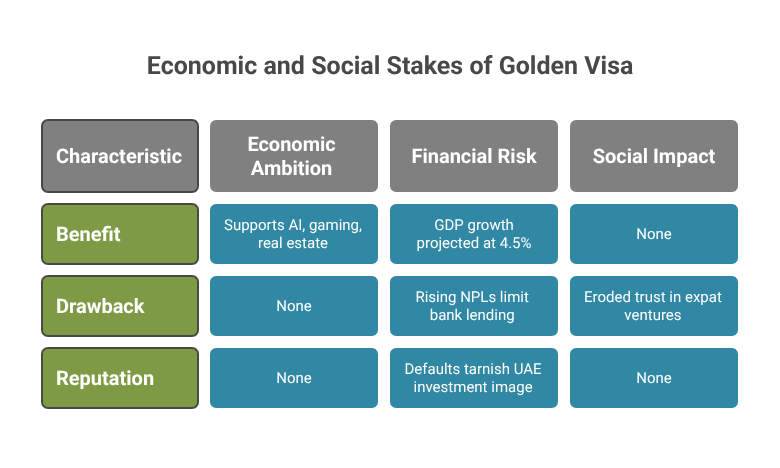
The Golden Visa fuels the UAE’s economic ambitions, supporting sectors like AI, gaming, and real estate. With GDP growth projected at 4.5% for 2025, expatriate contributions are vital. However, the debt exodus risks:
• Financial Strain: Rising NPLs could limit bank lending.
• Eroded Trust: Local businesses and communities grow wary of expat ventures.
• Reputational Harm: Defaults could tarnish the UAE’s image as a secure investment destination.
Charting the Path Forward
The UAE is acting swiftly. Banks are tightening lending criteria, and pilot exit clearance programs are underway in some emirates. Blockchain-based credit tracking is being explored to enhance transparency. Public campaigns emphasize the UAE’s zero-tolerance stance on financial fraud, urging expats to honor commitments.
The challenge is to close loopholes without undermining the UAE’s open economy. “The Golden Visa is a cornerstone of our growth,” said Omar Rashid, a Dubai policy analyst. “With smart reforms, we can protect our system and keep attracting the world’s best.”
As the UAE navigates this crisis, its ability to balance opportunity and accountability will shape its future as a global economic powerhouse. The world is watching to see if it can maintain its allure while ensuring financial integrity.